“Why only in the afternoon?”... The secret behind muscles that weaken at certain times of day [Health Talk]
- Input
- 2026-10-19 08:36:10
- Updated
- 2026-10-19 08:36:10
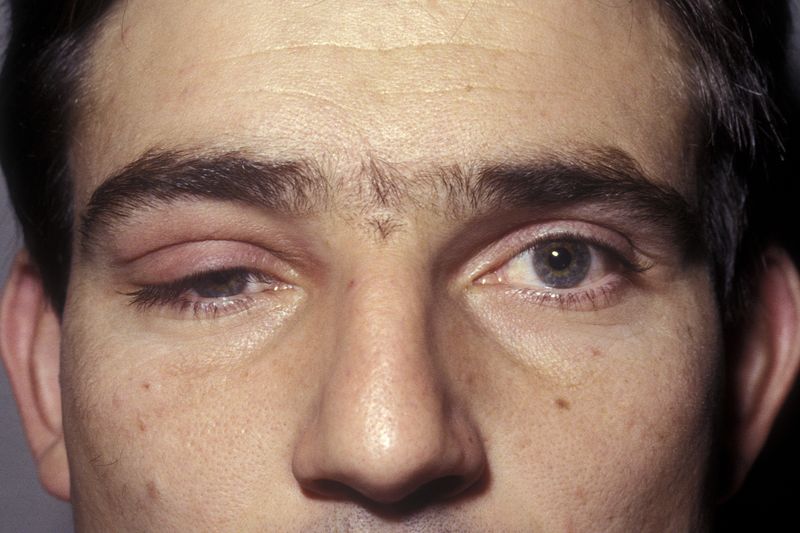
[Financial News] If one eyelid droops and you see double in the afternoon, you should suspect myasthenia gravis rather than simple fatigue.
Myasthenia gravis, whose name became known through a TV drama, often begins with symptoms such as drooping eyelids, double vision, or muscle weakness when speaking or chewing. In the early stages, symptoms are mild and improve with rest, so many people dismiss them as nothing serious.
Professor Seok Jin-myeong of the Department of Neurology at Ewha Womans University Seoul Hospital explained, “Myasthenia gravis is an autoimmune disease in which a problem develops at the neuromuscular junction, where nerves and muscles meet, preventing signals from being transmitted smoothly from nerves to muscles. Symptoms may recur or worsen at certain times of day, so awareness of the disease and early diagnosis are important.”
It starts with drooping eyelids and double vision... and worsens as the afternoon wears on
The most common early symptoms affect the eyes. The condition may begin with ptosis (drooping eyelids) and diplopia (seeing objects double), and can progress to generalized muscle weakness affecting the face, neck, arms, and legs. Difficulty chewing or swallowing food and unclear speech may also occur.
A characteristic feature is that symptom severity can vary over the course of a day. Professor Seok said, “Symptoms often worsen in the afternoon or evening compared with the morning. The more a person repeats the same movement, the weaker their muscles become, but they improve again after a short rest, and this pattern recurs. However, symptoms and the course of the disease vary from patient to patient, so anyone experiencing recurring muscle weakness should get an accurate diagnosis.”
Difficulty breathing or swallowing is a warning sign of a ‘crisis’... seek medical care immediately
Diagnosis is made through blood tests and tests such as repetitive nerve stimulation. Blood tests check for autoantibodies against acetylcholine receptors. Repetitive nerve stimulation, a type of neurophysiological test, involves repeatedly applying electrical stimulation to a nerve and examining the responses of muscles in the face, shoulders, hands, and other areas. Because thymic abnormalities such as thymoma may also be present, imaging tests such as a chest CT may also be performed.
Treatment is determined by considering symptoms, severity, and the type of autoantibodies, among other factors. Medication to improve neurotransmission at the neuromuscular junction and immunosuppressive therapy are commonly used. If symptoms are severe or worsen rapidly, intravenous immunoglobulin therapy or plasmapheresis may be performed.
Professor Seok urged, “Although myasthenia gravis symptoms may remain stable, they can suddenly worsen due to infections, excessive stress, certain medications, and other factors. If you experience a marked drop in muscle strength compared with usual, or sudden changes such as difficulty breathing or swallowing, these may be signs of a ‘myasthenic crisis,’ so do not delay—seek medical care immediately.”
[email protected] Jeong Myeong-jin, Medical Correspondent Reporter