DRAM prices rise, but semiconductor stocks plunge as interest-rate and cost pressures fuel AI investment fears
- Input
- 2026-10-19 07:20:24
- Updated
- 2026-10-19 07:20:24
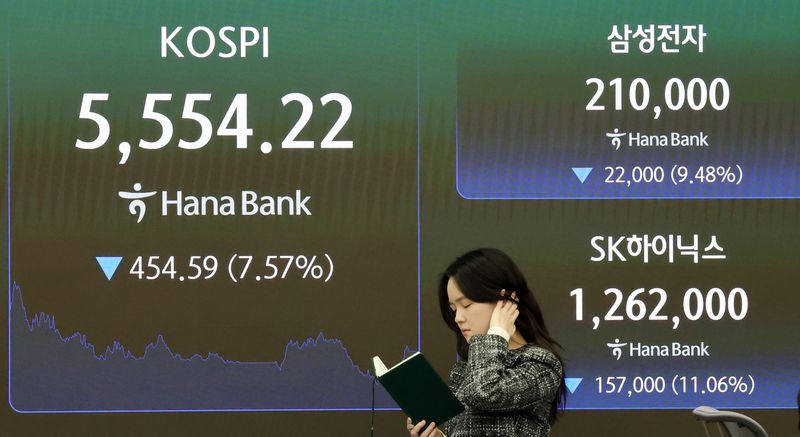
[Financial News] Semiconductor stocks came under pressure from interest rates and costs. Although DRAM prices continue to rise, concerns that interest-rate pressures will dampen AI investment and a sharp rise in memory prices will increase customers’ purchasing costs have dragged share prices down. The market appears to be dominated by anxiety over future demand rather than improving industry conditions.
Kim Rok-ho, an analyst at Hana Securities, said on the 19th, “DRAM prices in the third quarter were stronger than expected, and the projected price increase for the fourth quarter is also expected to be revised upward from the previous forecast,” but assessed that “concerns about the sustainability of AI investment amid interest-rate pressures and about rising cost burdens for customers have reached extreme levels.”
Last week, Samsung Electronics fell 17.8% and SK hynix fell 24.3%. Their declines exceeded the KOSPI’s 14.5% drop over the same period. Domestic memory makers’ share prices fell to levels last seen at the end of June.
Rising memory prices also failed to support share prices. Price increases driven by supply shortages are positive for memory makers’ earnings, but they raise costs for the customers that buy memory. Meanwhile, higher interest rates have increased the funding burden of building AI data centers, fueling doubts about whether investment can continue.
Kim said, “There are signs that customers are finding rising memory prices burdensome, and I believe those increases are therefore not being viewed as a catalyst,” adding, “This is a period when a shift in the macro environment is urgently needed.”
He also noted that concerns about demand may have been overreflected in memory makers’ share prices. With supply shortages persisting and DRAM price forecasts moving higher, his view was that there was no clear reason for memory stocks to fall particularly sharply solely because of anxiety over AI investment.
“Supply constraints are clear, which is why concerns about demand have arisen, but this is not limited to memory,” he said. “Although memory makers’ share prices have risen substantially this year, it is also unclear why AI-related concerns would have made their declines especially steep.”
He pointed to long-term supply agreements as a way to ease customers’ cost burdens. Kim said, “Long-term supply agreements have partly eased the burden on customers and secured visibility into medium- and long-term demand. However, some customers that have been unable to enter into such agreements must continue to withstand pressure from rising prices, and it will also take time to see stable earnings under the agreements.”
[email protected] Choi Doo-sun Reporter