One day to go before Alberta secession vote as controversy over ‘U.S. interference’ grows
- Input
- 2026-10-19 05:53:47
- Updated
- 2026-10-19 05:53:47
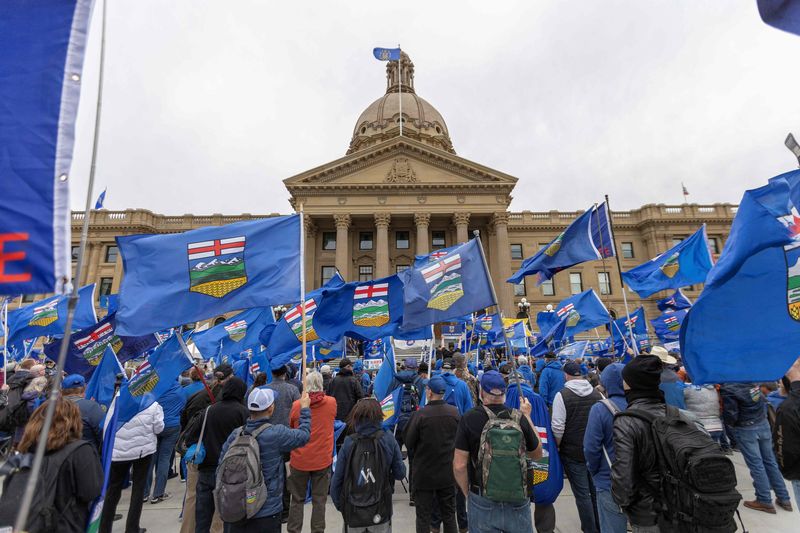
[Financial News] Alberta, a major oil-producing province in Canada, will hold a referendum on the 19th (local time) to decide whether to pursue separation.
As tensions between the United States and Canada escalate and a separatist movement advances, controversy has also emerged over the possibility of U.S. involvement.
According to the Associated Press, Agence France-Presse and other outlets on the 18th, Alberta will hold a referendum on the 19th asking residents whether they want to remain in Canada or begin the next steps toward separation.
Residents will choose ‘whether Alberta should remain a province of Canada, or whether the provincial government should begin the legal process to hold a binding referendum on separation from Canada.’
The vote itself is not legally binding, however, and even if the result favors pursuing separation, Alberta will not immediately become independent from Canada.
Alberta is Canada’s largest crude oil-producing province and plays an important role in the Canadian economy, thanks to its abundant oil and gas resources.
For years, Alberta residents have complained that the federal carbon tax, environmental regulations and energy-transition policies are weakening the region’s key industries.
A major grievance cited as a key driver of separatist sentiment is that tax revenue generated by the oil industry is used to support other provinces, while federal regulations stand in the way of resource development and exports in Alberta itself.
Separatists argue that an independent Alberta could pursue its own economic policies based on its abundant energy resources.
Opponents of independence, meanwhile, fear that severing economic ties with Canada could create serious uncertainty for trade, investment and jobs.
The vote is drawing attention because it is taking place amid deteriorating relations between the Trump administration in the United States and the Canadian government.
Since taking office, President Donald Trump has repeatedly said he would make Canada the 51st state of the United States, and the two countries have clashed over tariffs and other issues.
Controversy over possible U.S. involvement has also intensified following reports that Alberta separatist movement representatives met three times last year with U.S. State Department officials to discuss support for the independence movement.
At a rally in Calgary, Alberta, on the 15th, Canadian Prime Minister Mark Carney called for national unity, saying, ‘Some forces outside our borders are trying to divide us and take us over.’
Asked about allegations of foreign interference in elections, he said, ‘Our expectations of foreign governments, including the United States, are clear,’ adding, ‘We do not interfere in their elections, and they do not interfere in ours.’
Polls indicate that those who want Alberta to remain in Canada are in the majority.
According to a poll by the Angus Reid Institute cited that day by the Financial Times (FT), 66% of respondents favored remaining in Canada, while 34% supported moving ahead with a future binding referendum on independence.
[email protected] Lee Seok-woo, International Affairs Correspondent Reporter