'Half-price refunds' end for Everyone’s Card; 35,245 sign up in Jeju
- Input
- 2026-10-18 15:10:52
- Updated
- 2026-10-18 15:10:52
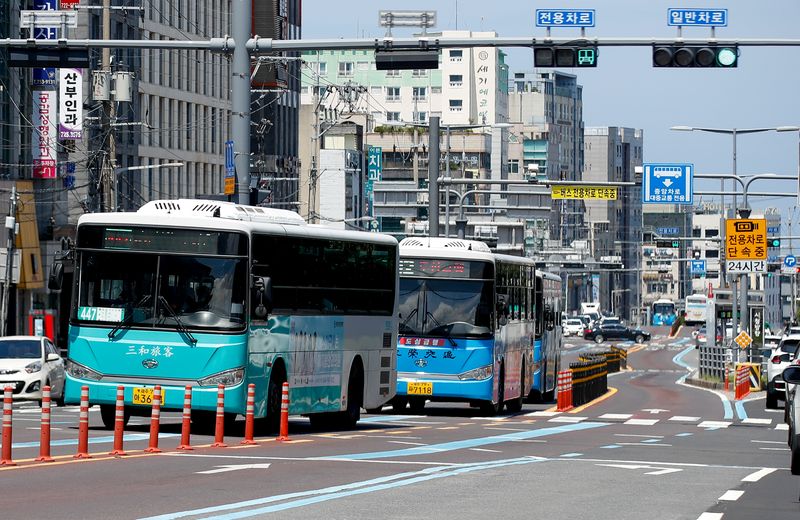
【Financial News Jeju = Reporter Jeong Yong-bok】 The temporary fixed-amount benefit under Everyone’s Card (K-Pass), which provided additional public transit reimbursements for six months to help address high oil prices, ended last month, and the reimbursement threshold returned to its previous level in Jeju starting in October.
According to Jeju Special Self-Governing Province on the 18th, the cumulative number of Everyone’s Card subscribers in the province stood at 35,245 as of the end of September this year. Average monthly new sign-ups rose from 784 last year to 1,800 this year.
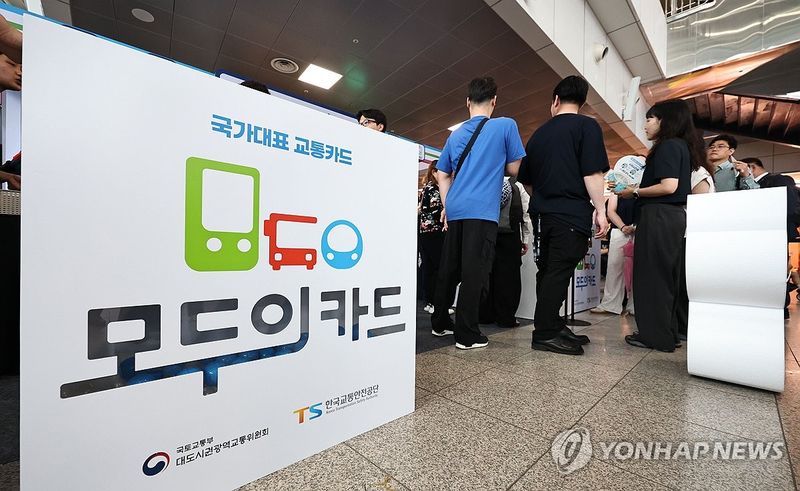
Everyone’s Card is a nationwide public transit reimbursement program run by the government. A threshold-based reimbursement option was added in January this year to the existing percentage-based K-Pass reimbursement system. The option more favorable to each user is applied automatically: either the percentage-based system, which refunds a set proportion of public transit spending, or the threshold-based system, which refunds in full the amount spent above a monthly threshold.
The increase in sign-ups appears to have been influenced by the government’s temporary transit-cost support. To ease the burden on households caused by high oil prices, the government lowered the reimbursement threshold for the threshold-based system by roughly half from April through September.
For general users in Jeju, the monthly reimbursement threshold for city buses fell from KRW 55,000 to KRW 27,000. For express and limousine buses and other services with a one-way fare of KRW 3,000 or more, the threshold was KRW 47,000 instead of KRW 95,000 per month. During that period, the average monthly refund per user in Jeju was KRW 25,406.
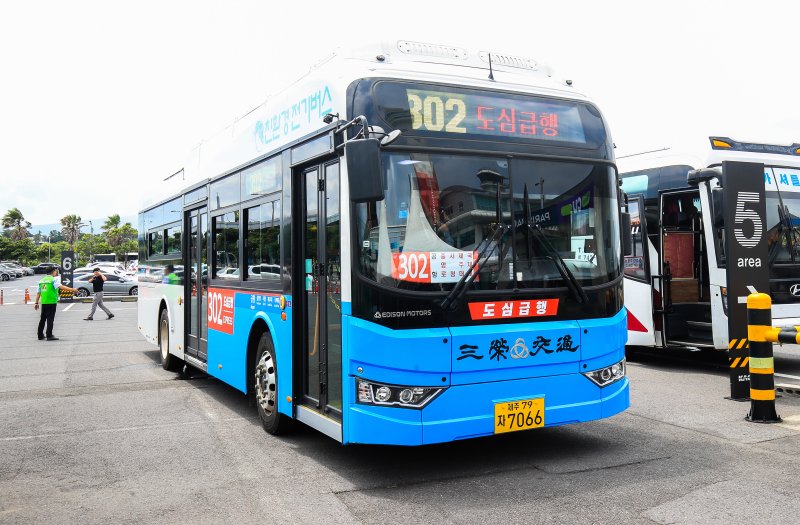
According to Jeju Province, one user commuting between Jeju City and Seogwipo City received a refund of KRW 275,450 out of monthly public transit spending of KRW 322,450. The user’s actual out-of-pocket cost was KRW 47,000. This was a case in which the temporarily lowered threshold-based rate applied because the user mainly rode buses with one-way fares of KRW 3,000 or more.
However, the temporary support that lowered the threshold for the threshold-based system ended at the end of September. For trips taken from October onward, general users will be reimbursed for spending above a monthly threshold of KRW 55,000 for city buses and KRW 95,000 for express and limousine buses and other services. This means the amount refunded under the threshold-based system may decrease even when users take the same type of transit and spend the same amount.
A monthly threshold of KRW 50,000 for standard city buses applies to young people, seniors aged 65 or older, and households with two children. Households with three or more children and low-income users are reimbursed for spending above KRW 40,000 per month. The threshold varies by user category and type of transit.
Reimbursements do not stop even if spending falls short of the threshold for the threshold-based system. Users who take public transit at least 15 times a month may qualify for percentage-based reimbursements: 20% for general users, 30% for young people, seniors and households with two children, 50% for households with three or more children, and 53.3% for low-income users.
Unlike the temporary threshold-based support, the additional reimbursement benefit for using public transit outside peak commuting hours will continue through December this year.
The Ministry of Land, Infrastructure and Transport announced on September 28 that it would extend Everyone’s Card’s “staggered commuting-time incentive” through the end of the year. Under the incentive, using public transit from 5:30 to 6:30 a.m., 9 to 10 a.m., 4 to 5 p.m. or 7 to 8 p.m. raises the percentage-based reimbursement rate on that spending by 30 percentage points.
The percentage-based reimbursement rate during the staggered time periods is 50% for general users and up to 83.3% for low-income users. However, whichever yields the greater reimbursement—the threshold-based or percentage-based system—is applied, so the final refund for travel during those time periods varies according to each individual’s usage.
Jeju Province plans to continue analyzing public transit use and reimbursement trends after the temporary support ends, with the aim of reducing residents’ transportation costs.
Kang Min-cheol, head of Jeju Province’s Transportation and Aviation Bureau, said, “The temporary expansion of reimbursements to address high oil prices has ended, but transportation-cost support through Everyone’s Card will continue. We will analyze usage and the effects of reimbursements and reflect the findings in policies to promote public transit.”
[email protected] Jeong Yong-bok Reporter