“Trump’s Alaska LNG announcement was premature” ... Former U.S. House members recognize Korea’s right to secure returns on its investment
- Input
- 2026-10-18 16:05:05
- Updated
- 2026-10-18 16:05:05
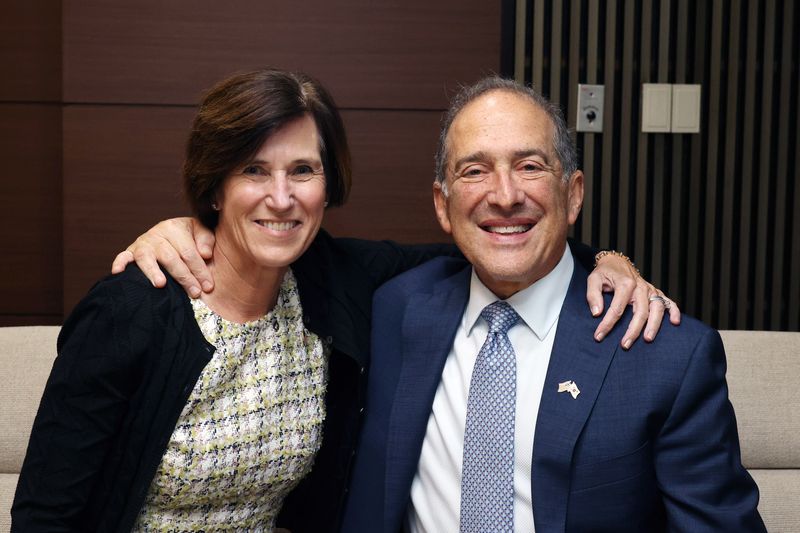
Ron Klein, a former Democratic member of the U.S. House of Representatives, made the comment about South Korea’s investment in the Alaska LNG project in the United States when he met with Financial News at the National Assembly on the 16th. Klein, who served on the House Financial Services and Foreign Affairs committees from 2007 to 2011 and now handles federal government relations at the major U.S. law firm Holland & Knight, said, “Even experts in the U.S. who are optimistic about the project think it will take at least five to 10 years for the Alaska LNG project to become a reality.” He added, “Wasn’t President Trump trying to score political points in Alaska ahead of the election?”
Former Republican Representative Mimi Walters also agreed that politics should not interfere in investment decisions. Walters, who served on the House Energy and Commerce Committee from 2015 to 2019 and now serves as chief commercial officer (CCO) at a U.S. power solutions company, said, “Korea has every right to secure returns on its investment,” and advised, “Use President Trump’s announcement as an opportunity for cooperation, while taking into account that it will take time for the project to become a reality.”
Their remarks about the Alaska LNG project are also connected to the political climate ahead of the U.S. midterm elections in November. While President Trump touts large-scale energy investment as an achievement, dissatisfaction with economic policy is growing in the United States.
The two former lawmakers said that President Trump’s economic policies, including high tariffs, were instead coming back as a political boomerang. Klein criticized the Trump administration’s imposition of across-the-board 50% tariffs on steel and other goods, citing POSCO and Korea Zinc as examples. He pointed to the policy contradiction of encouraging Korean companies such as these to invest in the United States by building factories or expanding local investment, while driving up their investment costs with high tariffs. Walters immediately agreed with Klein’s criticism of the tariffs, saying, “I oppose them too. I’m a Republican, but as a free-market advocate, I don’t support tariffs.”
Dissatisfaction with these economic policies is also linked to the cost of living, a key factor in the midterm elections. Citing the burden of gasoline, housing costs, interest rates and grocery prices, Klein said, “Voters want checks and balances.” He added, “The Republican-controlled House has done virtually nothing to stop the president from acting as he wishes.” The analysis is that the cost-of-living burden is fueling sentiment to check President Trump and the Republican Party.
Former Republican Representative Walters also said, “The Democrats are well-positioned to win a majority in the House,” adding, “Realistically, I expect a change in power at least in the House.” She said the Senate was expected to be closely contested, but noted that if Democrats retake the House, control of the committees would also shift to them, potentially strengthening congressional oversight of the Trump administration’s trade and investment policies.
The possibility of a shift in power in the U.S. Congress is also a new variable for South Korea’s diplomacy with the United States. As South Korean Ambassador to the U.S. Kang Kyung-wha recently voiced difficulty communicating with the White House, former Representative Klein advised Korea to make active use of personal networks in Congress and Washington political circles, rather than focusing solely on the White House.
Klein, a former Democratic House member who now handles federal government relations at a major Washington law firm, urged Korea to build relationships with members of Congress and make use of various diplomatic channels, including the embassy. The implication is that Korea should proactively cultivate not only ties with Democratic lawmakers, whose influence is likely to grow in the next Congress if Democrats retake the House and committee control changes hands, but also the Washington networks held by former lawmakers working as government relations professionals.
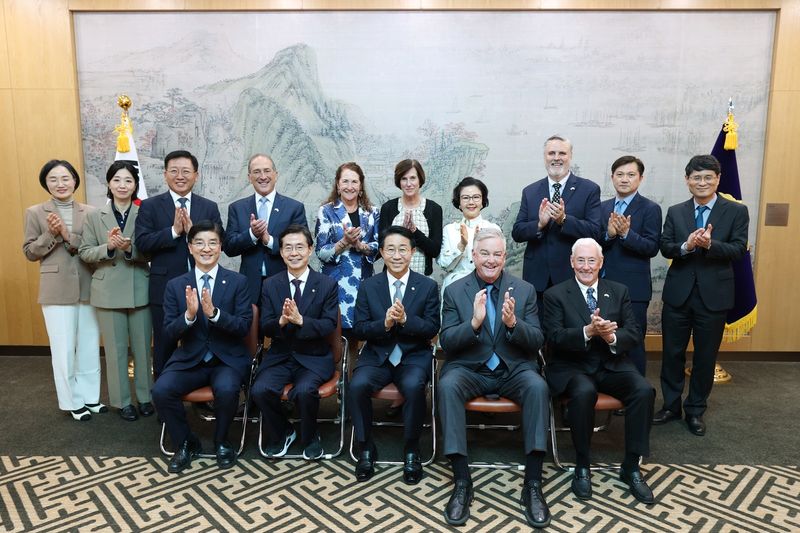
The former U.S. House members visited Korea for a 10-day program from the 8th to the 17th at the invitation of the incorporated Kim Chang-joon Korea-U.S. Research Institute. They toured the National Assembly and industrial sites.
Jiwon Song, Reporter | [email protected]
[email protected] Jiwon Song Reporter