APEC a month away... U.S.-China-Russia summit and U.S.-North Korea contact in focus
- Input
- 2026-10-18 15:32:55
- Updated
- 2026-10-18 15:32:55
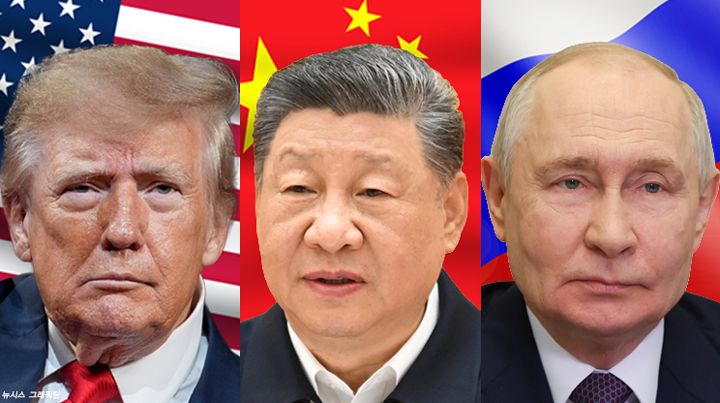
APEC summit week will begin with the final Senior Officials’ Meeting (CSOM), to be held in Shenzhen on November 14–15, followed by the APEC CEO Summit, bringing together business leaders from across the member economies, on November 17–18, and the leaders’ plenary session on November 18–19.
This year’s APEC summit in Shenzhen has adopted “Building an Asia-Pacific Community, Promoting Shared Prosperity” as its theme and “openness, innovation and cooperation” as its key words. With geopolitical differences among countries widening, attention is focused on whether a joint statement can be adopted on global issues such as AI cooperation and free trade, as well as on the “Shenzhen Declaration,” the summit’s final outcome.
The diplomatic maneuvering among leaders on the Shenzhen stage is also drawing attention. Observers expect the U.S. and Chinese leaders’ meeting in Shenzhen to reaffirm their commitment to managing tensions related to the trade war and maintaining communication, as a continuation of the agreement reached at their meetings in May and September this year to build a “constructive strategic stability relationship.”
Whether a U.S.-China-Russia leaders’ summit will be held on the sidelines of this summit is also drawing attention. If the trilateral meeting takes place, issues including the stalemated wars in Ukraine and Iran, as well as matters concerning the Korean Peninsula, could be discussed, according to some projections. The Russian Kremlin previously suggested that Chinese President Xi Jinping might seek to arrange a trilateral summit, while U.S. President Donald Trump, who has consistently expressed positive regard for the Chinese and Russian leaders, also recently said he was discussing nuclear arms reductions with China and Russia.
Whether Trump will meet North Korean leader Kim Jong Un during his visit to Asia is also a focus of attention. Trump, who has made conciliatory gestures toward North Korea, was asked by reporters on the 12th about the possibility of meeting Kim. He replied, “That could happen,” adding, “It would be exciting, wouldn’t it? I get along well with Chairman Kim.” This was interpreted as leaving open the possibility of a face-to-face meeting between the U.S. and North Korean leaders while once again urging Kim to agree to dialogue.
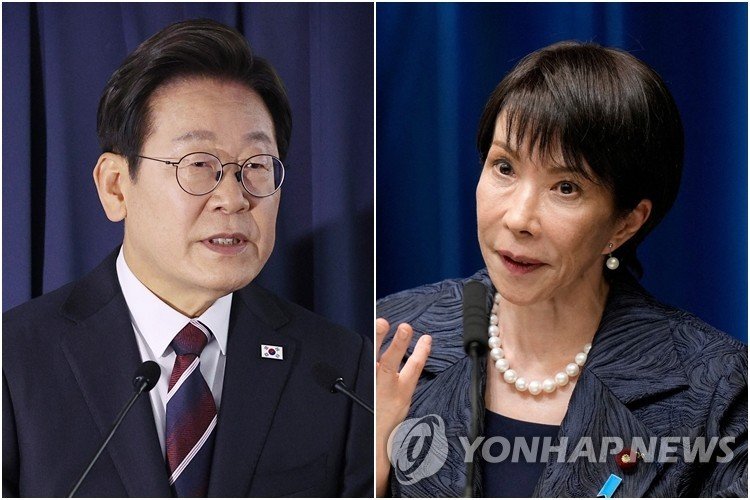
If a face-to-face meeting between the South Korean and U.S. leaders takes place, it could provide an opportunity for “top-down” discussions on issues including North Korea’s nuclear program and the transfer of wartime operational control (OPCON), which has emerged as an issue between Seoul and Washington. If a South Korea-China summit is held, the two sides are also expected to reaffirm their commitment to normalizing bilateral relations and expanding exchanges in areas such as the economy, industry and the humanities, following their meetings in Gyeongju last November and Beijing this January.
Attention is also focused on whether Prime Minister Takaichi, who has been at odds with China over remarks shortly after taking office late last year suggesting Japan would intervene in the event of a Taiwan contingency, will sit down with President Xi. Trump, who met Xi in September, also sought to mediate by calling for improved China-Japan relations. China, however, has not abandoned its hard-line stance toward Japan.
[email protected] Hong Chae-wan Reporter