Mayors and provincial governors: “The Local Allocation Tax must not be cut to create the Future Response Fund”
- Input
- 2026-10-18 14:24:15
- Updated
- 2026-10-18 14:24:15
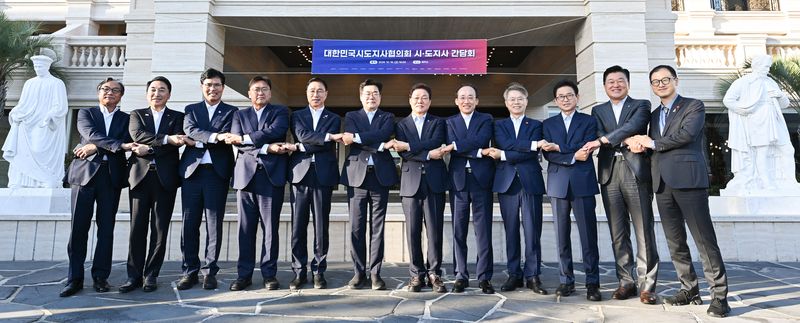
[The Financial News] City and provincial governors nationwide jointly called for maintaining the current method of calculating the Local Allocation Tax to prevent it from being reduced as a result of the government’s creation of the Future Response Fund. They support establishing a fund for future investment, but say it must not be financed by reducing the resources allocated to local governments.
The Governors Association of Korea announced on the 18th a “Joint Recommendation on Stabilizing Local Government Finances and Promoting Fiscal Decentralization Following the Introduction of the Future Response Fund.” The recommendation was agreed upon at a meeting of city and provincial governors held in Jeju on the 16th.
The issue raised by the city and provincial governors is how the fund will be financed. If the government first deducts the amount set aside for the Future Response Fund from domestic tax revenue, which funds the Local Allocation Tax, the amount actually reaching local governments could fall even if the statutory allocation rate for the tax remains unchanged. The governors support proactive national investment in young people, future industries, balanced regional development, and education and talent development. However, they stressed that establishing the fund must not undermine local governments’ fiscal autonomy.
They therefore called for maintaining the current method of calculating the allocation tax under the Local Allocation Tax Act and swiftly reactivating the “Pan-Government Fiscal Decentralization Task Force (TF).” They also called for raising the Local Allocation Tax rate and the share of local taxes, and increasing the central government’s share of funding for national projects.
According to the government’s 2027 budget proposal, the Future Response Fund will total 162.3 trillion won. Following the fund’s establishment, next year’s fixed-rate portion of the Local Allocation Tax was budgeted at 30.5 trillion won less than it would have been under the existing calculation method. Of this, the estimated reduction in the ordinary Local Allocation Tax is 29.6 trillion won. The government plans to establish a 15.3 trillion won local account within the fund and invest in creating regional growth hubs and improving living conditions, among other initiatives.
However, local governments can use the ordinary Local Allocation Tax at their discretion according to local conditions, whereas support through the fund may be restricted by project objectives and allocation criteria. That is why local governments are concerned not simply with the amount of support but with their autonomy in managing their finances.
Park Chan-dae, chair of the Governors Association of Korea, said, “The Future Response Fund should provide resources to support regional growth and residents’ lives.” He added, “We must carefully review the funding sources and allocation criteria to ensure local finances are not weakened during the fund’s introduction and operation, and put institutional safeguards in place so local governments can plan projects with confidence.”
The association plans to deliver the joint recommendation to the National Assembly and the government, and continue consultations to ensure local governments’ views are reflected in discussions on introducing the fund.
[email protected] Lee Bo-mi Reporter