‘Membership prices are soaring, but regional courses are in the red’: Japanese golf courses court visitors from South Korea and Taiwan
- Input
- 2026-10-18 14:13:40
- Updated
- 2026-10-18 14:13:40
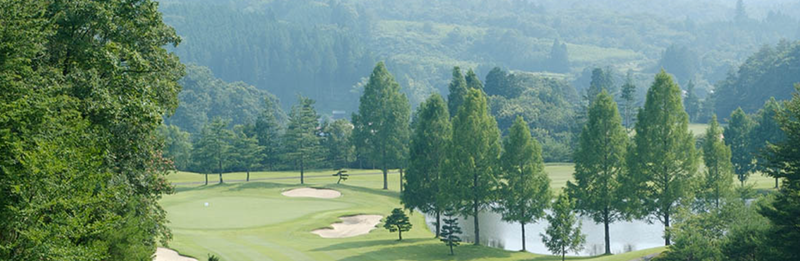
【Financial News, Tokyo = Correspondent Seo Hye-jin】 In Japan’s golf market, membership prices at popular, easily accessible courses are soaring, while some regional golf courses have decided to close amid financial difficulties, deepening the divide. As it becomes harder for regional courses to make a profit from domestic customers alone, they are turning to overseas golfers from South Korea, Taiwan and elsewhere. Some courses have increased their customer base with low-cost stay-and-play packages for South Koreans, while local governments are developing packages combining golf with hot springs and sightseeing to attract affluent Asians.
■ Regional golf courses struggle despite boom in membership prices
According to the Nihon Keizai Shimbun (Nikkei) on the 18th, the average membership price at 150 major courses, as tallied by the Kanto Golf Membership Trading Business Cooperative Association, stood at around ¥3.05 million (about 25.83 million won), its highest level since 2009. Although a change in how consumption tax is displayed makes a direct comparison difficult, prices were up about 80% from the end of 2019. Golf’s popularity has rebounded since the COVID-19 pandemic, and demand from individuals wanting to play themselves is driving prices higher.
Price increases varied considerably by region. The Nikkei reported that popularity is concentrated at some golf courses with easy access from city centers.
A comparison of median membership-price changes by region, based on data from Sakura Golf, shows prices in Tokyo rose to 2.7 times their level at the end of 2019, and those in Yamanashi to 2.3 times. By contrast, prices in Yamagata and Aomori, where heavy snowfall shortens the playing season, fell by about 40%.
Despite the recovery in popularity at some courses, the number of golfers has been declining over the long term. Japan’s golf population has fallen to about 5 million, roughly a third of its peak. The baby-boom generation, a core customer group, is also giving up golf as it ages. In regional areas, competition for a shrinking pool of customers makes it difficult to raise fees, while labor and facility-maintenance costs are becoming a greater burden.
It is also difficult to make up for this through rising membership prices. Proceeds from sales of existing memberships go to the sellers, while golf courses operate mainly on usage fees and annual membership fees. According to the Japan Golf Course Operators Association, about a quarter of all golf courses are reportedly in the red. Yaita Country Club in Tochigi Prefecture has also announced that it will close at the end of next year. A representative for the course explained, “Competition is fierce in regional areas, making it difficult to raise fees.”
■ Stay-and-play golf packages for South Koreans offer a way forward
Some golf courses that have struggled to attract domestic customers have drawn in overseas demand and invested in their facilities. One is Uguisu no Mori Golf Club & Hotel Bato in Nakagawa Town, also in Tochigi Prefecture. It has a hotel and bathing facilities, but is about a one-hour-and-20-minute drive from central Utsunomiya and has poor public-transport access, making business difficult until several years ago.
In 2023, the operator, Japan Green Development, joined forces with a South Korean-affiliated company that had a track record of partnering with other golf courses in Japan. In the early stages of attracting customers, it set the price for a package including golf, one night’s accommodation and three meals at about ¥10,000 (about 84,700 won). The partner company promoted the package through its South Korean subsidiary.
The course also eased the burden of getting around locally by offering fees lower than those in South Korea and adding a shuttle service to and from Narita and Ibaraki airports. The golf course’s sales manager explained, “We designed the package to offer a clear cost advantage for people using low-cost airfares.”
As a result, the share of all customers who were foreign visitors to Japan rose from about 30% in 2024 to 60% in 2025, while the total number of customers grew by about 30%. The golf course said it had recently gained room to invest and plans to build a new accommodation block with 10 rooms next year.
■ Low-cost packages for South Koreans, hot springs and sightseeing for Taiwanese
Some local governments are seeking to expand golf courses’ efforts to attract overseas customers into regional tourism businesses. In August, Nasushiobara City in Tochigi Prefecture announced plans for a three-night, four-day model tour combining visits to three golf courses in the city with hot-spring accommodation and sightseeing. The price was set at about ¥300,000 (about 2.541 million won) per person.
Unlike the low-cost stay-and-play packages, the main target is affluent Asians. The city said it would first target tourists from Taiwan, who account for the largest share of foreign visitors to Tochigi Prefecture, and aim to attract 20 people in the first year after sales begin in fiscal 2027. The city and local tourism and sports organizations are leading the planning, with the Nasushiobara City Tourism Bureau set to handle operations.
The city expects golf tourism to help secure demand for overnight stays on weekdays and during the off-season. While existing tourists tend to arrive during Golden Week, summer holidays and the autumn foliage season, the city believes overseas golfers can also be attracted between peak periods. It plans to include hot-spring accommodation and nearby sightseeing in the itinerary to increase spending beyond the golf courses.
However, transportation options will need to be in place to turn the rise in customers into sales for local businesses.
The number of foreign visitor-nights in Nakagawa Town, which has succeeded in attracting South Korean visitors, rose about 12-fold, from 1,451 in 2023 to 17,618 in 2025. South Koreans account for 98% of the total, but transportation between the golf course and the town center is limited. The drive takes 15 to 20 minutes, but there is no direct bus route and only one taxi company. The golf course provides its own shuttle service, but staffing constraints make it difficult to expand.
Director Endo of the Japan Golf Tourism Promotion Association said, “Even if an initiative starts under the leadership of local authorities, we need to create a structure that allows the private sector to take over operations and become self-sustaining,” adding, “Affluent visitors to Japan often travel extensively across multiple regions, so links with other areas are key.”
[email protected] Seo Hye-jin Reporter