“We won’t leave them to fight alone” ... Sergeant Chu Seok-yeong helps injured officers recover [Number 112]
- Input
- 2026-10-18 15:20:39
- Updated
- 2026-10-18 15:20:39
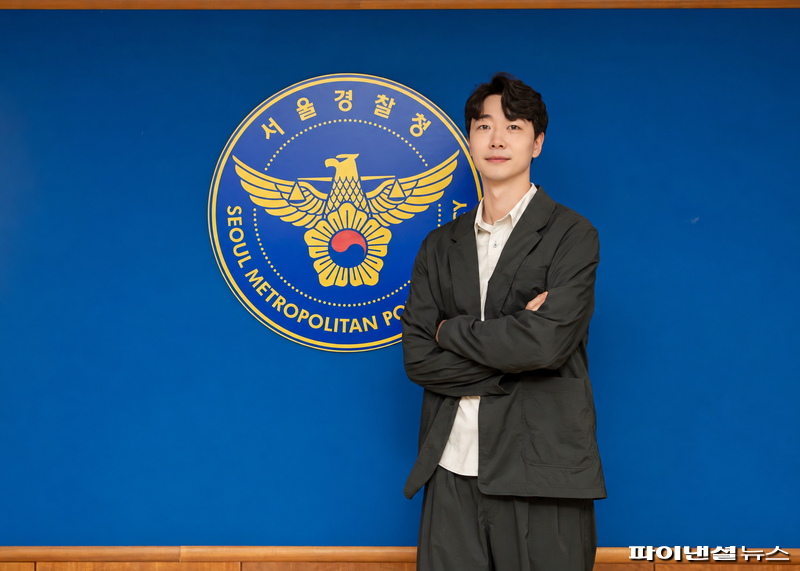
In his role supporting officers who have died or been injured in the line of duty, he helps police officers have their injuries or illnesses recognized as work-related and receive assistance with medical expenses. He explains the claim process and required documents to officers and police station staff, and, in cases of serious injury, visits the officer in person to provide tailored, one-on-one support.
Sergeant Chu joined the police in 2016 and worked in units including traffic investigations and crime prevention at Seoul Guro Police Station before transferring to the Seoul Metropolitan Police Agency in April last year. “I’ve seen countless colleagues injured in unexpected accidents on the roads or on the front lines of policing. It was especially upsetting to think that they were having to deal with complicated administrative procedures while fighting alone for a long time,” he said. “I volunteered for the line-of-duty death and injury support role at the Seoul Metropolitan Police Agency because I wanted to provide practical help to my colleagues in the field.”
A fall involving a member of the Seoul Metropolitan Police Agency’s Special Operations Unit early this year made Sergeant Chu acutely aware of gaps in the support system for line-of-duty injuries. “The officer was injured during rappelling training and, after being shuttled between four hospitals, reached a hospital able to treat them 76 minutes later,” he said. “Existing support for line-of-duty injuries had focused on administrative procedures after the fact. I believed an emergency system was needed to prepare for transport and treatment from the moment an accident occurs.”
Following the accident, Sergeant Chu actively worked to secure a memorandum of understanding (MOU) between the Seoul Metropolitan Police Agency, the Seoul Fire and Disaster Headquarters, and the National Medical Center, which was signed on the 7th. Under the system, once a hospital agrees via a hotline to admit an injured officer, a trauma specialist at the National Medical Center treats the patient as soon as they arrive.
The MOU also provides for deferring medical bill payments until an injury or illness is recognized as work-related. “It typically takes around five months after an application is filed to determine whether it will be approved,” Sergeant Chu explained. “This measure is intended to ease the burden of having to pay medical expenses upfront during that time.”
Sergeant Chu also revamped administrative procedures to reduce differences in the guidance provided by individual police stations and gaps in support caused by personnel transfers. “There were cases where lists of officers with line-of-duty injuries weren’t properly handed over when the person in charge changed,” he said. “We established the country’s first Integrated Management System for Line-of-Duty Deaths and Injuries so officers can receive the same level of support regardless of who is in charge.”
He added, “We manage the records and related documents in one place, from the occurrence of a line-of-duty injury through its processing and support, so the person in charge can access the materials they need right away. We also condensed guidebooks on line-of-duty injuries published by relevant agencies, some hundreds of pages long, into a five-page manual that officers in the field and staff can easily understand.”
Going forward, he plans to strengthen communication and cooperation with relevant agencies so that the demands of police work, including shift and night work and emergency dispatches, are fully taken into account when line-of-duty injury claims are reviewed. “I’ll do my best to ensure claims are handled more smoothly even in cases where it is difficult to prove a connection to the job, such as mental illnesses,” Sergeant Chu said.
“I feel the greatest sense of fulfillment when the family of an injured colleague tells me that our support gave them the strength to endure a long period of treatment, or when I see a colleague who has recovered safely return to the field,” Sergeant Chu said. “I want to be remembered as a warm-hearted police officer who looks after colleagues in the field. If you’re injured, don’t struggle with it alone—please reach out anytime.”
[email protected] Park Seong-hyeon Reporter