Kim Dae-ja Takes Office as New Chairman of Korea Industrial Complex Corporation, Pledging Support for Manufacturing AX and the Carbon-Neutral Transition
- Input
- 2026-10-18 12:51:54
- Updated
- 2026-10-18 12:51:54
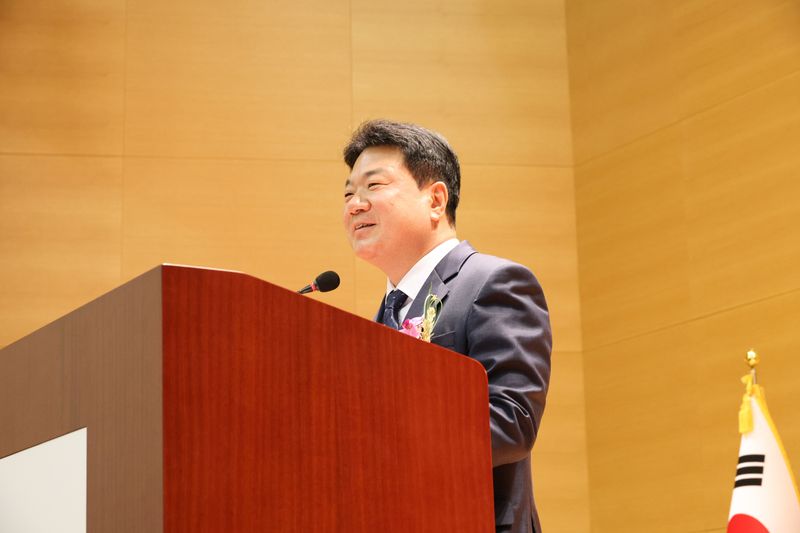
Kim Dae-ja, former head of the Korean Agency for Technology and Standards under the Ministry of Trade, Industry and Energy, has taken office as the 13th chairman of the Korea Industrial Complex Corporation. According to the corporation on the 18th, Kim held an inauguration ceremony at its headquarters in Daegu on the 16th and officially began his duties.
In his inaugural address, Kim emphasized, “The industrial landscape is changing rapidly, with artificial intelligence (AI) changing the rules of manufacturing and carbon footprints becoming a condition of trade. Industrial complexes must become key spaces that lead the transformation of industry.” Kim went on to say, “I will redefine the role of the Korea Industrial Complex Corporation—not just as an agency that manages industrial complexes, but as one that leads the transformation of industry.”
Kim set out key priorities including manufacturing artificial intelligence transformation (AX), support for carbon neutrality, development of regional industrial ecosystems, and strengthening a business-centered support system.
To this end, the corporation plans to expand data, communications and renewable energy infrastructure, as well as standards and certification systems, within industrial complexes, and strengthen cooperation among businesses, universities, research institutions and local governments. It will also promote regional industries in line with the government’s balanced-growth strategy linked to the Five Mega-Regions and Three Special Self-Governing Provinces Policy.
The corporation will also work to improve working conditions and strengthen safety management at aging industrial complexes. It plans to renovate aging factories and infrastructure and expand amenities such as housing, transportation and cultural facilities, while strengthening accident-prevention systems that take the characteristics of each industrial complex into account.
For organizational operations, Kim decided to expand collaboration among the headquarters, regional offices and departments, and to actively reflect businesses’ on-site needs in policies and programs.
Kim said, “What matters more than how much of the budget has been spent is what actual help it has provided to businesses,” adding, “We will become the first agency businesses turn to when they encounter difficulties.”
Kim graduated from Seoul National University’s Department of Architecture and earned a master’s degree in public administration from the Maxwell School at Syracuse University in the United States. After passing the 31st technical civil service examination in 1996, Kim served as director of the Industrial Technology Policy Division, director-general of the Nuclear Power Industry Policy Bureau, spokesperson, policy planning director and head of the Trade and Investment Office at the Ministry of Trade, Industry and Energy, before becoming head of the Korean Agency for Technology and Standards.
[email protected] Lee Ju-mi Reporter