520 Experienced Helicopter Pilots Leave, Representing 2.2 Trillion Won in Training Costs; Concerns Over Setbacks to Domestic Development
- Input
- 2026-10-18 12:12:38
- Updated
- 2026-10-18 12:12:38
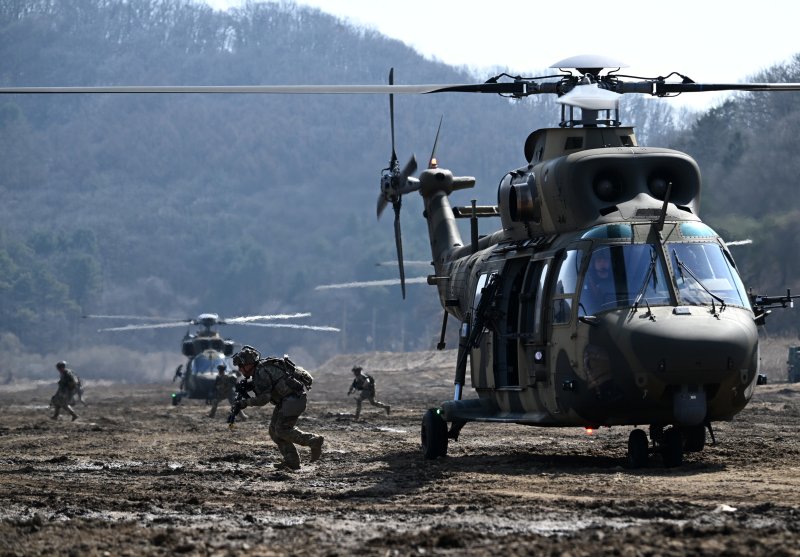
[Financial News] It emerged on the 18th that as many as 520 experienced helicopter pilots have left the South Korean military. Their training costs amount to more than 2 trillion won.
According to information submitted to Kim Byung-joo, a Democratic Party of Korea lawmaker on the National Assembly’s National Defense Committee, by Army Headquarters that day, a total of 520 experienced helicopter pilots with 16 to 25 years of service requested voluntary retirement between 2018 and 2025. The Army says the average cost of training one experienced helicopter pilot is 4.4 billion won over nine years. A simple calculation based on that figure suggests that experienced military capability worth approximately 2.288 trillion won left the armed forces over eight years.
Filling the gap would require not only an equivalent amount of funding but at least 10 years. That is because serving as a pilot in command requires at least 10 years of flying experience. In other words, the shortfall cannot be made up immediately just by allocating funds.
If the shortage of experienced pilots grows, development of domestically produced helicopters led by Korea Aerospace Industries (KAI) and the Agency for Defense Development (ADD) could also face setbacks. That is because experienced pilots’ judgment during test flights, a key stage of development, provides the most important basis for design improvements. The domestically produced KUH-1 Surion is also based on technology transferred from Airbus Helicopters. With many types of helicopters still needing development, including medium and heavy helicopters, numerous challenges remain in developing helicopters independently.
The number of departures is expected to grow. Half of experienced pilots will reach the mandatory retirement age within 10 years, while demand for pilots is increasing instead, as aviation groups are reorganized to support corps-level units and helicopters are brought into service.
Inadequate compensation is also contributing to the accelerating departures. One example is the extended-service incentive allowance paid to pilots who have completed their mandatory service. It is paid only to fixed-wing pilots; rotary-wing pilots, including helicopter pilots, are not eligible. The Army is therefore pursuing a plan to introduce a monthly extended-service incentive allowance of 700,000 won for rotary-wing pilots in their 16th to 21st years of service who have completed their mandatory service.
“Helicopters only become a military capability when there are pilots to fly them. One experienced pilot leaving is like one helicopter being grounded. Protecting talent trained at a cost of several billion won is the most cost-effective way to strengthen military capabilities,” Kim Byung-joo said. “I will actively support swift institutional reforms, including introducing an incentive allowance for rotary-wing pilots and adjusting the mandatory service period.”
[email protected] Kim Yun-ho Reporter