Oh Se-hoon: “Look first at people crushed by home prices”—a sharp rebuke to the Lee administration’s policies
- Input
- 2026-10-18 10:57:00
- Updated
- 2026-10-18 10:57:00
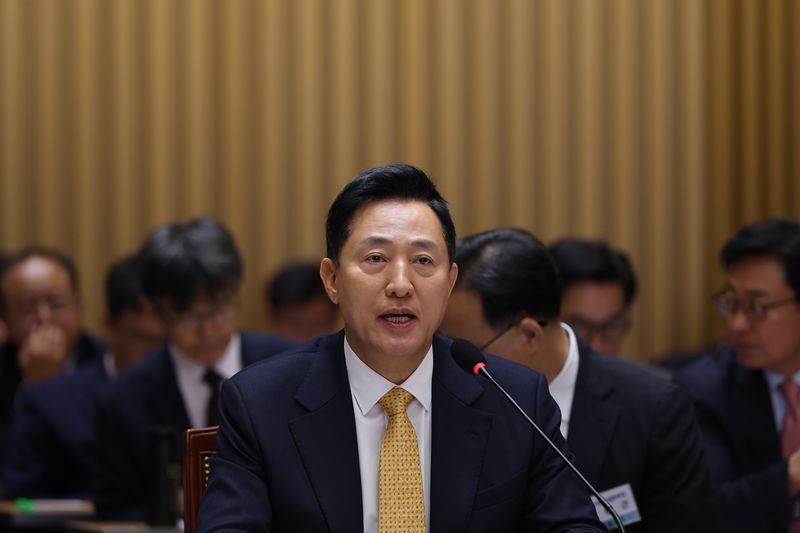
[Financial News] Seoul Mayor Oh Se-hoon sharply criticized the Lee Jae-myung government’s real estate policies, saying, “It must admit failure and correct the course of its policies.” In particular, he pointed out that the large-scale de-designation of redevelopment zones during former Seoul Mayor Park Won-soon’s tenure had led to the current shortage of housing supply, and urged the government and ruling party to make a responsible policy shift. On the 18th, Mayor Oh posted on Facebook under the title “Seoul City’s Letter of Apology: I Recommend Reading It,” saying, “It was exactly one year since the Lee Jae-myung government announced its Oct. 15 real estate measures. But the report card is so dismal that it is painful even to open it.”
He criticized the government, saying, “Even so, it seems to have neither the courage to reflect on the past nor the will to face reality,” and, “Instead, the president and the Democratic Party are busy evading responsibility by blaming the current housing supply cliff on the incumbent mayor.”
Citing a white paper recently published by the Seoul Metropolitan Government, titled “A 20-Year Review and Reflection on Seoul’s Housing Supply Policies,” Mayor Oh emphasized the impact that the reduction of redevelopment projects in the past had on today’s housing market. He said the city prepared the white paper to analyze the achievements and problems of its housing supply policies over the past 20 years and revisit responsibility for past policy decisions.
In particular, he highlighted that the de-designation of 389 redevelopment zones during former Mayor Park Won-soon’s tenure resulted in the loss of housing supply opportunities for approximately 430,000 homes. Mayor Oh said an opportunity to expand supply had been missed, given that this was a period when the construction industry was recovering from the impact of the global financial crisis.
He also took issue with the fact that areas where projects were already substantially underway were included in the de-designation process. According to Mayor Oh, 159 of all the zones whose designations were lifted (41%) had already reached stages in the redevelopment process, such as forming a project promotion committee, receiving approval to establish an association, or obtaining project implementation approval.
He also questioned whether the de-designation procedures had been proper. He claimed there were cases in which the names of deceased people were used when gathering residents’ opinions, or zones were de-designated by administrative order despite opposition from district governments and residents. Mayor Oh’s view is that these decisions later led to a decline in permits and construction starts, affecting housing supply over the long term.
Mayor Oh also said he believed responsibility lay with the elected mayors who determined policy direction, rather than the civil servants who implemented the policies at the time.
In particular, Mayor Oh again called for a change in the policy approach of the government and ruling party, urging Democratic Party of Korea lawmakers to read the white paper.
He stressed, “Just as the Seoul Metropolitan Government has admitted its past mistakes and reflected on them, the government and ruling party must now admit failure and correct the course of their policies.” He added, “Policies without reflection repeat failure, and the public always pays the price,” and, “Rather than spending your time focused on attacking me, I hope you will first look at the lives of people crushed by home prices.”
[email protected] Seong Cho-rong Reporter