Jeju Redeuhyang fruit cracking in the 30% range for second straight year... provisional rate around 20% in early October this year, too
- Input
- 2026-10-18 10:52:54
- Updated
- 2026-10-18 10:52:54
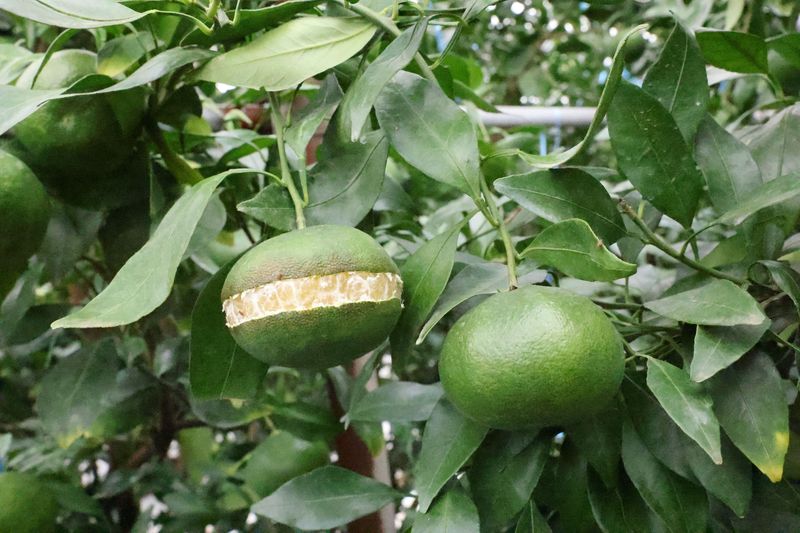
【Financial News, Jeju = Reporter Jeong Yong-bok】 Fruit-cracking damage to Jeju Redeuhyang, in which the fruit splits, has been in the 30% range for two consecutive years, and this year, too, the rate was tallied at around 20% as of early October.
According to the Rural Development Administration (RDA) on the 18th, the average fruit-cracking rate per Jeju Redeuhyang farm was 38.4% in 2024 and 30.6% in 2025. These figures are higher than the usual level of 15–20%. The rate recorded through early October this year was also around 20%.
This year’s figure is not the final damage rate. Fruit cracking is concentrated from August to October, as the fruit grows, and the extent of damage varies depending on the time of the survey and the growing conditions at each farm. The final cracking rate and the scale of the decline in yields can only be confirmed after further surveys.
Fruit cracking occurs when the skin cannot grow as quickly as the flesh expands, causing the fruit to split. Redeuhyang has thin skin, making it vulnerable to high temperatures and sudden changes in soil moisture. Multiple factors contribute, including heat waves and tropical nights, as well as nutrient imbalances, the tree’s growth condition and excessive fruiting.
As the damage recurs, the government is responding by improving growing conditions, including temperature and water management.
Kim Dae-hyeon, director of the National Institute of Horticultural and Herbal Science under the Rural Development Administration, visited a Redeuhyang farm in Topyeong-dong, Seogwipo City, on the 16th to inspect the extent of fruit cracking and the application of damage-reduction techniques. The farm grows Redeuhyang in a greenhouse covering about 2,650 square meters and has been surveying tree growth and fruit-cracking rates with the Citrus Research Center since last year.
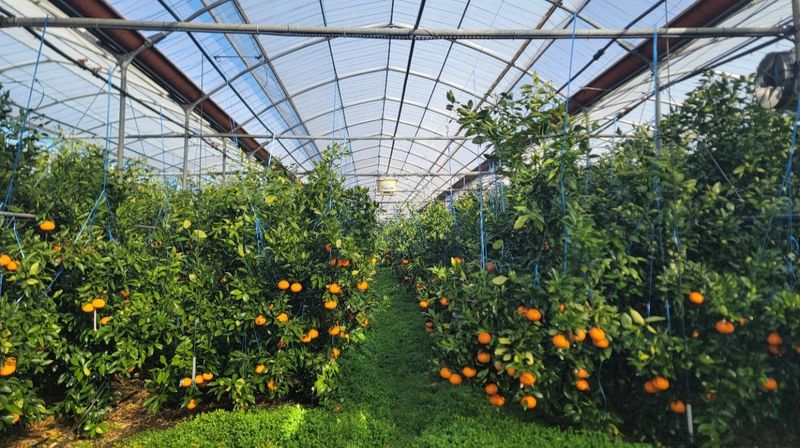
The farm’s final fruit-cracking rate last year was 43.2%. This year, it was recorded at 12.8% as of October 2. That is 22.4 percentage points lower than the 35.2% recorded on the same date last year.
To reduce fruit-cracking damage, the farm used soil-covering materials, opened the roof and side vents more widely, and improved its watering method. It focused in particular on lowering the temperature inside the greenhouse and in the soil during hot weather, and carefully managing growing conditions.
The Rural Development Administration previously drew up cultivation guidelines to reduce fruit-cracking damage with the Jeju Special Self-Governing Province Agricultural Research and Extension Services and the Redeuhyang Association. The guidelines cover key techniques that can be put into practice in five areas: temperature, water, soil, nutrients and tree management.
The most important factors to manage are greenhouse temperatures and soil moisture in summer. The Rural Development Administration recommended keeping greenhouse temperatures from July through October at no higher than 31°C during the day and 24°C at night. This can be done by opening roof and side vents wide enough to release heat and using shade nets and ventilation fans.
For water management, the recommendation is to maintain steady soil moisture by supplying an appropriate amount in small quantities every day, rather than providing a large amount all at once. This is because sudden changes in moisture can cause fruit to split.
The guidelines also recommend growing grass beneath trees (sod culture) and using perforated ground-cover material to lower soil temperatures. They also call for supplying appropriate amounts of nutrients needed for skin development, such as calcium and boron, and managing the number of fruits on each tree.
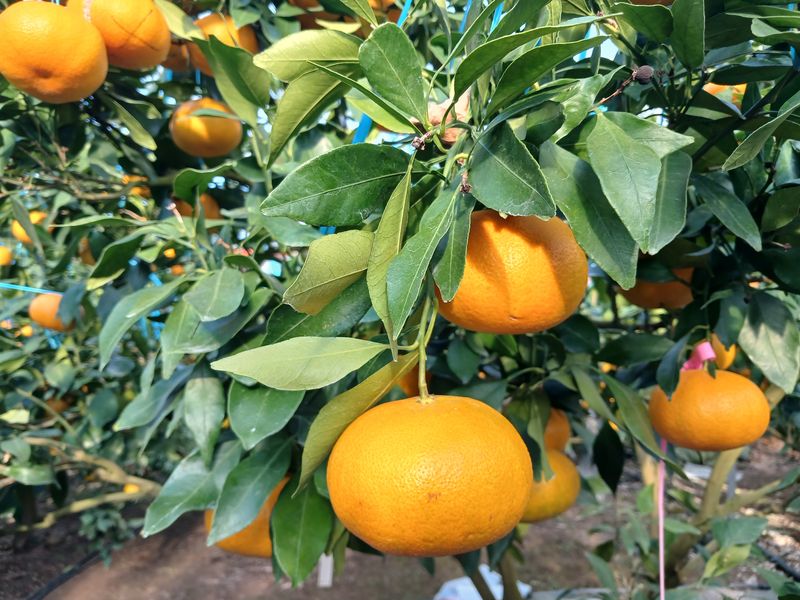
The Jeju Agricultural Research and Extension Services is also preparing a management system that uses growth data from individual farms. It analyzed greenhouse temperatures, soil moisture and fruit-growth data collected from 21 Redeuhyang farms across the province to establish management standards for each growth stage.
The Agricultural Research and Extension Services plans to begin applying these standards in late November to ‘Jebitna,’ a Jeju-style smart control and integrated data management system. The aim is to help farmers monitor growing conditions in real time and adjust temperatures and water supply.
The Rural Development Administration plans to distribute the new management guidelines to the Jeju Agricultural Research and Extension Services, agricultural technology centers and producer groups, among others, and provide on-site technical support to farms severely affected by fruit cracking.
Kim Dae-hyeon, director of the National Institute of Horticultural and Herbal Science, said, “We will assess the effectiveness of techniques to reduce fruit-cracking damage through on-site trials and work to disseminate effective cultivation techniques.”
[email protected] Jeong Yong-bok Reporter