Quality validation in virtual factories, AI support on the shop floor: Hyundai Motor and Kia accelerate manufacturing innovation
- Input
- 2026-10-18 09:11:17
- Updated
- 2026-10-18 09:11:17
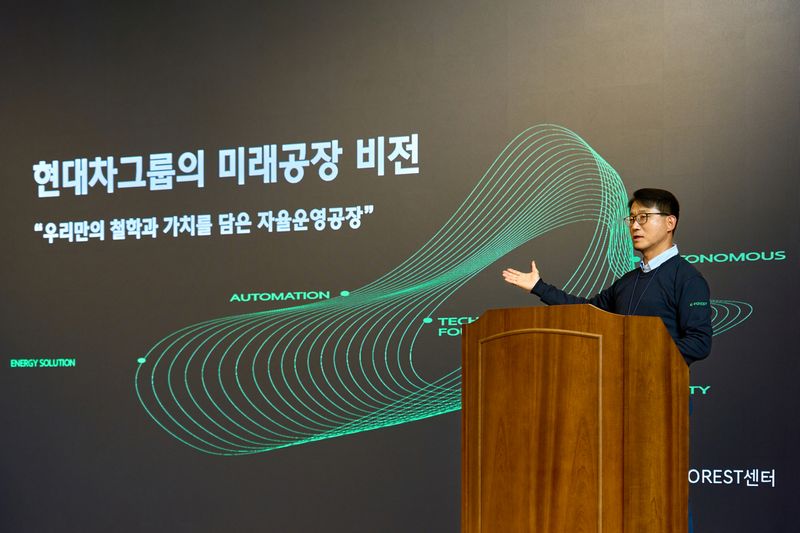
[Financial News] Hyundai Motor and Kia are accelerating the digital transformation of their automotive manufacturing plants, leveraging artificial intelligence (AI) and digital twins. Their strategy is to boost production efficiency and quality simultaneously by recreating actual factories in virtual spaces to check for equipment problems in advance and using AI to support work on the manufacturing floor. To this end, they will unveil around 200 new manufacturing technologies and expand their application to global production sites.
Hyundai Motor and Kia said on the 18th that they will hold E-FOREST TECH DAY 2026 from the 19th to the 21st at their Uiwang Research Institute in Gyeonggi Province. Now in its seventh edition, the event provides a venue to share smart factory technologies developed by Hyundai Motor and Kia's Manufacturing Solutions Division and their partner companies.
This year, around 200 new manufacturing technologies will be showcased across four areas: technologies underpinning the move toward a Software Defined Factory (SDF), autonomy and automation technologies, energy solutions, and future mobility.
At the core is SDF, which transitions factory operations to a software-centered model. The goal is to collect and manage production-floor data through a standardized system, establish a common development environment, and rapidly apply new manufacturing technologies at factories in Korea and abroad.
A key technology is the digital twin. It creates a virtual space identical to the actual factory and links it to on-site equipment to simulate production processes. This makes it possible to check in advance for problems that may arise as equipment is operated and to optimize production processes.
AI agents specialized for the manufacturing floor will also be unveiled. The technology can retrieve and analyze production data, search manufacturing know-how, and even assist in creating equipment manuals. It focuses on shifting tasks that have relied on experienced workers' expertise to a data- and AI-based approach.
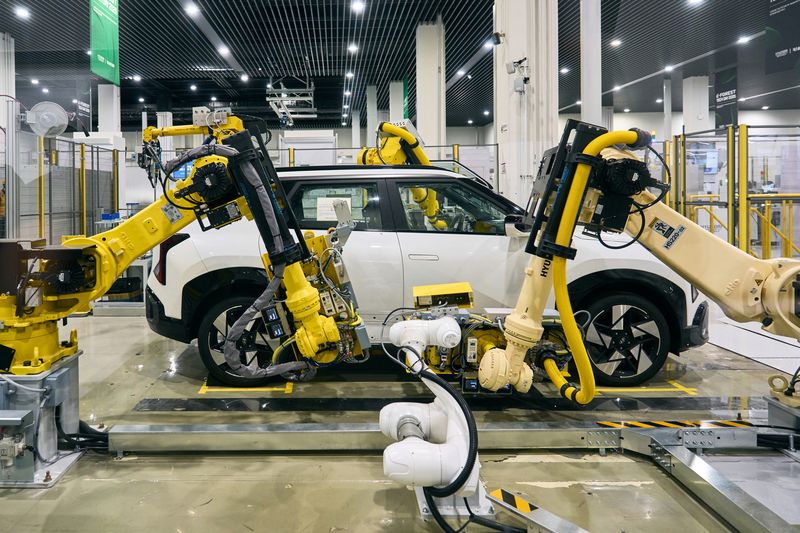
Automation technologies to improve finished-vehicle quality will also be showcased. One notable example is the 'Tunnel-Type Exterior Inspection Vision Technology' developed in-house by Hyundai Motor and Kia. Vehicles are fed into a tunnel-shaped inspection device, where their exteriors are inspected using three-dimensional (3D) simulation.
They previously used inspection systems from external specialist companies, but plan to strengthen their inspection capabilities by developing their own technology and apply it at production plants in Korea and abroad. Other exhibits will include additive manufacturing technology that creates part shapes using design data alone, without molds, as well as energy management technologies for environmentally friendly factory operations.
They will also expand manufacturing technology cooperation with partner companies. A new manufacturing technology presentation competition, held during the event, will share examples of technologies that have strengthened the competitiveness of global production plants. At a partner-company seminar, participants will discuss technology development priorities and ways to collaborate on topics including physical AI, data-driven manufacturing innovation, and manufacturing AI.
A Hyundai Motor and Kia representative said, "It is highly meaningful to be able to showcase to the industry and our partners the excellence and practicality of the innovative manufacturing technologies developed by Hyundai Motor Group through this event," adding, "We will continue working to expand the areas where new technologies are used in production plants and to apply them more widely."
[email protected] Kim Dong-ho Reporter