Semiconductor-led rebound in potential growth: set to rise for two straight years for the first time in 40 years
- Input
- 2026-10-18 08:51:32
- Updated
- 2026-10-18 08:51:32
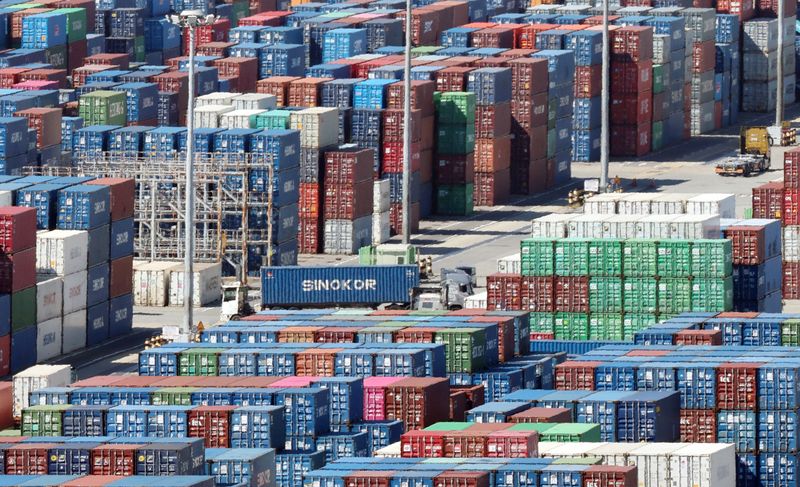
[Financial News] South Korea’s potential growth rate, which had fallen to 1.94% last year, is estimated to rise to 2.14% this year and 2.20% next year. This would mark the first two consecutive annual increases since 1986–87, during the “three-low boom.” The expansion of semiconductor investment and the spread of artificial intelligence (AI) are supporting the rebound, lifting South Korea to seventh place among 27 comparable countries both this year and next. However, many remain cautious, noting that the gains from the boom are concentrated among large semiconductor companies and that it is too early to interpret an improvement in the figures driven by economic conditions as a structural shift.
On the 18th, according to the International Monetary Fund’s (IMF) October World Economic Outlook (WEO), South Korea’s potential growth rate is on track to rise by 0.20 percentage points this year and a further 0.06 percentage points next year. After falling from 2.06% in 2023 to 1.96% in 2024, it will thus return above the 2% mark for the first time in two years. This year’s estimate is the highest in five years, since 2021 (2.23%).
The potential growth rate was calculated by working backward from the IMF’s forecasts for South Korea’s real gross domestic product (GDP) growth (3.33% this year and 2.83% next year) and GDP gap ratio (0.548% this year and 1.168% next year). The GDP gap ratio shows how far actual GDP is above or below potential GDP.
The long-term trend had been one of continued decline. The potential growth rate fell from 4.05% in 2010 to 3.67% just a year later, slipped into the 2% range in 2018 (2.97%), and sank into the 1% range in 2020 (1.28%).
Among the Group of Seven (G7), only the United States ranks ahead of South Korea. The United Kingdom (1.29% this year and 1.26% next year), France (0.85% and 0.85%), Japan (0.82% and 0.84%), and Germany (0.64% and 0.70%) are all well behind South Korea.
Income targets are also coming into sight. In its latest projections, the IMF expects South Korea’s per capita GDP to exceed $40,000 this year, reaching $43,512, rise to $49,277 next year, and reach $52,100 in 2028. In other words, it is expected to pass the $50,000 mark in two years. The 2031 estimate is $59,919, bringing it close to $60,000. Domestic and international institutions are also successively raising their forecasts: on the 23rd of last month, the Asian Development Bank (ADB) raised its forecast for South Korea’s growth this year to 3.2%, 0.6 percentage points above its July projection of 2.6%.
At the Council of Economic Ministers on the 1st, Lee Hyeong-il, Deputy Prime Minister and Minister of Economy and Finance, forecast that exports would exceed $1 trillion for the first time this year and per capita national income would reach $40,000. He said that investment in three mega-projects would lay the groundwork for a rebound in potential growth.
The Bank of Korea (BOK) has also hinted several times at the possibility of a rebound in potential growth through coordination of fiscal and monetary policy. The BOK raised its base rate twice in a row, in July and August. At a parliamentary audit on the 12th, BOK Governor Shin Hyun-song was asked about criticism that the government was loosening fiscal policy while the BOK was raising interest rates, creating a “policy mismatch.” He replied, “In the medium to long term, if potential growth rises, it may not be a mismatch.”
Experts point to capital and productivity as the drivers of the rebound. Potential growth rests on three pillars—labor, capital, and total factor productivity (TFP). Given that an aging population makes it difficult to increase labor input in a short period, analysts say that capital investment centered on semiconductors and the adoption of AI have expanded the economy’s growth potential.
Warnings continued that even if macroeconomic indicators improve, people’s experience of the economy may not follow suit. The benefits of the boom are concentrated among a small number of companies, which could widen the gap between the indicators and reality.
[email protected] Jeong Gyeong-su Reporter