182 Trillion Won in National Retirement Assets Melt Away ... ‘Semiconductor Shock’ Rocks the National Pension Service
- Input
- 2026-10-18 08:32:20
- Updated
- 2026-10-18 08:32:20
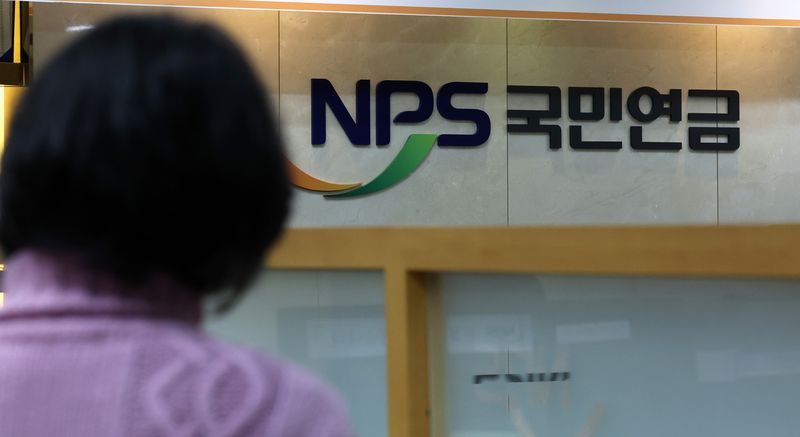
[Financial News] The National Pension Service’s valuation of its domestic stock holdings fell by more than 182 trillion won in just three and a half months as shares of the two semiconductor giants plunged. In effect, it gave back virtually all of the record 189 trillion won in valuation gains it had amassed in the second quarter in a single quarter.
According to financial data provider FnGuide on the 18th, the NPS’s holdings in 287 listed companies that had disclosed stakes of 5% or more (as of June 30 and October 15) were valued at 333.533 trillion won as of the 15th. Compared with 515.9293 trillion won at the end of June, that was a decline of 182.3963 trillion won, or 35.3%. This was the first quarterly drop in the valuation in seven quarters since Q4 2024, and the decline was the largest on record. The entire 189 trillion won in gains accumulated from April 1 to July 6 evaporated. Amid criticism that the NPS failed to act as a “safety net” because it did not absorb foreign investors’ sell-offs during the market plunge, the pension service itself was also unable to avoid losses.
The two stocks that had driven the rally became the main sources of losses this time. The valuation of the NPS’s SK hynix holdings fell by 74.2261 trillion won and its Samsung Electronics holdings by 56.871 trillion won, for a combined decline of 131.0971 trillion won. That accounted for 71.8% of the total decline. Over the same period, SK hynix shares fell from 2.65 million won to 1.262 million won, less than half their previous price, while Samsung Electronics shares dropped from 334,000 won to 210,000 won. On the 15th, the KOSPI fell 454.59 points, or 7.57%, in a single day, closing at 5,554.22. As of that day, the NPS held 7.84% of Samsung Electronics and 7.32% of SK hynix.
The losses were not confined to large-cap semiconductor stocks. The valuation of 176 of the 287 stocks fell, and SK Square and Samsung Electro-Mechanics also recorded losses of more than 10 trillion won and 7 trillion won, respectively (10.8698 trillion won and 7.5914 trillion won). By contrast, SK Innovation posted a valuation gain of 904.1 billion won as its share price rose from 94,900 won to 155,000 won and its stake increased from 6.03% to 7.14%. S-Oil followed with 710.7 billion won, then LG Energy Solution with 580.8 billion won and Hanwha Solutions with 434.7 billion won.
The decline was particularly painful because it came when the NPS’s concentration in domestic stocks had reached a peak. The National Pension Fund Management Committee raised the target allocation to domestic stocks for the first half of this year from 14.9% to 20.8%, but amid the KOSPI’s strength, the actual allocation soared to 29.1% by the end of June. Following the second-quarter rally, Samsung Electronics and SK hynix’s combined share of the NPS’s domestic stock holdings grew from 40.4% at the end of March to 55.7% on July 6. With its reliance on the two stocks increasing, the full impact of the share-price correction was felt. National Pension Fund disclosures show that domestic stock assets fell by 124.646 trillion won, or 22.9%, in July alone, from 543.204 trillion won to 418.558 trillion won. However, this was an accounting loss calculated without selling the shares held, and is distinct from a loss realized through an actual sale. The market is watching to see whether the Fund Management Committee will adjust the domestic stock allocation again this December.
The NPS’s third-quarter trading showed clear signs of a pullback from KOSDAQ stocks. Of the 84 stocks in which it increased its stake, just seven were KOSDAQ-listed companies, including PharmaResearch, RF Materials and Doosan Tesna. By contrast, 21 of the 82 stocks in which it reduced its stake were KOSDAQ companies. The NPS appears to have sold off many of the KOSDAQ stocks it bought in the first half of the year in line with the government’s KOSDAQ revitalization policies and other measures. It reduced its stakes in Daejoo Electronic Materials (from 7.67% to 6.27%), which had been touted as a SpaceX beneficiary, and cosmetics maker Cosmecca Korea (from 12.99% to 10.91%). Semiconductor materials maker Duksan Hi-Metal and biotech company OliX dropped off the list of companies in which the NPS held a 5% stake altogether.
There was also active adjustment of holdings among large-cap stocks on the Korea Exchange’s main board. The stocks with the biggest changes in stake were spread across construction, insurance and food, as well as biotech and leisure.
[email protected] Jeong Gyeong-su Reporter