Global airlines signal years of belt-tightening ahead... “Inflation is making everyone poorer”
- Input
- 2026-10-18 06:12:45
- Updated
- 2026-10-18 06:12:45
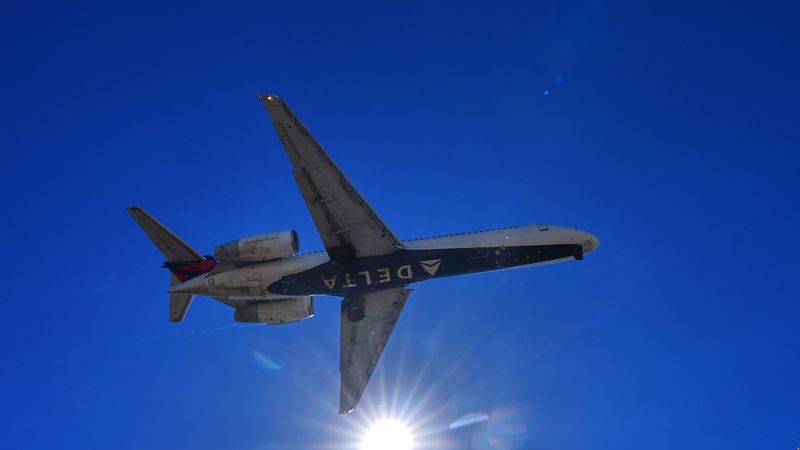
Airlines around the world have begun tightening their belts in preparation for severe business difficulties over the next several years.
Oil prices have surged amid the Iran war, launched by U.S. President Donald Trump on February 28 (local time), and inflation has spiraled out of control, leading to expectations of weaker consumer demand for air travel. Although no pronounced slowdown in demand has emerged yet, concern is growing that the global aviation market will face a downturn lasting several years if higher airfares due to fuel surcharges and consumers’ dwindling disposable income amid broad-based inflation begin to take hold in earnest.
A ‘new normal’ as the war drags on
The Financial Times (FT) reported on the 17th (local time) that airline executives around the world are on edge. They need to raise ticket prices further to keep pace with rising jet fuel costs, but cannot be sure consumers will be able to bear the increases.
They warned that soaring jet fuel prices since the outbreak of the Iran war are imposing a ‘new normal,’ leaving airlines with no choice but to raise ticket prices further, scale back long-term growth plans and resume reducing the number of aircraft in service.
That comes as early hopes that the Iran war would end quickly, the Strait of Hormuz would reopen and oil prices would start to fall have faded. The aviation industry is now bracing for the possibility that cost pressures will intensify as jet fuel prices remain high longer than expected, compounded by a decline in consumer demand for air travel.
Three to five years of austerity are inevitable
TAP Air Portugal CEO Luís Rodrigues said, “I think the next three to five years will be difficult,” adding, “Demand is still there, but... there is only so much we can do.”
Airline CEOs fear that rising inflation amid geopolitical uncertainty will force consumers to tighten their belts and cut back on air travel.
There are no major problems yet. Routes in the Gulf region have been disrupted for months, but passenger traffic volumes have changed little.
Data provider OAG estimates that airline seat bookings totaled 2.3 billion in the first half of this year, up 1% from a year earlier. Airfares have posted double-digit increases in almost every month so far this year, but demand still appears robust.
Delta Air Lines was also reassured by the fact that demand had not fallen, despite average ticket prices rising 20% this year, according to its quarterly earnings announcement on the 9th.
But fear that further price increases will inevitably bring a shock is gripping the aviation industry.
Italy’s ITA Airways had secured 80% of its fuel needs before the Iran crisis, but is deeply worried that it cannot prepare for next year’s shock. ITA CEO Jörg Eberhart said, “Like everyone else, we have no choice but to raise prices.”
LATAM Airlines CEO Roberto Alvo, whose Chilean airline is the largest in South America, also said the industry currently faces only cost pressures—which are easier to manage—and no demand problem, but warned that what lies ahead is the concern.
“Inflation is making everyone poorer”
The aviation industry is pessimistic that the current situation—in which air travel demand has yet to be hit despite rising prices—can continue.
The CEO of a major airline warned, “At some point, demand destruction will begin,” adding, “There will come a time when all this inflation makes people poorer.”
LATAM CEO Alvo also said, “The key question is whether higher energy prices will shock the economy as a whole,” adding, “If they do, we could face a slowdown in demand.” He went on to say that if fuel costs remain high, “everyone’s equation will inevitably change,” expressing pessimism that businesses and households would inevitably be hit by a decline in demand for air travel.
Airlines generally respond to weaker demand by cutting prices. But things are different amid cost inflation caused by a supply shock like the current one. As costs rise and profitability worsens, raising prices further would inevitably create a vicious cycle.
Abra Group CEO Adrian Neuhauser, whose company was formed through the merger of Brazilian low-cost carrier (LCC) GOL and Colombia’s flag carrier Avianca, said, “This affects growth plans,” adding that without this vicious cycle, “the industry will inevitably be smaller than it would otherwise have become.” He added, “Airlines go through difficult cycles. After a period of happy expansion, they go through a period of cost-cutting. This is that cost-cutting period.”
AI and cost-cutting
Airlines now face the challenge of cutting costs at a time when they also need to invest in artificial intelligence (AI), particularly to survive the competition.
SunExpress CEO Markus Schnabel, whose Turkish airline is a joint venture between Germany’s Lufthansa and Turkish Airlines, stressed, “We have to decide where to invest,” adding, “AI isn’t free.”
With cash dwindling amid falling demand and worsening profitability, airlines cannot neglect AI investment and are ultimately expected to reduce the number of aircraft they operate. They will retire older, less fuel-efficient planes and cut back on or postpone purchases of fuel-efficient new aircraft from Boeing and Airbus that they had originally planned to take delivery of.
LATAM Airlines, whose fleet is approaching 400 aircraft, has already put older planes on less busy routes to save on fuel costs. CEO Alvo said some would be formally retired.
Alvo also expressed hope, however. He expects that by shrinking and becoming leaner and nimbler through the difficult period, the airline will be able to rapidly scale up and expand its reach when the economy recovers.
[email protected] Song Gyeong-jae Reporter