1,700 Jeju residents take to the streets in parade as Tamna Cultural Festival opens alongside National Sports Festival
- Input
- 2026-10-17 20:15:21
- Updated
- 2026-10-17 20:15:21
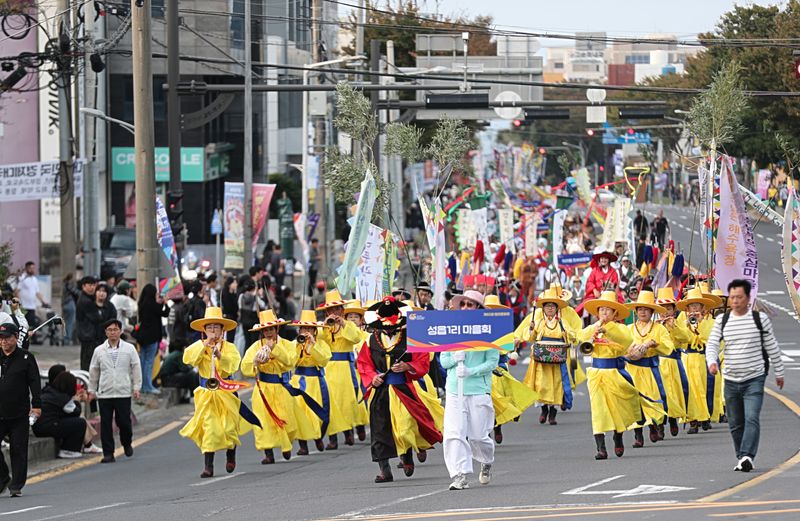
【Financial News, Jeju = Reporter Jeong Yong-bok】 More than 1,700 people from folk preservation groups in Jeju villages and performance troupes from Korea and abroad took part in a street parade to kick off the 65th Tamna Cultural Festival. Some 1,500 people gathered for the opening ceremony, launching a five-day festival showcasing Jeju’s traditional culture, timed to coincide with the National Sports Festival, which is being held in Jeju for the first time in 12 years.
According to Jeju Special Self-Governing Province, the opening ceremony of the 65th Tamna Cultural Festival was held at 7:30 p.m. on the 17th at Tamna Stage in Jeju Citizen Welfare Town Square. The festival, hosted by Jeju Province and organized by the Jeju Special Self-Governing Province Federation of the Federation of Artistic and Cultural Organizations of Korea, runs through the 21st.
This year’s theme is “The Breath of Tamna, the Passion of the Games, Jeju United.” Linked to the 107th National Sports Festival, which opened on the 16th, it features four sections and 16 programs encompassing Jeju’s history, myths, folk traditions and contemporary arts.
In particular, the main festival venue was set up at Citizen Welfare Town Square, near Jeju Sports Complex, so participants in the National Sports Festival could experience Jeju’s traditional culture. A total of 30,599 athletes from 17 cities and provinces and delegations from overseas Korean sports organizations are taking part in the National Sports Festival.
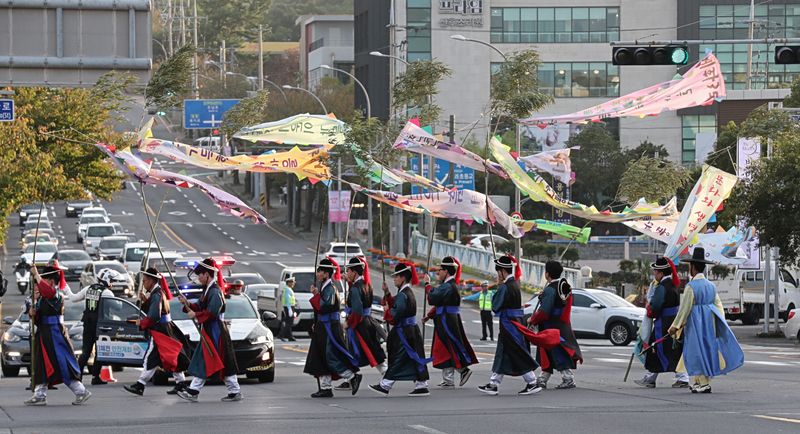
The Tamna Parade took place at 5 p.m., ahead of the opening ceremony. More than 1,700 people joined the procession, which covered about 750 meters from Jeju Complex Sports Center, via Health Center Intersection, to Citizen Welfare Town Square.
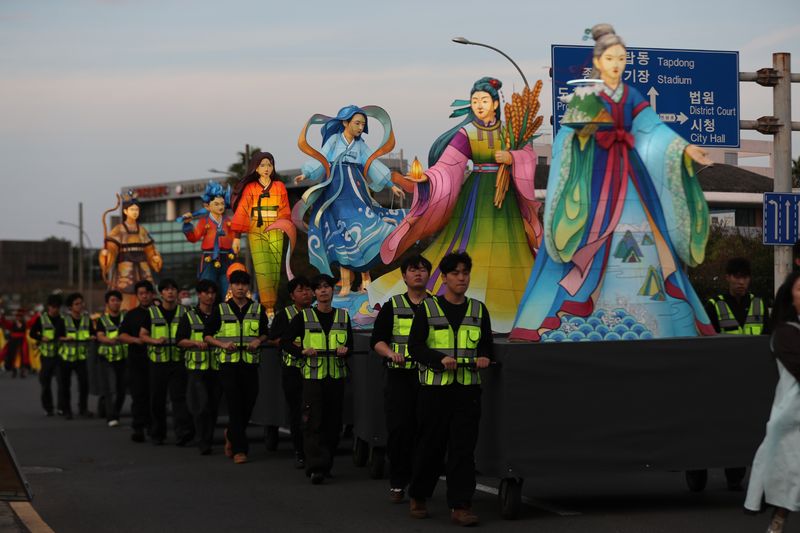
Tamna’s flag bearers, the Marine Corps band, the Sungkyunkwan Jeju Youth Confucian Scholars Association and sculptures of Jeju mythological characters led the procession. Thirty teams from folk preservation groups in towns and districts across the province, along with performance troupes from domestic and overseas partner regions—including Osaka, Japan; Ömnögovi Province, Mongolia; Naga City, the Philippines; and the Gangneung Danoje Festival in Gangwon Province—showcased their regions’ traditional cultures.
Those attending the opening ceremony included Jeju Governor Wi Seong-gon; Jeju Provincial Council Speaker Song Young-houn; Jeju Superintendent of Education Go Ui-suk; National Assembly member Kim Han-gyu; Jeju City Mayor Lee Sang-bong; Seogwipo Mayor Kim Hee-chan; Jeju Province Federation of the Korea Arts and Culture Federation Chair Kim Seon-young; and Federation of Artistic and Cultural Organizations of Korea Chair Jo Gang-hun.
Local and international figures from partner regions also joined the opening, including Chinese Consul General to Jeju Jin Geon-gun, Japanese Chief Consul to Jeju Miyata Kimihiro, a delegation from the Shanghai Municipal Committee of the Chinese People’s Political Consultative Conference, and the vice governor of Mongolia’s Ömnögovi Province.
At the opening, 40 models from Jeju presented the “K-Heritage Collection,” featuring royal court hanbok and garments dyed with Jeju persimmon dye. Sculptures of Jeju mythological characters were illuminated as Governor Wi and other dignitaries declared the festival open.
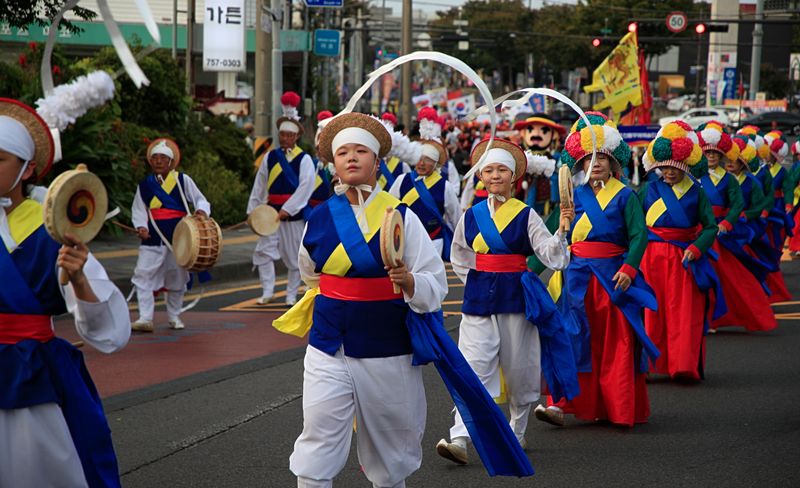
The opening program also featured performances combining traditional and contemporary arts, including electronic string music and operatic pop; the original dance drama “Daughter of the Wind Becomes an Island”; pansori by master singer Seo Myeong-hui; and a performance by the Good Voice Choir. A communal street procession featuring audiences and pungmul bands was also organized.
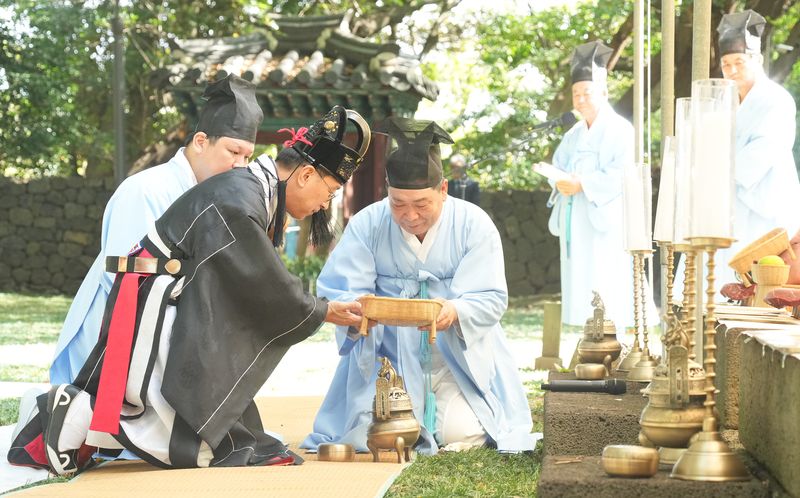
Earlier that day, at 11 a.m., the Tamna Founding Ancestors Rite was held at Samseonghyeol in Jeju City. Jeju Governor Wi Seong-gon served as chief officiant, Kim Seon-young, chair of the Jeju Province Federation of the Korea Arts and Culture Federation, as second officiant, and Han Dong-su, chair of the Jeju Provincial Council’s Culture, Tourism and Sports Committee, as final officiant. They prayed for the festival’s success and the well-being of Jeju residents.
The Tamna Founding Ancestors Rite is a traditional ceremony honoring the founding of the country by the three founders—Go Eul-na, Yang Eul-na and Bu Eul-na—who appear in Jeju’s founding myth. The Tamna Cultural Festival is a cultural event that carries forward Jeju’s distinctive history and community culture in a contemporary form. It began as the Jeju Arts Festival in 1962, was renamed the Halla Cultural Festival in 1965, and took its current name in 2002.
The festival grounds feature “Myth Road,” a nighttime walking trail inspired by Jeju myths; “Neon Tamnarok,” an interactive media art installation; “Tamna Sports Arena,” a traditional folk games experience zone; and “Tamna Mendolong Market,” offering food made with Jeju ingredients.
On the 18th, “Tamna Performance,” a competition among folk preservation groups from towns and districts, will be held. The domestic and international cultural exchange performances “Culture Connection Plaza” will run from the 18th to the 19th, while the “Wareung Wareung Festival” and “Tamna Night Theater” will run from the 18th to the 20th. The “Tamna Intangible Heritage Festival” will take place on the 20th, and the closing ceremony is scheduled for 4 p.m. on the 21st at Tamna Stage.
At the opening ceremony, Governor Wi said, “This year’s Tamna Cultural Festival is especially meaningful because it is being held alongside the National Sports Festival, which opened on the 16th.” He added, “I hope this festival will be an opportunity to show Tamna’s great history to Jeju residents and tourists, as well as the many people visiting for the National Sports Festival.”
[email protected] Jeong Yong-bok Reporter