Jeju April 3 victims’ spirits consoled at Halla Mountain Yeongsanjae ... Governor Wi Seong-gon serves as chief officiant
- Input
- 2026-10-17 19:40:26
- Updated
- 2026-10-17 19:40:26
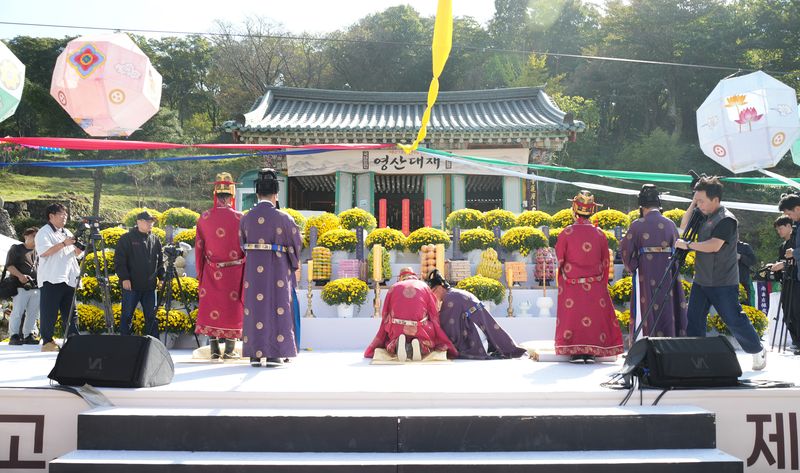
【Financial News Jeju = Reporter Jung Yong-bok】 The Halla Mountain Yeongsanjae, which combines the tradition of the Joseon-era Halla Mountain Spirit Rite with Buddhist rituals, was held as an occasion to console the spirits of the victims of the Jeju April 3 Incident. Jeju Special Self-Governing Province Governor Wi Seong-gon served as chief officiant and prayed for peace in Jeju and social harmony.
According to the Jeju Special Self-Governing Province on the 17th, Gwaneumsa, the head temple of the 23rd district of the Jogye Order of Korean Buddhism, held the 27th Halla Mountain Yeongsanjae that afternoon on a special stage in front of Samseonggak Pavilion at the temple in Jeju City. Around 800 people attended, including Gwaneumsa’s abbot, Venerable Muso Heo-un, Buddhist figures, heads of major institutions in the province, Buddhists and Jeju residents.
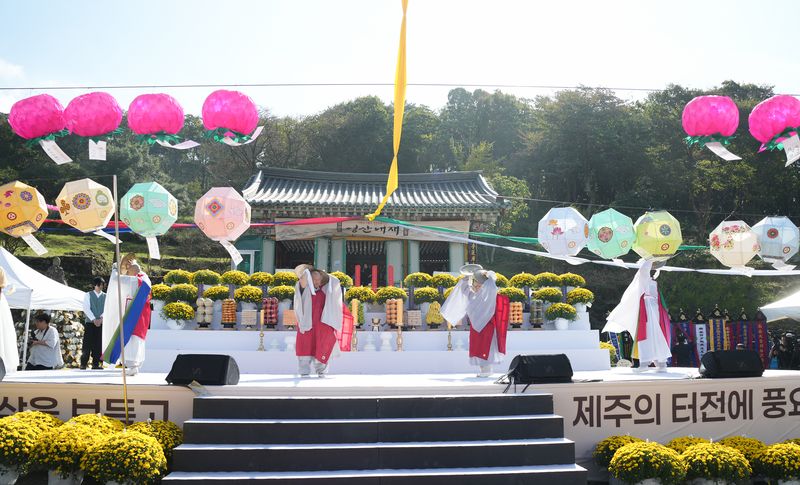
The Halla Mountain Yeongsanjae combines Yeongsanjae, a Buddhist ritual reenacting the Buddha preaching at Yeongchuksan, with the Halla Mountain Spirit Rite, Jeju’s traditional ancestral rite. It also carries the meaning of praying to Jeju’s nature deities—including the Halla Mountain deity, sea gods and heavenly deities—for the well-being of the region and consoling the spirits of the victims of the Jeju April 3 Incident.
The Halla Mountain Spirit Rite served as a state ritual during the Joseon era. It was originally held near the summit of Halla Mountain, but residents faced considerable hardship transporting the offerings. Jeju magistrate Yi Yak-dong established an altar in 1470 at Sancheondan in Ara-dong, present-day Jeju City, also to ease that burden on residents.
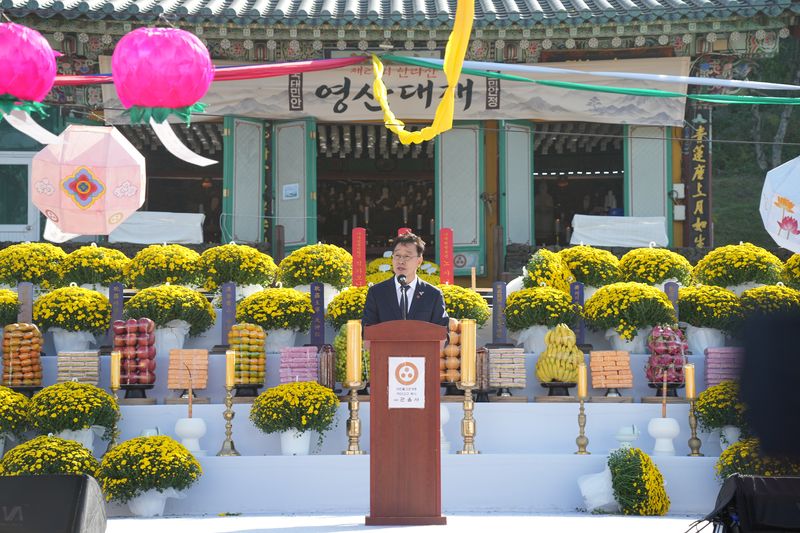
The Halla Mountain Spirit Rite, which continues at Sancheondan, and Yeongsanjae at Gwaneumsa are separate ceremonies. Gwaneumsa has incorporated the tradition of the Halla Mountain Spirit Rite into Buddhist rites, honoring both Jeju’s nature worship and its historical memory.
Gwaneumsa, the venue for the ceremony, is also a place marked by the scars of the Jeju April 3 Incident. Located on the northern slope of Halla Mountain, where armed groups and suppression forces faced off during the incident, Gwaneumsa saw seven buildings, including Daeungjeon Hall, burned down by suppression forces on February 12, 1949. The April 3 memorial rite held as part of the Yeongsanjae that day also reflects the site’s historical significance.
Governor Wi, who served as chief officiant, read the ritual prayer before the Dharma-protecting deities, heavenly deities, the Halla Mountain deity and the sea deity, praying for the well-being of Jeju residents.
In the ritual prayer, Governor Wi said, “We are living in an era of complex crises, with the climate crisis and economic crisis striking at the same time,” and prayed, “Grant us the strength and wisdom to help Jeju, the Island of World Peace, overcome the crisis and lead the future of the Republic of Korea.”
Governor Wi also prayed that the historical pain of the Jeju April 3 Incident would be healed through the spirit of compassion and reconciliation, and that the Yeongsanjae would become an occasion for resolving conflicts in Jeju society and fostering harmony.
Those attending that day reflected on Jeju’s traditional rites, rooted in a way of life sustained by Halla Mountain and the sea, paid tribute to the victims of the April 3 Incident, and prayed for the well-being and peace of Jeju residents.
[email protected] Jung Yong-bok Reporter