How Does Authority Become Capital? ... Anne Carson’s ‘Nobel Bump’ and the Paradox of Korea’s Reading Ecosystem [Park Ji-hyun’s Art World]
- Input
- 2026-10-17 12:31:36
- Updated
- 2026-10-17 12:31:36
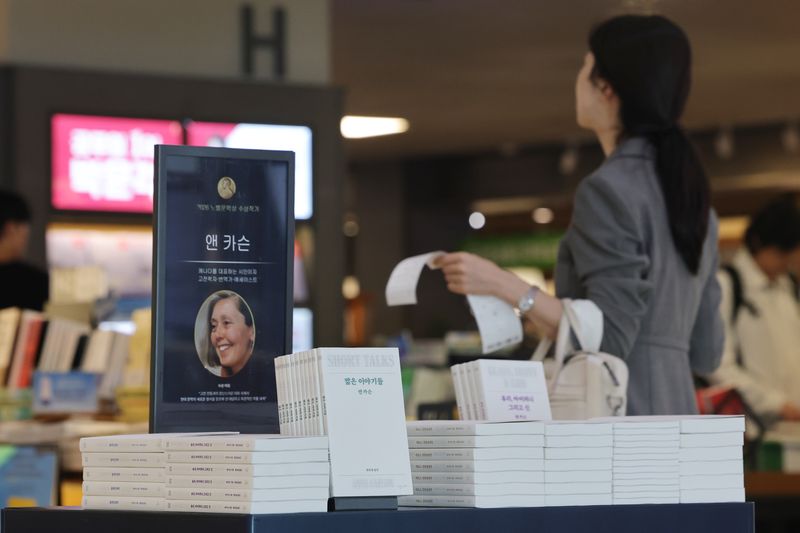
[Financial News] On the 8th, immediately after the Swedish Academy’s announcement, bookstores around the world were brought to a standstill. According to Kyobo Book Centre on the 12th, sales of books by Canadian poet Anne Carson, this year’s Nobel Prize in Literature laureate, rose to at least 230 times the previous week's level immediately after the announcement. Major translations, including Autobiography of Red and Nox, filled real-time bestseller charts and quickly became scarce. People in their 20s and 30s accounted for nearly half of the buyers, drawing an enthusiastic response from younger readers. According to local media outlets including CP24 on the 17th, sales in the author’s home country of Canada also soared by at least 10,000%.
This is the ‘Nobel Bump’—the phenomenon that sweeps through global publishing markets each October during Nobel Prize in Literature season. Even difficult verse or translations of classics, rather than popular fiction, can have an enormous impact in the face of the ‘authority’ of the Nobel Prize. The literary world’s attention is now turning beyond artistic acclaim to the movement of real capital generated by this major event.
■ “A book that sold 300 copies in three years sells 30,000 in three minutes” ... The Economy of Prestige
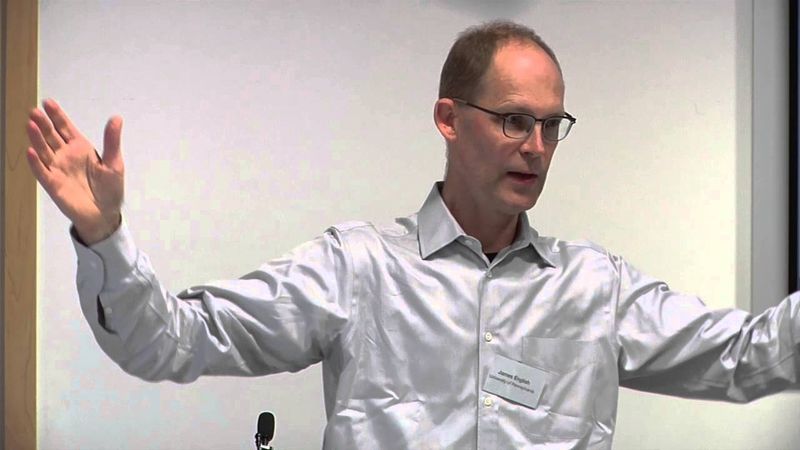
The ‘Economy of Prestige,’ proposed in 2005 by cultural sociologist James F. English, a professor at the University of Pennsylvania, has once again been perfectly demonstrated by Anne Carson’s win this year. How, specifically, does this vast conversion of prestige into capital work? In a past feature on the Nobel Prize in Literature, German media outlet Deutsche Welle (DW) highlighted the Nobel effect by quoting Lucien Leitess, head of the Swiss publisher Unionsverlag. “When Egyptian writer Naguib Mahfouz won the Nobel Prize in 1988, we sold 30,000 copies in just three minutes of a book we had sold 300 copies of over three years,” he said, asserting that nothing has a market impact as powerful as the Nobel Prize.
The key to this economic phenomenon is that an author’s entire ‘backlist’—the books they have written over decades—surges back up the charts all at once, rather than just a single new release. As the Anne Carson boom shows, publishers gain an ‘ultimate cash cow’ that generates enormous cash flow without additional marketing costs. This can propel books beyond print and into the core intellectual property (IP) industries of the 21st century, including screen adaptations. Even a genre’s popular appeal or barriers to entry become irrelevant in the face of the absolute authority of the ‘Nobel Prize.’
■ The Han Kang Effect Fades Within Six Months, and the Illusion of ‘Text Hip’

Amid the dynamic flow of global publishing capital, our attention naturally turns to the sobering reality of the Korean market. This year, Korean translations of Anne Carson’s books sold out almost instantly at major online bookstores following the award announcement, and publishers began emergency reprints. The unprecedented record set in 2024, when one million copies were sold in just six days after the announcement that Han Kang had won the Nobel Prize in Literature, follows the same pattern.
But beneath this explosive ‘open-run’ buying spree, which boils over like a pot only when news of an international literary prize breaks, lies a grim reality. According to the Ministry of Culture, Sports and Tourism’s 2025 National Reading Survey, the overall reading rate among adults fell to a record low of 38.5%. This means that six out of every 10 adults do not read a single book in a year. With the foundations so weakened and the soil so barren, even the rare boost from a literary prize often evaporates as a one-off event. Statistics Korea data show that output in the book publishing industry briefly rose by 2.8% in October 2024, immediately after Han Kang’s win, but plunged by 11.1% just a month later, in November, turning negative. The warmth of the ‘Nobel Bump’ failed to spread across the publishing ecosystem and quickly faded.
A ‘Text Hip’ trend, which sees reading as a cool form of self-expression, has recently taken hold, particularly among people in their 20s and 30s. But the grassroots ecosystem feels very different. One local independent bookstore owner lamented, “The phrase Text Hip feels like an illusion. There are plenty of days when we don’t sell even a single book all day.” This is because people tend to focus more on image-driven consumption, such as limited-edition merchandise and social media (SNS) posts, than on the books’ content. The number of new independent bookstores—which should introduce readers to a range of authors in their everyday lives—fell from 143 in 2018 to 36 in 2025, a drop to about a quarter. The grassroots ecosystem is withering under a winner-take-all structure in which capital and public attention concentrate on a tiny handful of talked-about books.
■ Can We Expect Original IP from a Tree Without Roots?
Over the past 20 years, the Nobel Prize in Literature has moved away from grand narratives and focused on restoring marginalized voices and individuals’ personal, micro-level traumas. The narratives of Han Kang and Anne Carson are part of this trend. The world is captivated by these profound, resilient narratives and is expanding them into a vast IP industry, yet we are losing the fertile ground needed to enjoy literature in everyday life.
Literature is the most important source of IP for K-content, spanning films, dramas and webtoons. If we bask only in the fleeting halo effect of awards and allow everyday reading infrastructure to collapse, the renaissance of Korea’s cultural industries will ultimately be built on sand. Behind the dazzling spotlight of the Nobel Prize boom lies the deepening shadow of ‘polarized literary consumption’ and ‘open-run reading.’ This is the most urgent economic challenge facing Korea’s publishing ecosystem today.
[email protected] Park Ji-hyun Reporter