Works by Han Kang and Hwang Sok-yong Used Without Authorization to Train 'Claude' ... Evidence Suggests Anthropic Used 21 Korean Books
- Input
- 2026-10-17 11:20:34
- Updated
- 2026-10-17 11:20:34
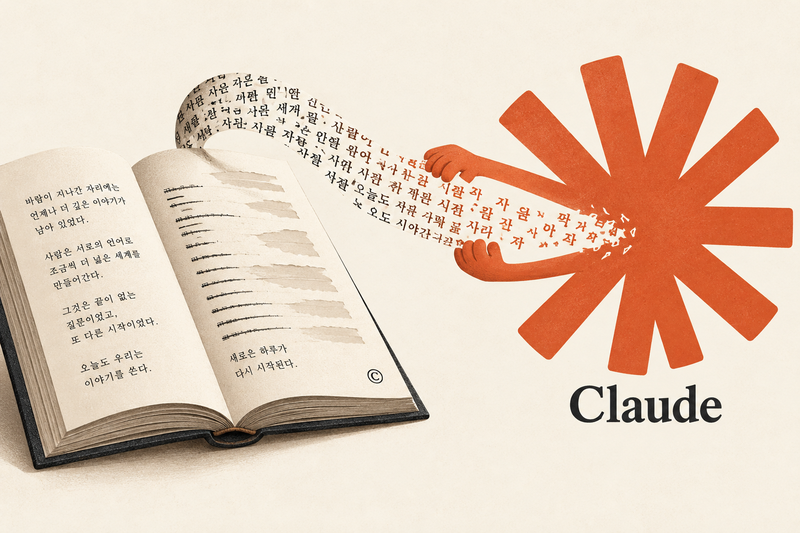
[Financial News] Twenty-one works by Korean authors, including Han Kang and Hwang Sok-yong, have been confirmed as eligible for compensation in connection with copyright infringement by U.S. artificial intelligence (AI) company Anthropic. Indications have emerged that Anthropic used English editions of Korean literary works, among other materials, without authorization to train its AI chatbot Claude.
According to the Literature Translation Institute of Korea on the 17th, 21 books by Korean authors were identified in the list of books eligible for compensation published on the settlement website for the copyright class action against Anthropic. The institute informed the authors concerned and advised them on procedures for seeking redress, including filing compensation claims.
The list included three works by Han Kang, including Human Acts, as well as Hwang Sok-yong’s The Guest, Kim Ae-ran’s My Brilliant Life, Kim Soom’s One Left, and Hwang Sun-mi’s The Hen Who Dreamed She Could Fly. Four works by Kim Young-ha, including The Empire of Light, and three by Shin Kyung-sook, including Please Look After Mom, were also listed.
Earlier, Anthropic faced a class-action lawsuit in the United States over allegations that it used books downloaded without copyright holders’ permission to train its AI models. A U.S. court found copyright infringement involving about 500,000 works, and the lawsuit was settled last July after Anthropic agreed to pay a total of $1.5 billion (about 2 trillion won).
The compensation amounts to about $3,000 (4.35 million won) per work. Korean authors can also receive compensation if they participate in the claims process. An official from the Literature Translation Institute of Korea said, “We will work with copyright-related organizations and others to actively support authors, including through legal action where necessary, so that they can receive fair compensation.”
[email protected] Kim Hyun-ji Reporter