Tools of Restraint and Apologies by the Powerful...Reading the Connections Between Works at the Gwangju Biennale
- Input
- 2026-10-17 08:30:00
- Updated
- 2026-10-17 08:30:00
According to the Gwangju Biennale Foundation on the 17th, this exhibition, themed “You Must Change Your Life,” opened on the 5th of last month and runs through November 15. Singapore-born visual artist Ho Tzu Nyen is its artistic director.■ Connections Between Paintings, Stones and VideoThe exhibition title comes from the final line of Rainer Maria Rilke’s poem “Archaic Torso of Apollo” (1908). The English-language themes of the galleries also create a linguistic rhythm by matching the initials of key words, as in “Molecules and Me” and “Bodies and Bonds.”
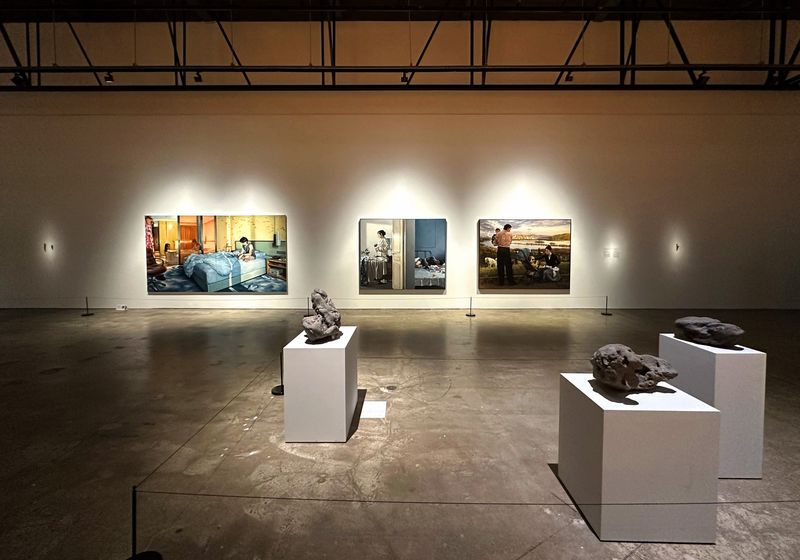
Wang Jiahao’s paintings in Gallery 1 bring together changes in the times and individual lives. “To the Youth (On the Road to Longjing Mountain)” features a couple and a foreign-made car, while “Giving” depicts a couple caring for a child. The three volcanic rocks placed in front of the works evoke a father, mother and son, prompting thoughts of family ties.
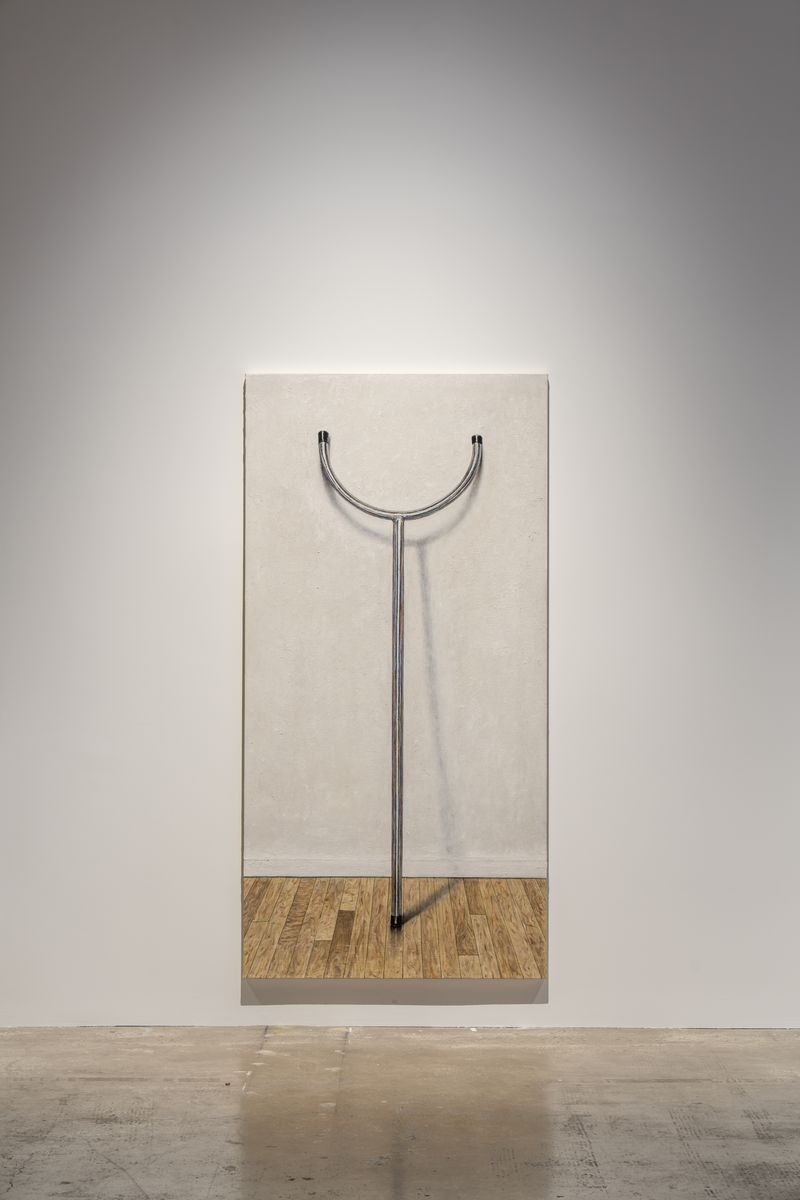
“Sasumata (Restraint Pole)” in Gallery 1 depicts a Japanese law-enforcement tool used to subdue people from a distance. A police officer in “The National Diet” in Gallery 3 is also holding one, connecting the two spaces.
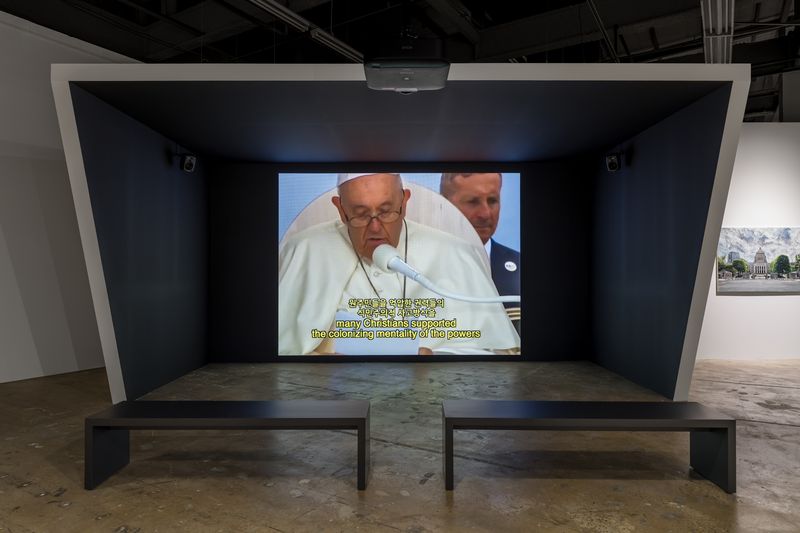
Next to “The National Diet” is James T. Hong’s video “Apology,” which brings together public apologies by politicians. The work runs for 10 hours and 43 minutes and is also screened on the exhibition hall’s exterior wall from 7 to 9 p.m.
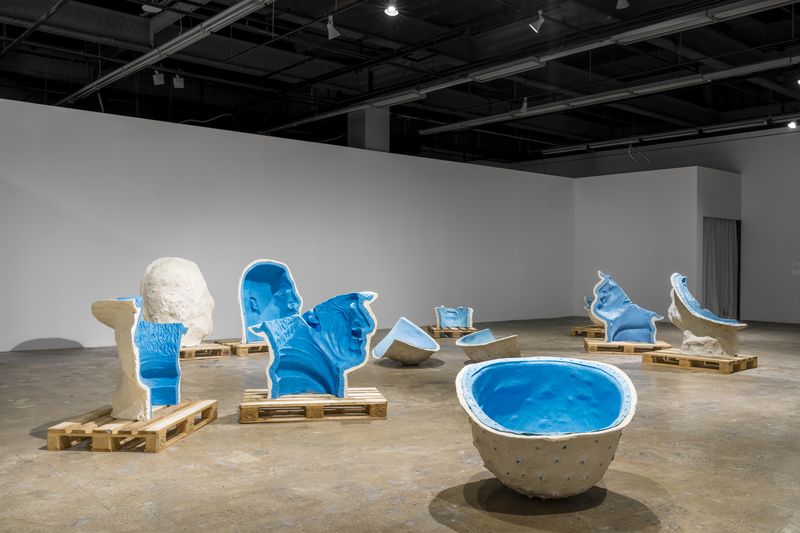
Across from it, Rosella Biscotti’s “The Problematic Heads” is modeled on sculptures of Mussolini and Vittorio Emanuele III, king of Italy. Silicone and acrylic resin transform these symbols of authority into something pliable and unstable. Tools used to control people, apologies by the powerful and memorials reshaped in form are linked through the theme of power.
Visitors can use the AI docent “DocentQ” to learn about the works. Scan the QR code at the exhibition entrance with a smartphone, then take a photo of a work to receive an explanation. Explanations are also available in multiple languages and tailored to children.
Regular guided tours run seven times a day, hourly from 10 a.m. to 5 p.m., except at noon. Visitors can join on-site on a first-come, first-served basis without an advance reservation. Group tours for 5–20 people and English-language tours every Friday and Saturday can be booked on the official website. The exhibition hall is closed every Monday.
Ahead of the closing, performances, workshops, and screening-and-talk programs will be held November 6–8 at the Gwangju Biennale Exhibition Hall, Geosigi Hall and other venues. Events include Jeong Geumhyung’s performance “Rehabilitation Training,” a workshop by Christian Nyampeta, and a closing talk by the curatorial team. Applications to participate are being accepted through the 29th.
[email protected] Jang In-seo Reporter