President Lee Jae-myung: “We will spare no effort in supporting sports” ... National Sports Festival opens in Jeju
- Input
- 2026-10-16 19:48:00
- Updated
- 2026-10-16 19:48:00
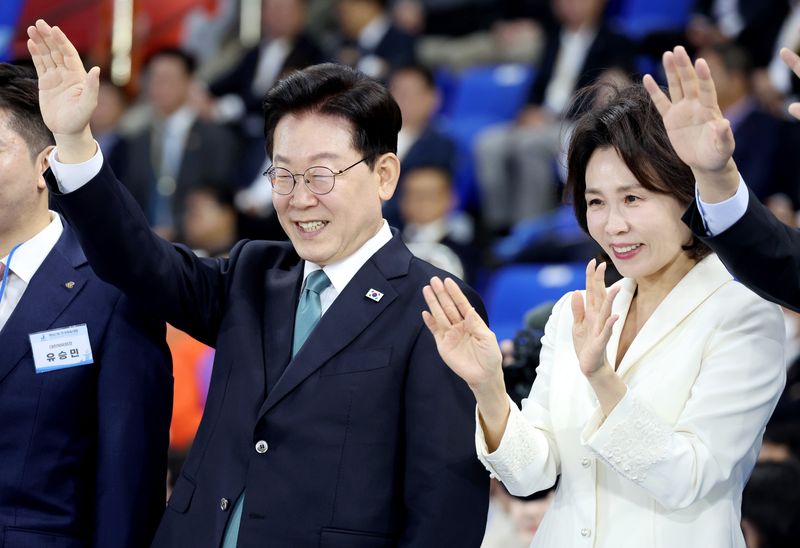
【Financial News, Jeju = Reporter Jeong Yong-bok】 President Lee Jae-myung pledged government support to help Korean sports make its mark on the international stage at the opening ceremony of the National Sports Festival, held in Jeju for the first time in 12 years. With First Lady Kim Hye-kyung also in attendance, 30,599 members of delegations from 17 cities and provinces across the country and overseas Korean sports organizations began seven days of competition.
In his commemorative address at the opening ceremony of the 107th National Sports Festival at Jeju World Cup Stadium on the afternoon of the 16th, President Lee said, “We will spare no effort in providing the support needed for Korean sports to move toward the world with even greater vigor.”
He added, “The government will provide steadfast support so that everyone can enjoy sports in their daily lives, athletes can pursue their dreams in better conditions, and sports professionals can work with pride.”
The event is being held in Jeju for the first time in 12 years, since the 95th National Sports Festival in 2014. Key figures including President Lee and First Lady Kim, Jeju Governor Wi Seong-gon, Minister of Culture, Sports and Tourism Choi Hwi-young, Korean Sport & Olympic Committee President Ryu Seung-min, National Assembly Culture, Sports and Tourism Committee Chair Lee Jae-jung, Jeju Provincial Council Chair Song Young-houn and Jeju Superintendent of Education Ko Ui-suk, along with delegations and around 20,000 spectators, attended the opening ceremony.
In his commemorative address, President Lee emphasized the role of sports in connecting people and fostering harmony in the community.
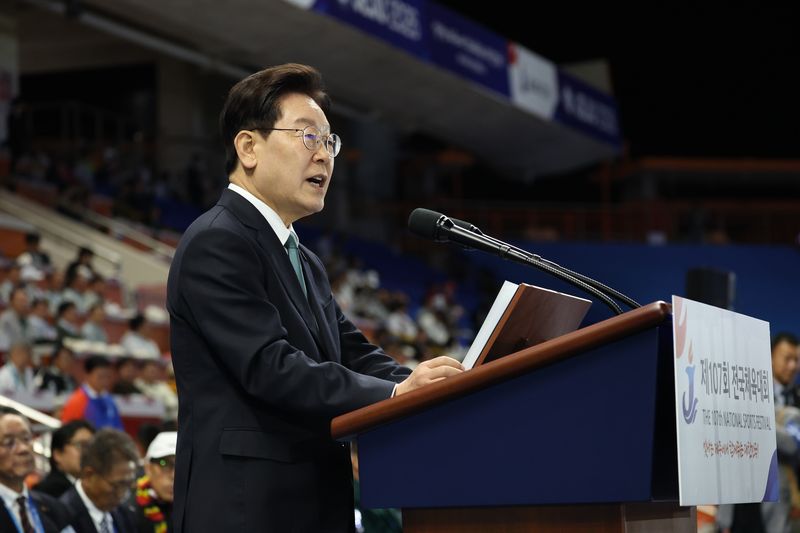
“Sports make our lives healthier and richer, and have a special appeal that can sometimes bring together people with differing views,” President Lee said.
He also reflected on the historical significance of the National Sports Festival. President Lee said, “For more than 100 years, the festival has grown alongside Korean sports and served as a foundation for countless athletes to advance to the international stage.”
He also mentioned the fighting spirit shown by Korean athletes at the recently concluded 2026 Aichi-Nagoya Asian Games. Saying that the athletes’ refusal to give up until the very last moment had moved and encouraged the public, he urged participants to uphold the values of competition and harmony at this National Sports Festival as well.
In particular, he told the participating athletes, “You are the stars of this stage today,” and asked them to respect and encourage one another regardless of the outcome and give their all as they showcase the skills they had worked to develop.
This National Sports Festival, whose slogan is “Korea, competing together in shining Jeju!”, will run through the 22nd at 74 venues in total: 68 in Jeju and six outside the province. Athletes will compete in 50 sports, including 49 official sports and jujitsu as a demonstration sport.
The participants include 19,576 athletes, 9,468 officials and 1,555 members of overseas delegations, for a total of 30,599. Delegations from 17 cities and provinces across the country and overseas Korean sports organizations are taking part, with competitions divided into under-18, university and general divisions, among others.
National team athletes who have competed on the international stage are also on the entry list, including swimmers Hwang Sun-woo and Kim Woo-min, archer Kim Woo-jin, fencer Oh Sang-uk and weightlifter Park Hye-jeong. The event is also drawing attention as an opportunity to watch leading national team athletes compete in Korea following the Asian Games.
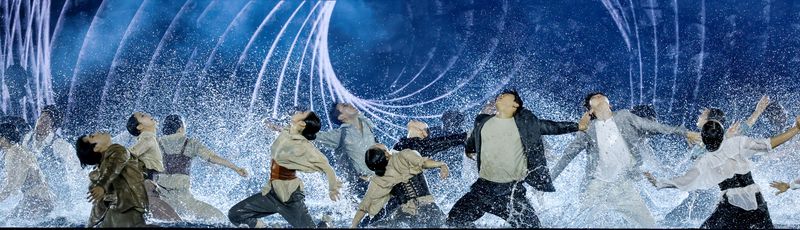
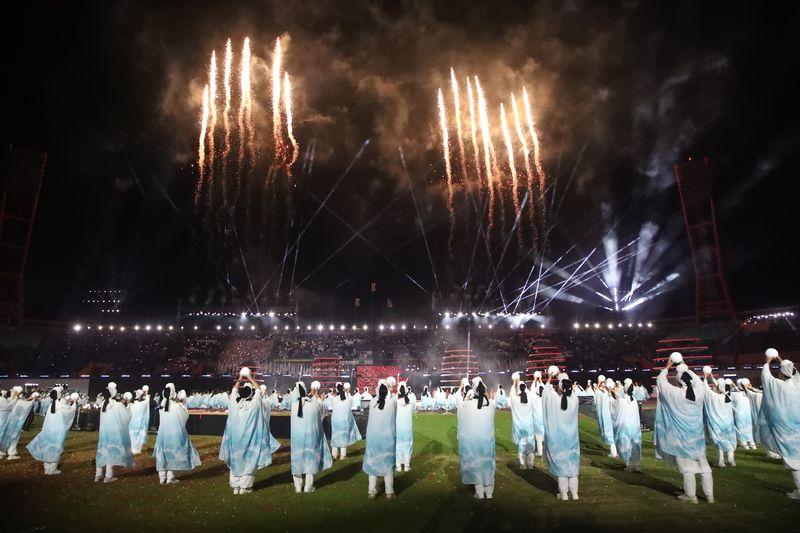
The opening ceremony showcased Jeju’s natural environment, history and cultural identity under the theme “The Great Breath.” The program opened with “Island, Echo of the Wind,” featuring Jeju musicians, a wind band and a traditional folk performance troupe, followed by “Breath of Birth,” depicting the origins and myths of Jeju, and “Flower Embracing the Wind,” which celebrated the strength of a community that overcame a painful history.
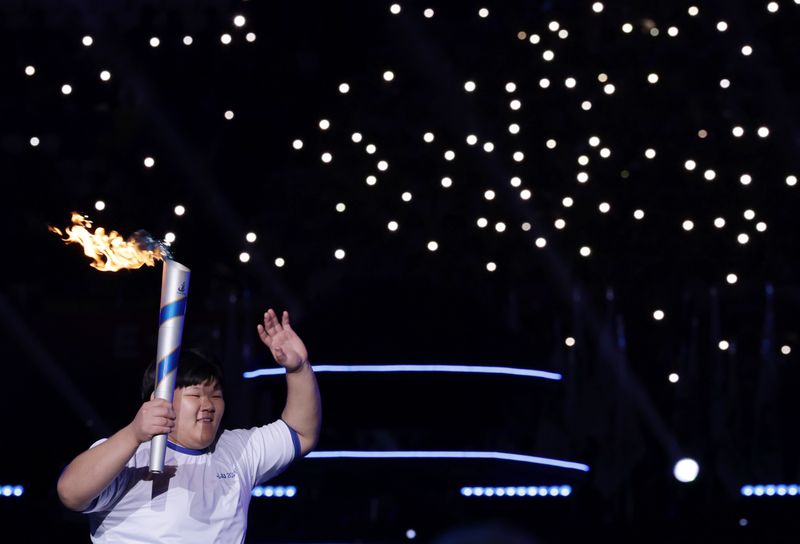
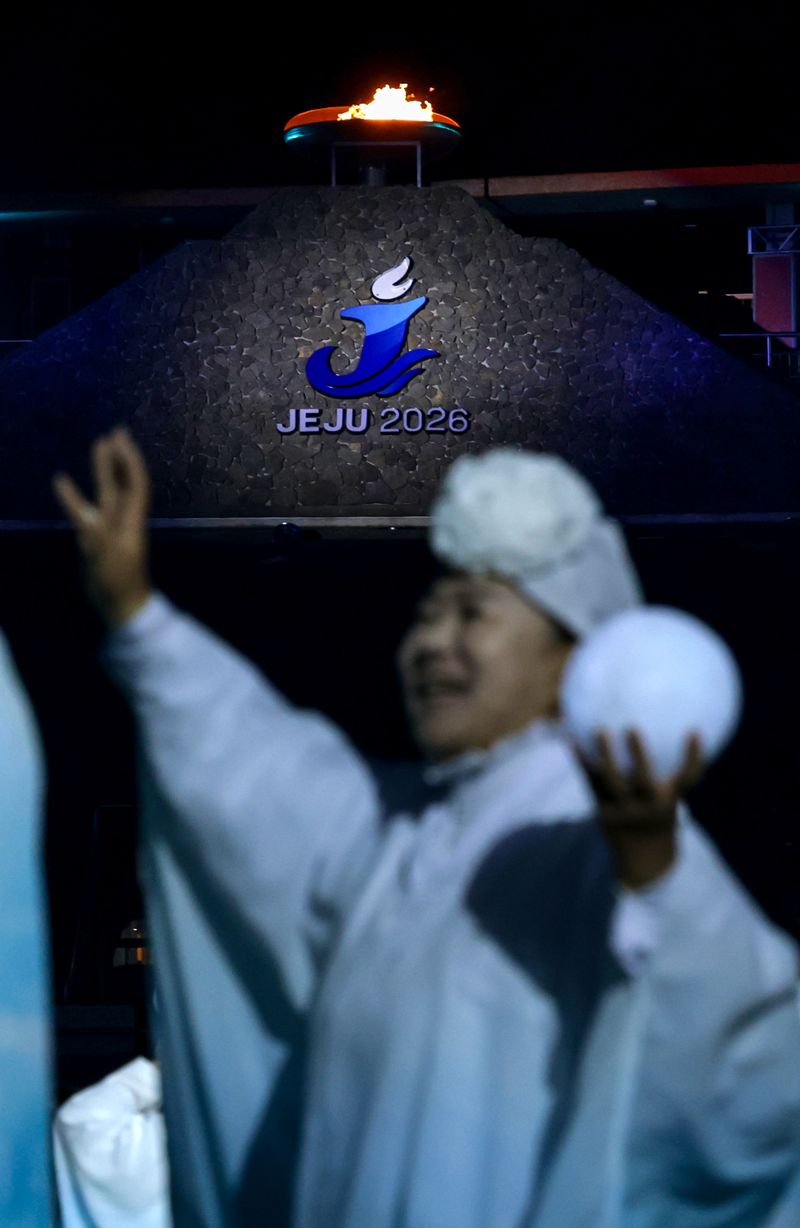
The torch relay also reflected Jeju’s distinctive symbolism. The official flame, lit at Manisan on Ganghwa Island on the 3rd, and the special flame, lit at Jeju Stone Park on the 13th, were brought together at the Jeju Provincial Government Office on the 14th.
The torch relay passed through outlying islands including Chuja, Biyang and Udo, covering 115 sections across Jeju. Around 900 torchbearers took part.
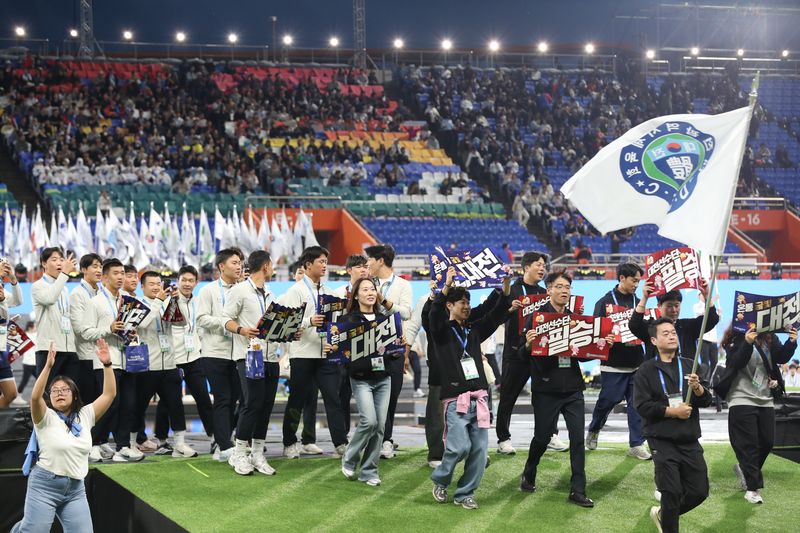
Jeju-born national judo team member Lee Hyun-ji was chosen as the final torchbearer. The ceremony was arranged so that she would receive the torch after it had been carried by veteran sports figure Byeon Chang-bo and national wrestling team member Lee Min-ho.
That day, Lee Hyun-ji won gold by defeating Kim Min-young with an ippon just nine seconds into the final in the women’s university division’s 78-kilogram-and-above judo category, held at the gymnasium of Namnyeong High School in Jeju City. The moment was made all the more meaningful by the fact that an internationally active athlete from Jeju was the last torchbearer at the National Sports Festival held in her hometown.
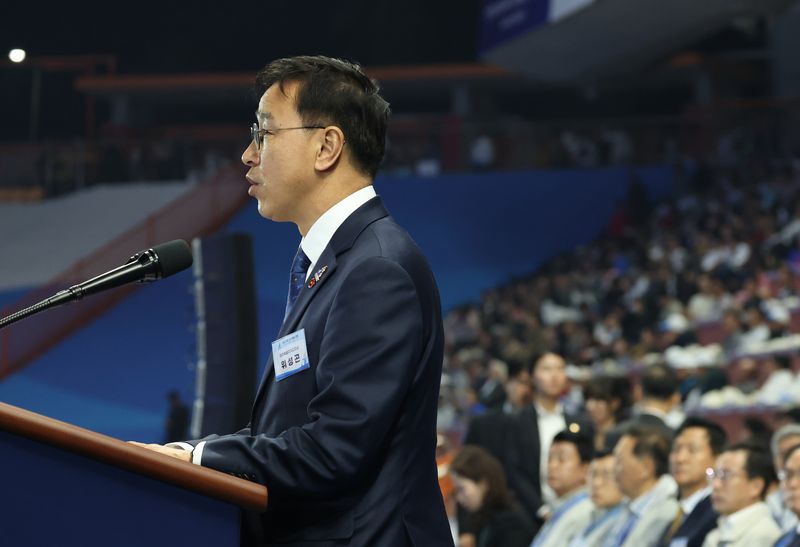
In his welcoming address, Jeju Governor Wi Seong-gon praised the athletes’ long years of effort and their spirit of challenge. “What shines brighter than the result of winning or losing is the true value of sports: surpassing oneself,” he said, urging the athletes to showcase the skills they had honed to the fullest.
He also emphasized event safety management. Wi said, “We will inspect every aspect of operations, including venues, accommodation and transportation, support athletes so they can focus on their competitions, and do our utmost to prevent accidents.”
During the event, Jeju Province will operate a joint response system centered on the general situation room at Jeju World Cup Stadium, with relevant organizations including the Provincial Office of Education, the provincial sports association and the Jeju Provincial Police Agency. They will inspect venue facilities, delegation transportation and spectator safety, and prepare for emergencies.
A total of 3,500 volunteers and 4,762 supporters will also help guide visitors at venues and cheer on the athletes. Vehicles for transporting delegations and on-site support teams at each venue will also be in operation during the event.
Programs have also been introduced to connect attending competitions with local tourism and spending. Jeju Province has launched an NFT-based digital attendance verification system and will provide up to 20,000 won per person in the local currency Tamna-jeon, based on visits to the opening and closing ceremonies and competition venues. Free admission or discounts will be offered at 24 designated public tourist attractions.
Major competitions will be broadcast live or on a delayed basis via Korean Broadcasting System (KBS), sports channels and online platforms. Coverage will include 39 sports, including swimming, archery, athletics and fencing.
The event is hosted by the Korean Sport & Olympic Committee (KSOC) and jointly organized by Jeju Special Self-Governing Province, the Jeju Special Self-Governing Provincial Office of Education and the Jeju Special Self-Governing Provincial Sports Council. It is sponsored by the Ministry of Culture, Sports and Tourism and the Korea Sports Promotion Foundation.
The closing ceremony will be held at Jeju World Cup Stadium on the 22nd under the theme “Memories of the Wind,” with awards for the overall competition and the Most Valuable Player (MVP).
[email protected] Jeong Yong-bok Reporter