Local Allocation Tax calculation base to shrink to fund Future Response Fund; Jeju Governor Wi Seong-gon calls for higher rate
- Input
- 2026-10-16 18:40:01
- Updated
- 2026-10-16 18:40:01
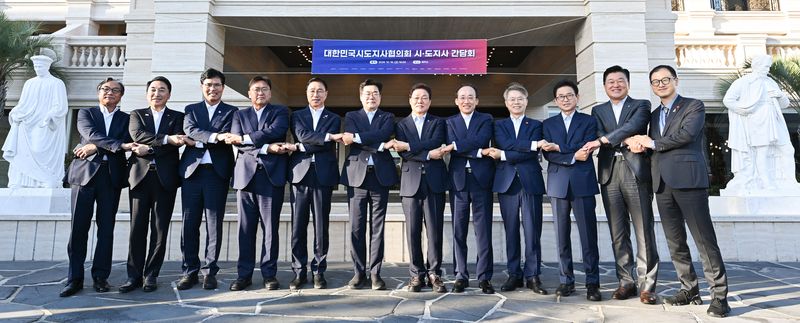
【Financial News | Jeju = Yong-bok Jung, reporter】 Local governments’ fiscal autonomy has emerged as a point of contention as the government moves to secure funding for the Future Response Fund before calculating Local Allocation Tax allocations. Jeju Governor Wi Seong-gon urged an increase in the Local Allocation Tax rate and the securing of stable, independent revenue at a gathering of metropolitan and provincial governors from across the country.
According to Jeju Special Self-Governing Province on the 16th, Governor Wi attended a meeting of metropolitan and provincial governors organized by the Governors Association of Korea at The Siena in Jeju that afternoon, where they discussed the effects of establishing the Future Response Fund on local finances and possible responses.
The central issue is that the criteria for calculating the Local Allocation Tax distributed to local governments will change as the government establishes the new fund.
In August, the government announced plans to introduce the Future Response Fund to invest in young people, future industries, balanced regional development, education and other areas. The plan is to use 162.3 trillion won in additional tax revenue in 2027 to secure funding for national investments in the future and fiscal stabilization.
The issue is how the Local Allocation Tax is calculated. Under the current system, 19.24% of domestic tax revenue serves as the basic funding source for the Local Allocation Tax. The government plans to maintain this rate but calculate allocations based on the amount left after deducting contributions to the Future Response Fund from domestic tax revenue.
If the amount set aside for the fund is deducted first, Local Allocation Tax allocations will be lower than under the existing formula even if the statutory allocation rate remains unchanged.
The portion calculated at a fixed rate, including ordinary and special Local Allocation Tax, in the government’s 2027 budget proposal is about 69.7 trillion won. This is 30.5 trillion won less than the amount that would have been budgeted under the existing calculation method. Since the shortfall would be made up through the fund’s local account and other channels, there are concerns that local governments could have fewer funds whose use they can decide independently.
Jeju has a fiscal structure that makes it particularly sensitive to these changes. Article 124 of the Jeju Special Act stipulates that 3% of the nationwide total of ordinary Local Allocation Tax be allocated to Jeju. As a result, any change in the total amount of ordinary Local Allocation Tax also affects the amount allocated to Jeju.
Ordinary Local Allocation Tax is a key source of independent revenue that local governments can use according to local needs. It supports services essential to residents’ daily lives, including welfare and care, disaster safety and transportation. By contrast, funds earmarked for specific projects may limit local governments’ discretion depending on their designated purposes and conditions for support.
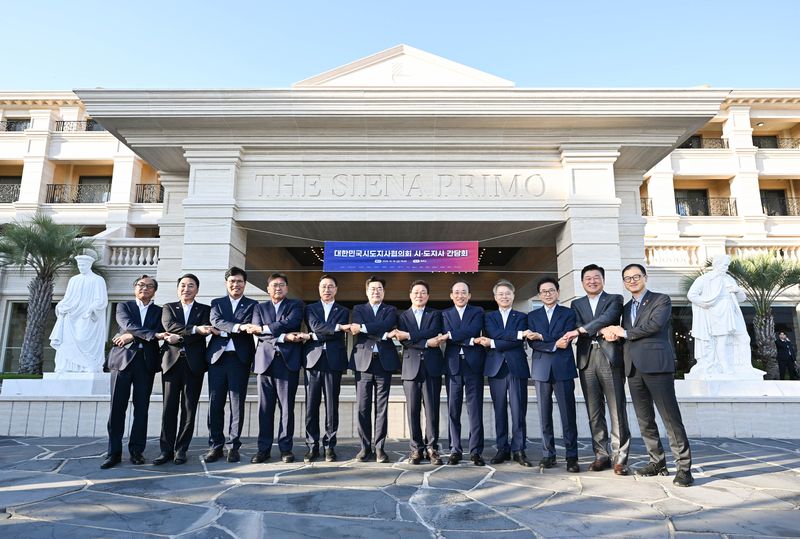
The meeting also addressed concerns that requiring local governments to contribute matching funds to projects supported by the fund could affect their fiscal capacity to pursue projects of their own.
Governor Wi emphasized, “Since Local Allocation Tax is a statutory funding source that supports residents’ daily lives and essential public services, measures must be developed to expand and stabilize local finances, including raising the Local Allocation Tax rate over the long term.”
However, a change in the calculation method does not necessarily mean that total Local Allocation Tax allocations will immediately fall compared with the previous year. The Ministry of the Interior and Safety projected that total Local Allocation Tax allocations in 2027 would reach 77.2 trillion won, an increase of 7.8 trillion won (11.3%) from this year’s main budget. The government says it will also expand investment in local areas through the Future Response Fund and ease instability in local finances caused by fluctuations in tax revenue.
However, since the funding available under the existing formula differs from the amount calculated under the government’s new method, how to guarantee local governments’ fiscal autonomy remains a separate issue.
The amount of ordinary Local Allocation Tax that will actually be allocated to Jeju in 2027 has also yet to be finalized. To determine the specific increase or decrease in Jeju’s finances resulting from the fund’s establishment, the government’s regional allocation results and its plans for fund support must be considered together.
Since August, the Governors Association of Korea has been reviewing the impact of the Future Response Fund on local finances and gathering the views of each metropolitan and provincial government. The Jeju meeting also discussed the possibility of a decline in Local Allocation Tax funding, concerns about increased local-government contributions, and ways to reflect local governments’ views in designing and operating the fund.
The bill on the establishment and operation of the Future Response Fund, which the government submitted to the National Assembly of the Republic of Korea on September 3, is currently under consideration there. The final decisions on how Local Allocation Tax will be calculated and how the fund will be operated depend on the legislative process.
The meeting also addressed changes to the procedure for appointing the president of the Korea Institute of Local Finance and plans for special judicial police officers to jointly use the Korea Information System of Criminal Justice Services (KICS).
Jeju Province plans to continue consulting with other metropolitan and provincial governments and relevant agencies while assessing the impact of the Future Response Fund on local finances. How to balance expanded national investment in the future with local governments’ autonomy in managing their finances remains a key challenge for future deliberations in the National Assembly of the Republic of Korea and consultations between the central and local governments.
[email protected] Yong-bok Jung Reporter