Japan Stocks Rebound After Seven Trading Sessions as ‘AI Money-Makers’ Emerge
- Input
- 2026-10-16 16:22:40
- Updated
- 2026-10-16 16:22:40
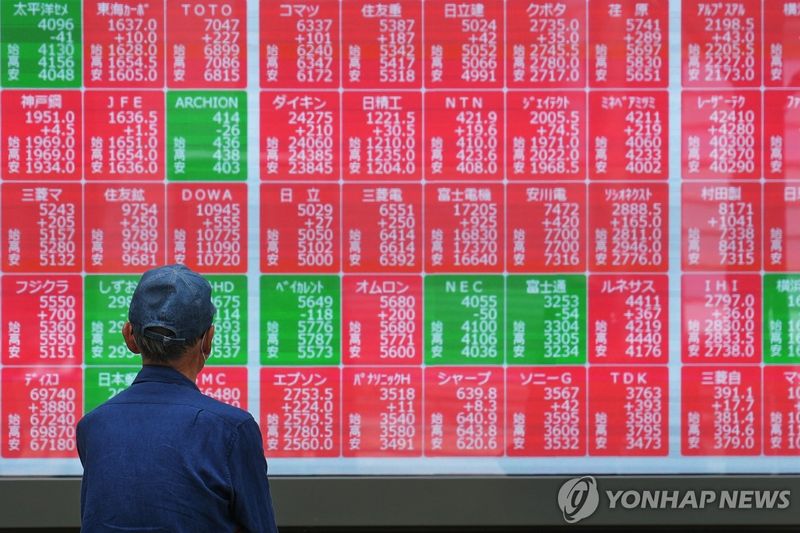
【Financial News Tokyo Correspondent Seo Hye-jin】 Japan’s stock market rebounded on the 16th for the first time in seven trading sessions as credit concerns over U.S. artificial intelligence (AI) company CoreWeave eased. Buying concentrated in consulting and software companies that have boosted earnings by using AI. However, analysts say it is too early to judge whether a full-fledged recovery is underway, as the market failed to recoup even a third of the previous day’s plunge.
The Nikkei 225 Stock Average (Nikkei Index) closed at 65,324.29 on the Tokyo Stock Exchange, up 898.34 points (1.39%) from the previous trading day. Its gains topped 1,200 points at one point during the session, but narrowed in the afternoon.
The rebound was sparked by remarks from Nvidia CEO Jensen Huang. In a media interview on the 15th (local time), Huang said of CoreWeave, an AI cloud provider backed by Nvidia, “The situation is improving day by day.”
CoreWeave shares rose more than 5% in U.S. trading after the remarks eased concerns about the company’s financial health.
As concerns over a slowdown in AI investment eased somewhat, buying also flowed into semiconductor stocks on the Tokyo market, including Advantest and Tokyo Electron, which had plunged the previous day.
The companies that stood out for their gains that day were those using AI in their businesses to boost earnings.
Consulting firm BayCurrent hit its daily upper price limit, rising 17.25% to 10,195 yen. Adjusted for its stock split, this was its highest price since listing. Its operating profit for March through August 2026, announced the previous day, exceeded market expectations, and its new medium-term management plan also won praise.
Earlier this year, BayCurrent had fallen along with other software-related stocks amid concerns that AI would replace business software and related services. But its shares reversed course and began rising on expectations that demand for cybersecurity measures and consulting would grow as cyberattacks exploiting AI increased.
Software testing company SHIFT also rose to near its daily upper price limit. Buying was fueled by a forecast that its adjusted net income for the fiscal year ending August 2027 would increase 60% from the previous year, underpinned by expanded IT investment by companies and public institutions, as well as plans to establish a fund with Tokyo Gas.
Recruit Holdings also set a record high on a stock-split-adjusted basis. Investors took note of the company’s efforts to improve business efficiency in its HR tech operations, including using AI to speed up hiring through services such as the U.S. job-search platform Indeed.
Ken Irisawa, an analyst at Tachibana Securities, told the Nikkei, “Investors’ attention is shifting from AI infrastructure to stocks that are using AI to deliver strong earnings.”
However, it is difficult to say that investor sentiment across the market has recovered. After plunging 3,318.34 points the previous day, the Nikkei Index recouped only about 27% of those losses that day. It also failed to break above the 26-week moving average, around 65,600, from a technical perspective.
Strategist Ryuta Otsuka of Toyo Securities noted, “Individual investors who were unable to sell during the previous day’s plunge may sell some AI and semiconductor stocks at a loss.” The Nikkei reported that earnings announcements from major companies, which will pick up later this month, are expected to determine whether the Japanese stock market can sustain its rebound.
[email protected] Seo Hye-jin Reporter