Jeju school restructuring: 70% consent threshold; 55.4% of residents favor easing it
- Input
- 2026-10-16 16:40:39
- Updated
- 2026-10-16 16:40:39
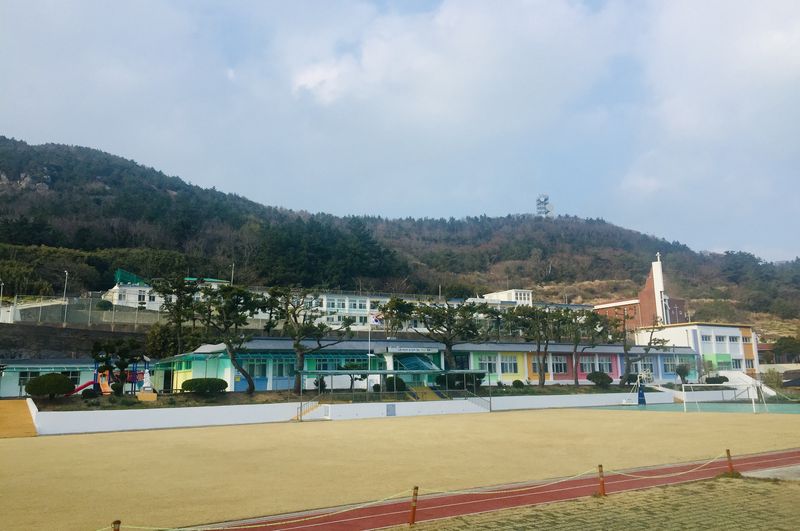
【Financial News, Jeju = Jeong Yong-bok】 A total of 55.4% of Jeju residents favored lowering the guardian-consent threshold required for school restructuring from the current 70%. With the school-age population projected to decline by 14,119 by 2031, easing the criteria for restructuring schools and safeguarding guardians’ right to consent have emerged as key issues.
According to the “Public Opinion Survey for Formulating Jeju Education 2027,” released by the Jeju Special Self-Governing Provincial Office of Education on the 16th, 31.1% of respondents chose a guardian-consent threshold requiring at least 60% approval for efforts to promote right-sized schools, while 24.3% chose at least 50% approval. In total, 55.4% chose a threshold lower than the current one.
By contrast, 31.6% chose the “at least 70% approval” threshold currently applied in Jeju. Other opinions accounted for 0.3%, while 12.8% did not know or did not respond.
The difference between the shares choosing the current 70% threshold and the 60% threshold was just 0.5 percentage points. Although support for the two thresholds was closely divided, more than half of all respondents chose to lower the consent threshold.
Among the 381 residents who said they had a child or grandchild attending elementary, middle or high school, the largest share, 33.0%, chose the 60% threshold. The current 70% threshold was chosen by 32.2%, and the 50% threshold by 24.5%.
The discussion of school restructuring comes against a backdrop of a declining school-age population. Projections presented in the Jeju Provincial Office of Education’s survey show the population falling from 73,373 in 2027 to 59,254 in 2031. That is a decline of 14,119, or 19.2%, over four years.
Promoting right-sized schools is a policy to adjust how schools operate in response to declining enrollment, including by consolidating schools, relocating or reorganizing them, and operating different school levels together. It affects curriculum delivery, teacher assignments, students’ travel to school and the continued vitality of local communities.
Last July, the Jeju Provincial Office of Education announced its “Plan to Promote Future-Oriented, Right-Sized Schools.” It outlined various approaches, including school consolidation, relocation and reorganization, integrated operation, and restructuring branch schools. The office said it would avoid unilateral school closures, taking each school’s history and local characteristics into account.
School restructuring criteria are changing nationwide as well. Last June, the Ministry of Education announced its “Measures to Enhance Local Educational Capacity through Innovation in Small Schools” and abolished the existing “Recommended Criteria for Promoting Right-Sized Schools and Restructuring Branch Schools.”
The measure expands the autonomy of provincial and metropolitan offices of education to set school sizes and consolidation procedures according to local conditions. The Ministry of Education also proposed increasing school consolidation support to up to 7.5 billion won for elementary schools and up to 13 billion won for secondary schools.
However, the central government’s abolition of its recommended criteria does not automatically change Jeju’s guardian-consent threshold. Whether the Jeju Provincial Office of Education should revise its own criteria, and what level would be appropriate if it does, will require a separate policy decision and public consultation. The survey alone does not mean a change to the criteria has been decided.
Differences also emerged among students, education staff and residents over priorities for Jeju education next year, alongside the discussion of school restructuring.
Among 714 student representatives, career, college-preparation and employment education was the most frequently selected priority for the Jeju Provincial Office of Education to pursue. It accounted for 21.57% of all multiple-choice responses. Culture, arts and physical education followed at 14.64%, and student safety and health at 12.89%.
By contrast, the 1,308 education staff members most often cited improving academic achievement and literacy, at 28.98% of multiple-choice responses. Protecting educational activities followed at 17.43%, and democratic citizenship education at 10.97%.
In a separate survey of 1,007 residents, personalized education for students ranked highest at 16.5%. Career, college-preparation and employment education came next at 16.3%, followed by student safety and health at 15.6%, artificial intelligence (AI), digital and information education at 14.9%, and academic achievement and literacy at 11.4%.
The findings suggest that students place relatively high priority on their career paths and varied educational experiences, education staff on foundational academic skills and protecting educational activities, and residents on education that takes individual students’ characteristics and career paths into account.
Shared priorities were also evident around protecting educational activities and supporting students’ psychological and emotional well-being. In the inclusive education category, education staff selected stronger protection of educational activities, at 34.75%, and psychological and emotional support for students in crisis, at 32.84%, as key priorities.
Students selected creating an environment where teachers and students can teach and learn with peace of mind, at 28.85%, and strengthening psychological and emotional counseling and support, at 17.51%. Residents also showed strong interest in creating safe routes to and from school and safe school environments, at 21.2%, and providing psychological and emotional support for students in crisis, at 20.5%.
Views also differed on how education policy should be implemented. Education staff most often chose reducing administrative burdens at schools, at 29.74%. Residents prioritized establishing a transparent budget-execution system, at 15.9%, while students chose strengthening communication to foster an honest and transparent school culture, at 19.75%.
The survey found that 56.9% of residents were satisfied with school education in Jeju. A further 28.6% were dissatisfied, while 14.5% did not know or did not respond. Those who were satisfied most often cited the range of curricula and programs, while dissatisfied respondents most frequently pointed to a lack of variety in curricula and programs.
The Jeju Provincial Office of Education conducted the survey to develop its “Jeju Education 2027” policies. The 714 student representatives and 1,308 education staff members took part in an online survey from September 22 to October 2. Separately, polling firm Realmeter surveyed 1,007 Jeju residents aged 19 or older from September 29 to October 1.
The residents’ survey was conducted by phone and online, with a response rate of 10.8% and a margin of sampling error of ±3.1 percentage points at the 95% confidence level. The student and staff survey was an online survey of participants, and used a different methodology from the residents’ sample survey. The policy-priority percentages were also calculated from multiple-choice responses, so figures across groups should be compared with caution.
Jeju Superintendent of Education Go Ui-suk said, “Based on the survey results, we will reflect the views of the education community in our policies and develop the 2027 education plan with a focus on students’ learning and growth and changes in schools.”
Restructuring schools in response to the declining school-age population and improving curricula will remain major challenges for Jeju education. Key issues in future discussions will include how to reflect public opinion on guardian-consent thresholds in actual policy, and how to balance students’ right to learn and travel-to-school conditions with the needs of local communities during the restructuring process.
[email protected] Jeong Yong-bok Reporter