“As if you’d never had hair-loss treatment” ... Director Hong Ju-hyeong offers “a life free from thinking about hair loss” [Interview with 100 Hair-Loss Experts]
- Input
- 2026-10-19 11:00:00
- Updated
- 2026-10-19 11:00:00
When things that should normally be there are absent, that brings loss. Hair loss, which has emerged as one of the defining issues of our time, causes us deep and profound loss. To face hair loss head-on and overcome it, we’ll meet 100 hair-loss experts, beginning with a medical doctor who pioneered the first generation of hair-loss treatment. Please look forward to the new stories that will unfold beyond the two words “hair loss.” [Editor’s note]
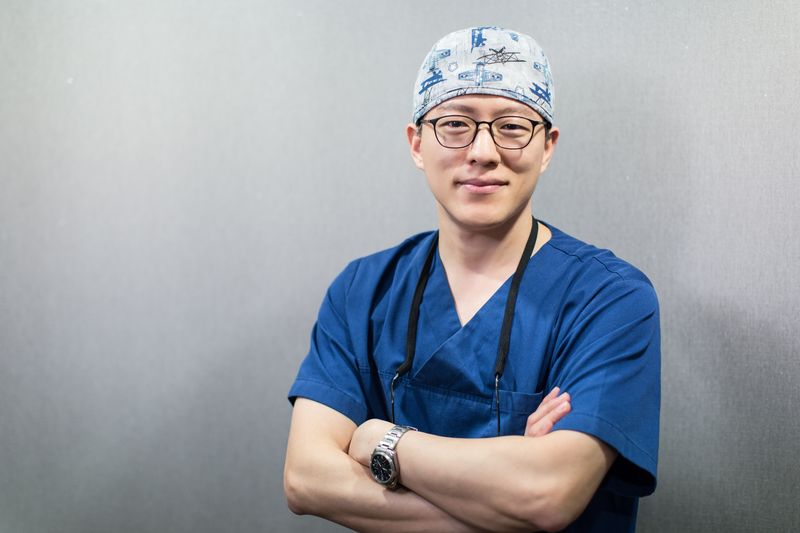
[Financial News] “Hair-loss treatment should be sustainable over the long term without becoming a burden, and hair transplants should look natural.” This is the belief and principle of Hong Ju-hyeong, director of Moheal Clinic. Drawing on his experience as a urologist, he takes a multifaceted approach to hair-loss medication and combines surgical skill with a refined aesthetic sensibility to create hairlines that look natural to anyone who sees them. He looks beyond immediate results to the patient’s life ten years from now. He says he hopes patients can live without thinking about hair loss anymore.

How hormone therapy that began in urology expanded into hair-loss treatment
― You’re a urologist. It seems hair-loss treatment may have some similarities, given that it also involves male hormones.▲ That’s also why I came to specialize in hair-loss treatment and hair transplantation. Testosterone and dihydrotestosterone (DHT), which is produced when testosterone is converted, are considered the main causes of male-pattern hair loss, aren’t they? Testosterone is also one of the key areas of focus in urology.When I first entered the field of hair-loss treatment, I felt it was closely connected to the care I had provided until then, and that I could help patients through it. In fact, I’ve continued to provide hormone therapy and perform hair transplant surgery, drawing on my experience as a urologist.― Are there similarities in surgery as well?▲ In urological surgery, surgical skill is crucial at every stage, from making an incision and dissecting tissue to controlling bleeding and suturing the layers of tissue together. In particular, as you perform more surgeries, you learn to discern the characteristics of tissue by touch, going beyond simply stitching up the skin. Based on that, you decide which layer to dissect, how to suture it, and how much tension to use when pulling the skin.
This experience was a great help when I performed hair transplant surgery, particularly strip procedures that remove scalp from the back of the head, the donor area. Of course, hair transplantation has its own specific requirements, so I did need additional specialized training (laughs).
Scalps vary widely from patient to patient ... Hair transplants that take the possibility of future hair loss into account
― What is unique to hair transplantation?▲ The scalp has a rich blood supply, and tissue elasticity and thickness vary greatly from person to person. That’s why, with strip surgery, every stage of the procedure needs to be carefully planned for the individual patient. We have to consider everything together, including how much skin to remove from the back of the scalp, how much tension is needed when suturing, and what the scar will look like after surgery.So even if a patient insists on a particular method before surgery—FUE or strip surgery—it’s important to carefully assess their individual characteristics and recommend the appropriate procedure. In some cases, the two methods can also be combined. And because hair loss progresses over a long period, many patients eventually have a second procedure, so foresight to anticipate the future is essential.― Foresight to anticipate the future? Could you explain what you mean in more detail?▲ Hair moved and transplanted through hair transplantation lives permanently, unaffected by hair loss. That’s why patients may want to densely fill in a thinning crown right away or lower their hairline aggressively to make their forehead look smaller.
The problem is that hair loss doesn’t appear briefly and then stop; it progresses gradually over a person’s lifetime. If the existing hair around the transplanted hair falls out due to hair loss, the transplanted hair can be left standing alone, like an “island.” At that point, additional transplants are needed in the newly affected areas. But if too much donor hair from the back of the scalp is used up in the first procedure, there may not be enough follicles available when they’re actually needed.― So what do you consider when anticipating the future before a first procedure?▲ We need to assess both factors that aren’t visible, such as the likelihood of future hair loss, family history, and whether the patient takes hair-loss medication, and visible factors, such as age, hair thickness, and the density of hair at the back of the scalp. Donor hair at the back of the scalp is not unlimited. It’s a finite resource that has to last a lifetime. That’s why it’s important to allocate and preserve it appropriately, while also providing medication-based treatment to keep the patient’s remaining natural hair healthy.
Hair-loss treatment should not become a source of “fear” for patients ... Personalized prescriptions are needed
― Does medication work by regulating male hormones?▲ Ultimately, yes. But even though the overall approach is established, I don’t insist on prescribing finasteride or dutasteride to every patient as a one-size-fits-all solution. Many patients are more afraid of the medication’s side effects. Some are planning to have children, while others are already taking other medication and are reluctant to add another. We need to deeply understand their concerns, assess the risks objectively based on medical evidence, and then prescribe accordingly.― I’ve heard that hormone-suppressing medication is the most reliable treatment for hair loss. Are there alternatives?▲ Rather than looking for an alternative that works in every case, it’s important to find a treatment the patient can stick with. Many patients report changes in sexual function or mood when taking finasteride or dutasteride. These symptoms may ease even if they continue taking the medication, but if they feel strongly uncomfortable, forcing them to simply put up with it isn’t the answer. We can try lowering the dose or switching to another medication with the same mechanism. Depending on the situation, we can replace it with a topical medication, or reduce the dose of the oral medication and use it alongside a topical one.The ultimate goal of prescribing hair-loss medication is not simply to “get patients to take the medication.” It’s to find the right balance so they can continue treatment consistently over the long term without psychological or physical burden. This is a belief I developed when I was a urologist, and a principle I won’t compromise on in hair-loss treatment or hair transplantation.
“Avoid a dense, doll-like hairline” ... Get back to everyday life with a natural gradient
― Do you follow any particular principles when performing hair transplant surgery?▲ If the principle for medication is “long-term treatment without a burden,” for hair transplantation it’s “as if you never had surgery.” Even if the graft survival rate is very high and there are no side effects at all, an unnatural result can make the entire appearance look artificial. For example, creating a neat, straight hairline without any irregularity, placing follicles at perfectly measured intervals, or simply packing them in densely to increase volume would not make for good surgery. Even from a distance, it’s bound to look awkward, like a doll’s hair.― How, specifically, do you make it look “as if you never had surgery”?▲ Take the hairline, for example: the skull and facial contours are three-dimensional. You can’t design it based only on a flat, straight-on view, as if sketching on paper. You have to assess it from multiple angles—front, side, and 45 degrees—and design the hairline’s height and contours accordingly. The line shouldn’t end abruptly, nor should it run straight as if drawn with a ruler. I make repeated, minute adjustments so it remains natural during everyday movements, whether turning the head or lowering and raising it.It’s also important to understand the hair’s natural direction and texture. Straight and curly hair grow in entirely different directions and have different curves. So when transplanting, the angle of each follicle must be carefully adjusted to suit the hair type. Hair angle and growth patterns vary enormously across areas such as the forehead, temples, crown, and crown whorl, so they need to be assessed precisely.― Apart from hairline design, is there another area where you have particular expertise?▲ Creating a “gradient” in the hairline. If thick hair is packed densely along the hairline, anyone would immediately realize that surgery had been done when the forehead is exposed. So I select the finest, softest single-hair follicles from those harvested from the back of the scalp—follicles that grow just one hair each—and place them at the front of the hairline. Farther back, progressively thicker hair is implanted to build density.
The key is to create a “subtle irregularity” that is barely noticeable when viewed up close. Only by varying hair thickness, angle, and density in stages can you achieve a perfect gradient. A natural result doesn’t come from one grand technique; it’s achieved through the painstaking repetition, thousands of times over, of small differences that are easy to miss.― You have an exceptional eye for detail. What direction should hair-loss treatment take in the future?▲ The goal is for patients to live without thinking about their “hair” anymore. People experiencing hair loss deal with daily inconveniences at every turn. When the wind blows, they’re quick to grab their bangs; under bright lights, they worry that their thinning crown will show. They may even avoid places like swimming pools and bathhouses.
Many patients remain anxious even after treatment and surgery, worrying about medication side effects or whether the surgery will be noticeable. The care I aim to provide involves medication that is manageable enough for patients to forget they’re undergoing treatment, and surgical results so natural they forget they had a hair transplant. I hope patients can enjoy the full freedom of everyday life without worrying about other people’s gaze or living with anxiety.
[email protected] Kim Hyun-seon Reporter