Move-In Push for 100,000 Public Housing Units by Next Year; Race to Stabilize the Rental Market
- Input
- 2026-10-16 16:00:00
- Updated
- 2026-10-16 16:00:00
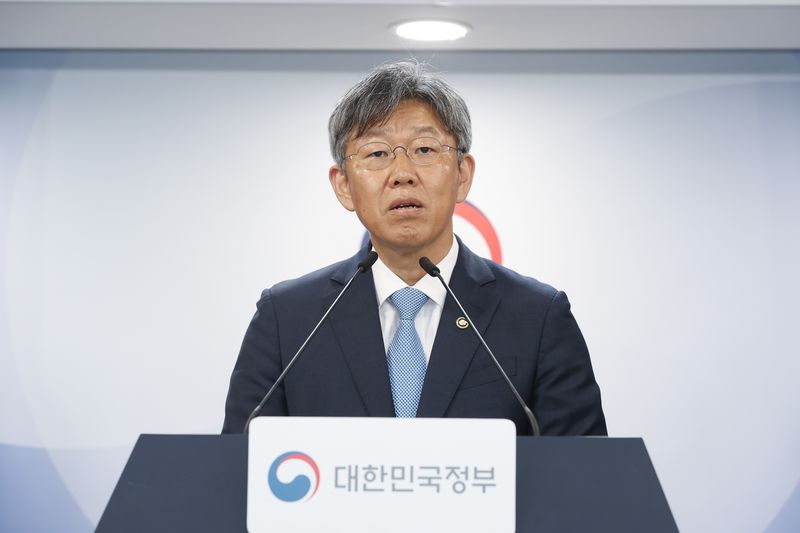
[Financial News] The government is accelerating short-term housing supply to stabilize the jeonse and monthly rental market. It plans to facilitate move-ins to 100,000 public housing units in the capital region by the end of next year. At the same time, it aims to strengthen the housing safety net, improve trust in and the quality of jeonse and monthly rentals, and create a housing ladder.
Kim Yi-tak, First Vice Minister of MOLIT, announced the plan at the ‘First Regular Housing Supply Briefing’ at the Government Complex Seoul on the 16th.
The government is focusing on stabilizing the jeonse and monthly rental market, pursuing its policy along two main pillars: ‘expanding short-term supply’ and ‘strengthening the housing safety net.’
The government plans to provide 100,000 public housing units in the capital region by the end of next year and facilitate move-ins. These will include 9,000 units for public sale, 8,000 newly built rental units, 29,000 purchased rental units, and 45,000 jeonse rental units. Starting with Incheon Gyeyang this December, the government will begin move-ins to the Third New Towns and expand supply. At the same time, it plans to increase supply by pursuing public purchase-rental housing in regulated areas of the capital region virtually without limit.
The government will continue backing efforts to boost private housing supply. To expand the supply of diverse types of general housing, including urban-style housing, it will establish an Integrated Housing Supply Support Center by the end of this year, comprising MOLIT, the Financial Services Commission, and the Financial Supervisory Service. It plans to provide support for housing supply approvals and permits and financing, as well as incentives such as exemptions from development charges for projects that break ground ahead of schedule by 2027.
The government will also strengthen the safety net to ease residents’ concerns and create a housing ladder. Its aim is to provide high-quality rental housing where people can live securely for the long term by introducing measures such as universal jeonse rental housing (5,000 units annually) and 20-year long-term private rentals. To prevent jeonse from shifting to monthly rent, it will pursue the Jeonse-Wolse Safe Trust administered by the Korea Housing & Urban Guarantee Corporation (HUG), strengthen efforts to prevent jeonse fraud, and improve the process for moving into public rental housing.
The government will also roll out tailored support. It will expand the youth monthly rent assistance, which provides 200,000 won per month, including by easing income requirements and broadening the eligible age range. It also plans to provide young people with universal jeonse rental housing, Happy Dormitories, and shared housing. For newlyweds entering public rental housing, the income eligibility threshold will be relaxed and raised substantially to about twice the level for unmarried applicants. The government also plans to provide 3,500 units of senior welfare housing annually.
The government also emphasized that Seoul’s housing approval and construction-start figures improved over the first eight months of this year. It said that for general housing, which can be supplied quickly, 5,000 units received approvals and permits and construction began on 4,200 units between March and August.
Kim said, “The important significance of this briefing is that we showed the upward trend in construction starts after volumes had hit a low,” adding, “The government is working to ensure that this can serve as a good leading indicator. Since 2022, construction starts and housing approvals and permits have fallen sharply, leaving too few units available for move-in.”
[email protected] Jung Kyung-soo, Choi Ga-young Reporter