“500 Cars a Month During Festival Season” ... A Visit to a Hyundai Dealership in India
- Input
- 2026-10-18 09:00:00
- Updated
- 2026-10-18 09:00:00
【Pune, India—Reporter Dongho Kim】Eight vehicles, including the Creta, stood in a row on either side of the entrance steps at Kundan Hyundai, a Hyundai dealership in India. Another six were waiting for customers inside the showroom, including one in the new-car display area. All six models on sale were displayed in person, in contrast with South Korean car showrooms, which display only some models and feature the rest in catalogs. The new-car display area also had a touchscreen where customers could preview their preferred exterior colors and interior options in three dimensions (3D). Vehicles awaiting repairs were lined up at the large service center next to the showroom. The visit offered a glimpse of Hyundai’s sales strategy in India, where customers can take care of everything in one place, from buying a new car to servicing and parts replacement.
■All models on display in person ... 500 cars sold per month during festival season
Kundan Hyundai, an official Hyundai dealership in the Chakan area of Pune, Maharashtra, India, visited on the 15th (local time), operated both a digital display space to help customers choose vehicles and a large service facility. On a roughly 27-inch touchscreen in the showroom dedicated to new cars, customers could rotate a vehicle through 360 degrees, change its exterior color and interior options, and check the price.Kundan Hyundai, which began operating in 2008, is one of the leading Hyundai dealerships in the Pune area. Its current showroom opened in June 2024 and covers about 512 square meters. It sells six models: the Grand i10 Nios, Aura, i20, Exter, Venue and Creta. It has about 280 employees.
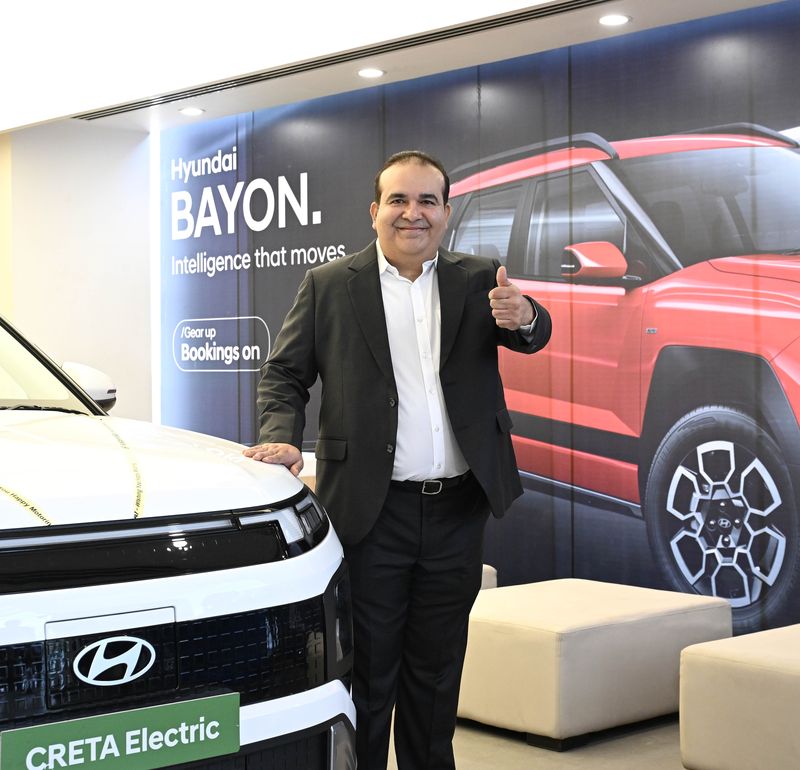
Hitesh Chadda, head of Kundan Hyundai, said, “Hyundai has built trust in the Indian market over the past 30 years and has now established itself as a brand like family to Indians. Customers choose vehicles by considering not just basic transportation but also style, technology and safety.”
Indian consumers’ purchasing criteria are also changing. Whereas price and ease of getting around used to take priority, more customers are now looking for premium features such as sunroofs, wireless smartphone connectivity, advanced driver-assistance systems (ADAS) and connected-car functions. Preference for sport utility vehicles (SUVs) is also on the rise, he said.
Chadda said, “Hyundai’s strengths include its distinctive premium design, range of convenience features, connected-car technology and brand trust built up over many years. We are focused on providing services that satisfy customers from the time they purchase a vehicle through after-sales care.”
Car sales rise sharply during major festival periods in India. Chadda said, “We usually sell around 300 to 350 cars a month, but that rises to 500 or more during major festivals such as Diwali and Dussehra.” Average monthly sales from January through September this year were 285. Depending on the options selected, customers sometimes have to wait seven to eight months for popular models to be delivered, he said.
■EV-specific service facilities, too ... Competition in after-sales service goes beyond sales
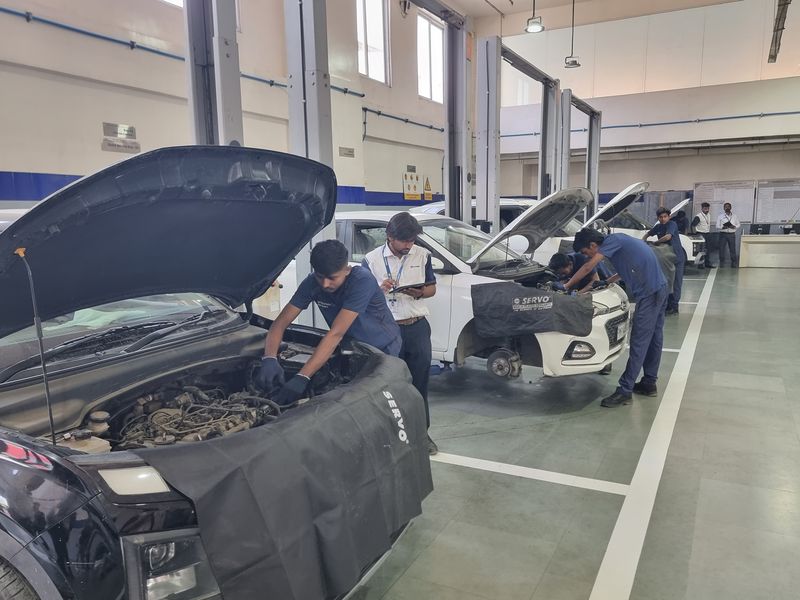
The service center next to the showroom is another competitive strength for Kundan Hyundai. It operates what is known as a “3S” system, providing vehicle sales, servicing and parts supply together. It is one of the largest facilities in the Pune area, with 45 service bays.Inside the service center, there was a dedicated area for repairing electric vehicles, separate from the area for conventional vehicles. A parts storage area holding more than 20,000 items was located on one side. It looked as though a Hyundai Mobis parts supply facility from South Korea had been transplanted there. Even body-related parts are stored on the second floor, allowing the facility to quickly supply the repair bays with the parts they need.
Repair times vary depending on the type of work. Routine minor repairs take three to four hours, while emergency repairs take around one to two hours. Body repairs following traffic accidents and other incidents take four to five days. The facility also has a parking lot that can accommodate about 200 vehicles and a car wash for use after servicing. Solar panels on the roof support environmentally friendly operations as well.
The shift in the electric vehicle market was also evident on site. Chadda said, “We currently sell around 15 electric vehicles a month, or about 5% of our total sales. EVs cost 15% to 20% more upfront than internal combustion engine vehicles, but their long-term maintenance costs are lower, and interest is growing, particularly in urban areas.”
He stressed, “There are competitors such as Tata and Mahindra, but Hyundai is continuing to strengthen its SUVs and advanced features to meet the needs of Indian customers. We will keep increasing our market share by building on our service strengths, which extend from sales through after-sales care.”
The basis for competition in India’s auto market is broadening from price to product appeal and service. The Hyundai dealership in Pune was responding to the changing expectations of Indian consumers by combining new-car displays, a digital purchasing experience, servicing and parts supply.
[email protected] Dongho Kim Reporter