A mere 0.66% move in a stock index in the opposite direction can wipe out an entire investment... Financial authorities warn about ‘perpetual futures’
- Input
- 2026-10-16 15:46:40
- Updated
- 2026-10-16 15:46:40
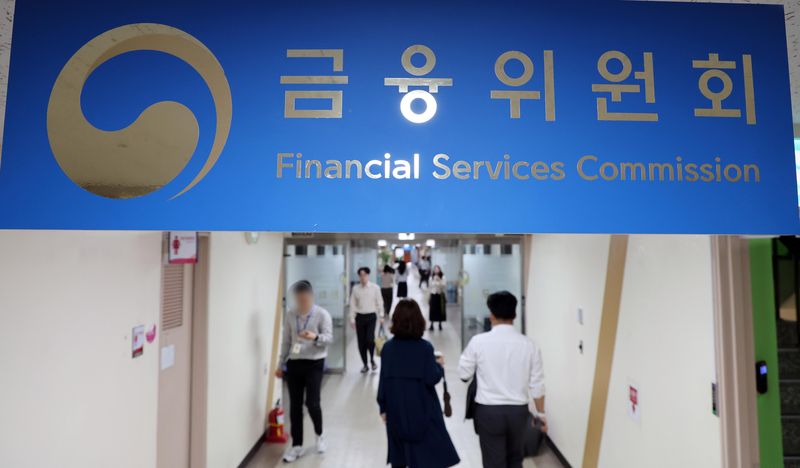
[Financial News] Perpetual futures traded on overseas virtual asset platforms offer leverage of up to 200x, meaning investors can lose their entire investment even if the underlying asset price moves only slightly. As investors also have difficulty obtaining protection under Korean law, financial authorities urged users to exercise caution.
The Financial Services Commission and the Financial Supervisory Service issued guidance for users of perpetual futures on the 16th, saying that particular caution should be exercised when investing through offshore platforms, including overseas virtual asset exchanges.
Perpetual futures use stocks, virtual assets and other instruments as underlying assets, but unlike conventional futures, they have no expiration date. They are not structured to deliver money or other assets at a specific point in the future, and their contractual terms and trading and settlement structures differ from those of traditional derivatives, including because they trade 24 hours a day, year-round.
Perpetual futures currently traded are structured to track changes in the price of an underlying asset at between 10 and 200 times. Losses can mount quickly even if the underlying asset price moves only slightly in the direction opposite to what an investor expects.
For example, a product offering 150x exposure to a Korean stock index could be forcibly liquidated, wiping out the entire investment, if the index moves just about 0.66% in the opposite direction intraday. The higher the leverage, the greater the likelihood of forced liquidation without time to post additional margin. Because of these speculative characteristics, perpetual futures are not permitted under Korea’s regulatory framework.
Investor protection may also have blind spots. Most offshore virtual asset platform operators are not subject to the regulatory framework under Korean law, making it difficult for users to receive the same level of protection as in Korea’s regulated financial markets. If a platform goes bankrupt or unilaterally suspends its operations or trading, it is difficult to pursue legal remedies and redress under Korean law. Domestic supervisory authorities may also find it difficult to verify whether deposited assets are protected and held in custody.
Financial authorities plan to monitor the launch of perpetual futures linked to the Korean stock market and their impact on the domestic market. If they confirm illegal business activities targeting Korean residents, such as using referral codes to encourage new sign-ups or earning fees, they plan to respond by, among other measures, filing complaints with investigative authorities.
Financial authorities also plan to ask major offshore platforms that support trading in perpetual futures related to the domestic market to cooperate in ensuring that no violations of Korean law occur. Whether to introduce similar products in Korea and how to regulate them will be carefully considered, taking into account the impact on the market, investor protection and trends in global discussions.
[email protected] Lee Jeong-hwa Reporter