[On the Ground] The secret to enjoying sweet potatoes even in midsummer: the hidden “eight months”
- Input
- 2026-10-18 12:38:34
- Updated
- 2026-10-18 12:38:34
[Financial News] “Since supermarkets sell sweet potatoes all year round, many people think they grow year-round in places like greenhouses.”
Sweet potatoes, which are always available on supermarket shelves, are actually harvested for only about two or three months of the year. For the rest of the year, most of the sweet potatoes on sale are those harvested in the fall and stored. Freshly harvested sweet potatoes are fluffy and mild, but as they mature over time, their starch turns into sugar, making them sweeter and moister. In other words, each sweet potato holds a different flavor depending on the season.
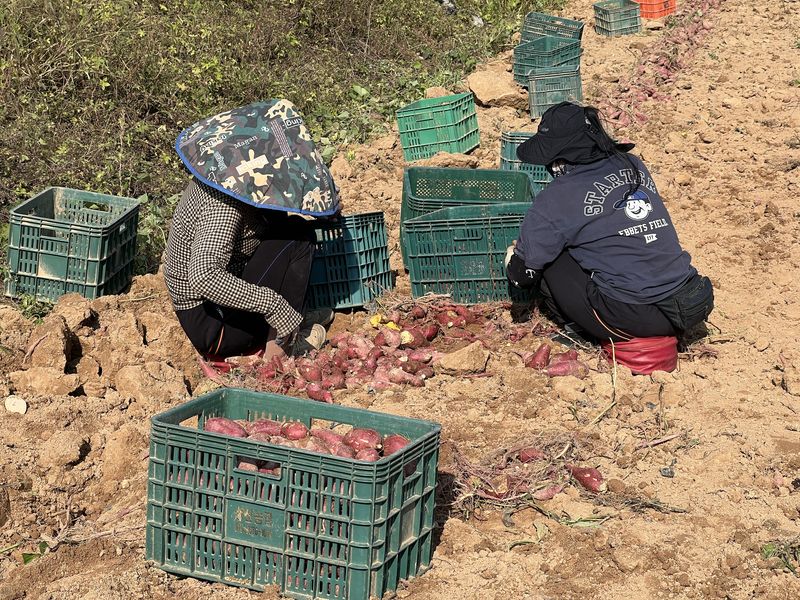
Harvesting was in full swing at an E-Mart sweet potato farm in Yeoju, Gyeonggi Province, which we visited on the 15th. In one corner of a sprawling 11,570-square-meter (3,500-pyeong) field—too large to take in at a glance—about 10 foreign workers were digging up sweet potatoes and chatting with one another. At the same time, work was underway on the other side using farm machinery.
Sweet potatoes are generally planted in fields around April and harvested after at least 150 days. Harvesting earlier than that means they have less starch and are less sweet, we were told. Right after planting, the field is covered with plastic to retain moisture. A few days later, holes are made and only the leaves are brought out through them. After further cultivation, harvesting begins around October. In warmer areas such as South Jeolla Province, the harvest continues until mid-November.
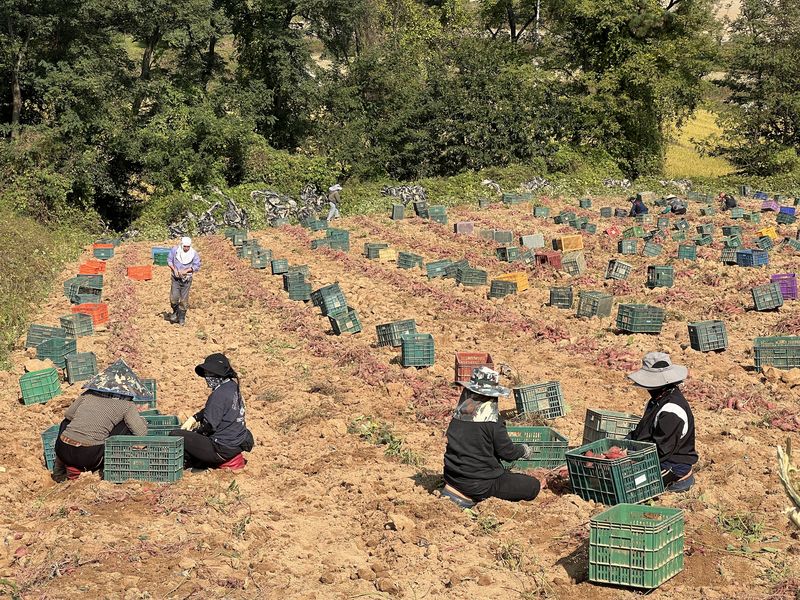
Farm owner Kim Dong-ok, who has been growing sweet potatoes for 30 years, said, “You can tell about 45 days after planting whether a plant is going to produce sweet potatoes,” adding, “If you dig up the roots that will grow into sweet potatoes, they’re reddish and plump.”
This year, summer drought was a key factor. In some growing regions, including Yeoju and Haenam, a lack of rainfall has hurt the crop, and growers expect harvests to be about 70% of last year’s level. Too little rain causes sweet potatoes to wrinkle and prevents them from developing proper color, while too much raises the rate of rot.
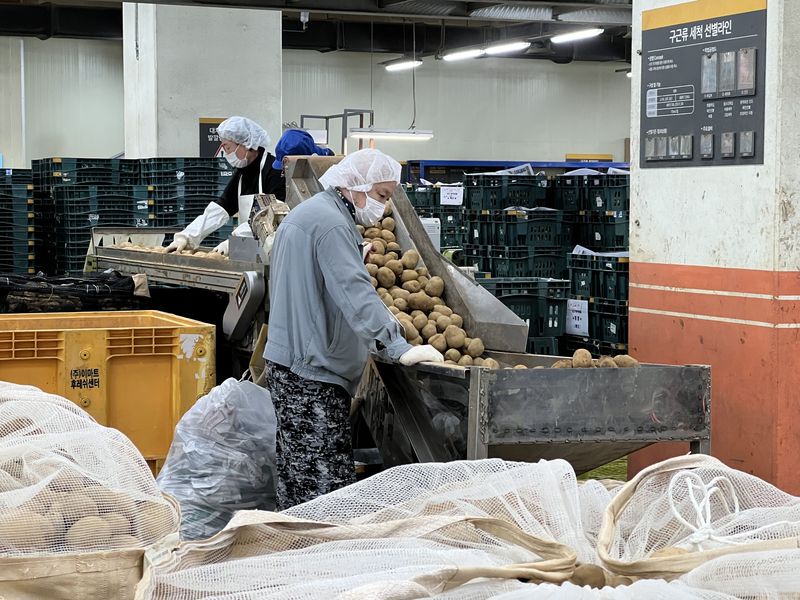
Some of the sweet potatoes dug up in the fields are taken to E-Mart’s Fresh Center in Icheon, Gyeonggi Province, where they undergo “curing.” The process allows tiny surface wounds sustained during harvesting and transport to heal. E-Mart sells about 5,000 metric tons of sweet potatoes a year, of which 1,100–1,500 metric tons go through curing and storage at the Fresh Center. Sweet potatoes handled this way can be stored for up to eight months and are supplied to stores in stages through the following summer.
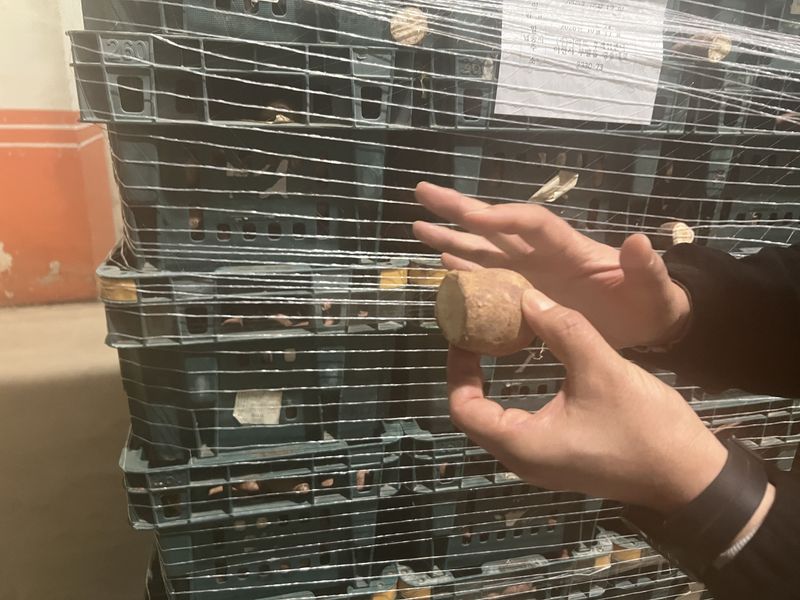
Choi Jong-hun, an assistant manager (AM) at E-Mart, said, “Now that the Fresh Center handles processes such as curing, which used to be done at the farms, we can source the produce directly without additional processing and offer it at lower prices.”
[email protected] Kim Hyun-ji Reporter