Kim Ji-yong’s First Words as Serious Crimes Investigation Agency Chief: “Move Quickly to Get Established”... Reviewing Cases for Transfer and Filling Positions Among Key Tasks
- Input
- 2026-10-16 14:14:59
- Updated
- 2026-10-16 14:14:59
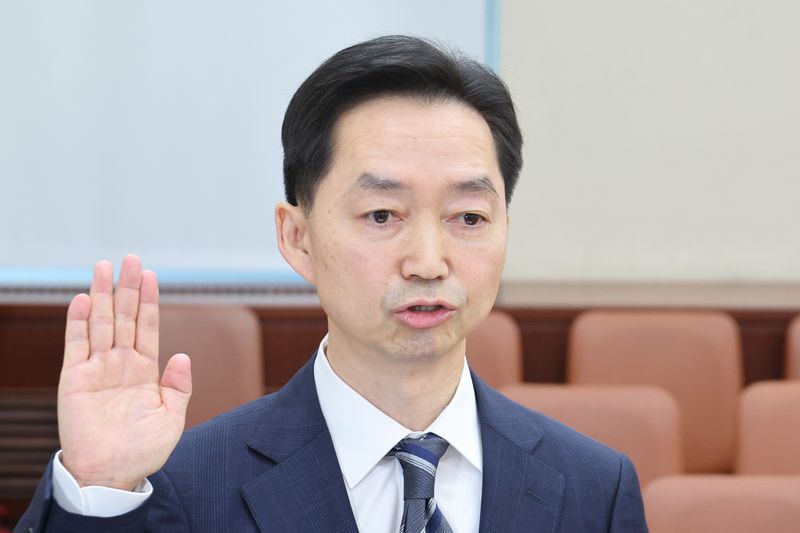
[Financial News] Kim Ji-yong, the inaugural chief of the Serious Crime Investigation Agency (Serious Crimes Investigation Agency), reported for work for the first time on the 16th and called for investigations to begin promptly and for visible results. As consultations intensify over the transfer of around 200 cases from the Prosecution Service, the Seoul Regional Serious Crimes Investigation Agency, which handles corporate and economic crimes, has also begun reviewing cases. However, with senior posts in key investigative units vacant and the actual transfer of cases expected to take time, reorganizing the agency and establishing an investigative framework have emerged as immediate tasks.
According to legal circles, Chief Kim reported for work for the first time on the 16th and received briefings on key issues and work in the departments under his jurisdiction. The Serious Crimes Investigation Agency said, “Chief Kim stressed the need to move forward swiftly with work by quickly forming a dedicated response team to ensure the agency gets established early, and to achieve visible results, including launching investigations, as soon as possible.” As he had said during his confirmation hearing, Chief Kim instructed the agency to form a task force (TF) to support its early establishment and organize its staffing, facilities and systems.
One of the Serious Crimes Investigation Agency’s immediate tasks is selecting and transferring cases it will take over from the Prosecution Service. Regional Serious Crimes Investigation Agencies recently received from the agency’s headquarters a list of cases proposed for transfer from the Prosecution Service, and are consulting on whether and when to transfer each case. The Prosecution Service provided a list of around 200 cases, which the regional agencies are reviewing to determine whether they fall within their jurisdictions and investigative remit.
An official from the Seoul Serious Crimes Investigation Agency said, “We received the list from headquarters and are consulting on taking over the cases on it,” adding, “Given the circumstances on both the Seoul agency’s and the Prosecution Service’s sides, the process is expected to proceed sequentially.” The official added, “Once we agree with the Prosecution Service on when to take over the cases, we will obtain the records accordingly.”
The agency is also assigning cases based on complaints it has received directly. A case in which President Lee Jae-myung and military commanders, among others, were accused of general treason and other offenses has been assigned to the Public Security Investigation Division of the Anti-Corruption Investigation Bureau. A case in which a public-interest whistleblower who raised allegations that Democratic Party of Korea lawmaker Kim Seung-won lobbied the Ministry of Food and Drug Safety over clinical trial approval sued Democratic Party of Korea lawmaker Park Seon-won and others has also been assigned to the Anti-Corruption Investigation Bureau. However, both cases are still at the stage of reviewing their details after assignment, so it would be difficult to describe them as having entered the full-scale investigation stage.
Alongside taking over cases, reorganizing the investigative chain of command is another task. According to the Seoul Serious Crimes Investigation Agency’s staffing chart as of the 8th, one of its six bureau director positions and 11 of its 25 division chief positions are being filled in an acting capacity. In other words, about 39% of the 31 bureau director and division chief posts are being filled by acting officials.
In particular, three of the five division chiefs in the Economic Crime Investigation Bureau, which handles cases closely tied to businesses, are acting: the head of the Serious Economic Crime Investigation Division 2, the International Economic Crime Investigation Division, and the Crime Proceeds Investigation Division. In the Financial Crime Investigation Bureau, the head of the Financial Crime Investigation Division 2 is acting; in the Anti-Monopoly Investigation Bureau, the bureau director and the heads of Anti-Monopoly Investigation Divisions 2 and 4 are acting. Thus, seven of the 16 bureau director and division chief posts across the three bureaus for economic crime, financial crime and anti-monopoly investigations are being filled in an acting capacity.
Although cases can be assigned and investigations directed under an acting arrangement, observers say formal appointments to senior posts and the establishment of an operational framework for investigative teams are needed to conduct full-scale investigations into complex corporate and financial cases. An official from the Serious Crimes Investigation Agency said, “There’s no major problem for now,” but added, “It would probably be better to have the positions filled.”
[email protected] Choi Eun-sol Reporter