Gangneung City’s First Organizational Restructuring of Its Ninth Elected Administration Creates Future Planning, Climate and Environment, and Transportation Information Bureaus
- Input
- 2026-10-16 14:18:36
- Updated
- 2026-10-16 14:18:36
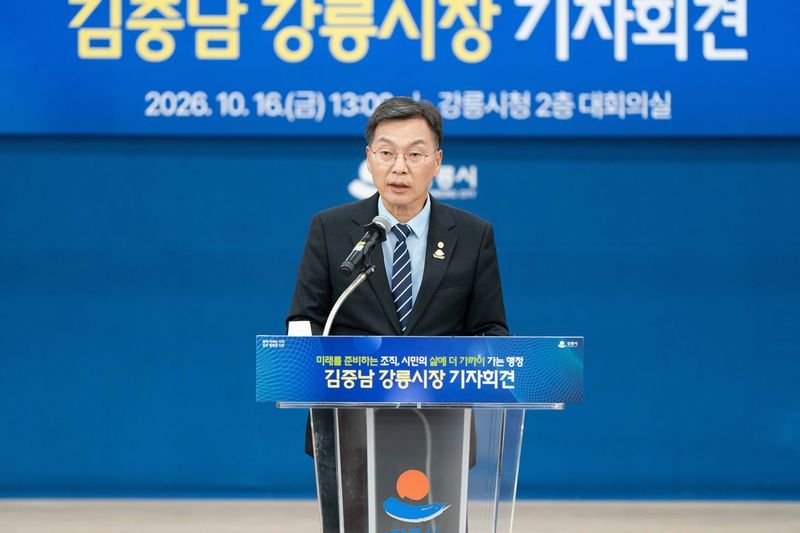
【Financial News, Gangneung = Reporter Kim Gi-seop】Gangneung City is moving ahead with the first organizational restructuring of its ninth popularly elected administration. The plan includes creating the Future Planning Bureau, the Climate and Environment Bureau, and the Transportation Information Bureau, as well as dedicated departments for youth, care, and permits and approvals.
According to Gangneung City on the 16th, Mayor Kim Jung-nam held a press conference that day in the main conference room on the second floor of City Hall and announced the proposed reorganization. The city will abolish the Special Self-Governing Promotion Task Force, a temporary organization, and establish three bureaus, changing its current structure from 11 bureaus and 79 divisions to 13 bureaus and 81 divisions. The city said administrative challenges have grown, including population decline, aging, and the response to the climate crisis, while town hall meetings and other forums have seen strong calls to ease traffic problems and handle public service requests more quickly.
At the heart of the reorganization, the Future Planning Bureau will take over the Planning and Budget Division from the Administration Bureau, bringing medium- and long-term development strategies and resource allocation together. The city will also establish a Lifelong Education Division, a Youth Leap Division, and an Expedited Permitting Division to handle permitting and approval work from multiple departments in one place. The Economic and Environment Bureau will be split into the Economic Bureau and the Climate and Environment Bureau. The Economic Bureau will merge the Economic Promotion Division and the Small Business Division into the Economic Affairs Division, and establish a New Growth Industries Division to oversee future industries such as artificial intelligence (AI). The Climate and Environment Bureau will pursue carbon-neutrality policies, led by its Climate and Energy Division.
The Welfare Bureau will gain an Integrated Care Division linking medical care, long-term care, and caregiving. The Senior Citizens and Persons with Disabilities Division will be split into the Senior Welfare Division and the Disability Welfare Division, while the Population and Family Division and the Childcare Division will be merged into the Family Welfare Division. The Transportation Information Bureau will apply the advanced transportation infrastructure built in connection with the ITS World Congress to urban management. The existing Transportation Division will be split into the Transportation Administration Division and the Transportation Facilities Division, and a City Information Division will be established to oversee the operation of the intelligent transportation system (ITS) and smart city work.
The city will also establish the Gangneung Art Museum and elevate its Seoul Office to an independent level-5 agency to strengthen efforts to secure central government funding. After advance legislative notice and revisions to ordinances, the city plans to begin operating the new organization on January 1 next year.
Mayor Kim Jung-nam said, “After meeting citizens in person, I found that what they wanted was not grand slogans but fewer traffic problems and timely handling of public service requests.” He added, “We will establish departments dedicated to youth, care, and permitting and approvals, and integrate into our administration the advanced transportation infrastructure put in place in connection with the ITS World Congress, so that citizens can feel the organizational changes in their everyday lives.”
[email protected] Kim Gi-seop Reporter