Interbank FX trading reached $55.6 billion in Q3 as net forward selling plunged
- Input
- 2026-10-16 12:00:00
- Updated
- 2026-10-16 12:00:00
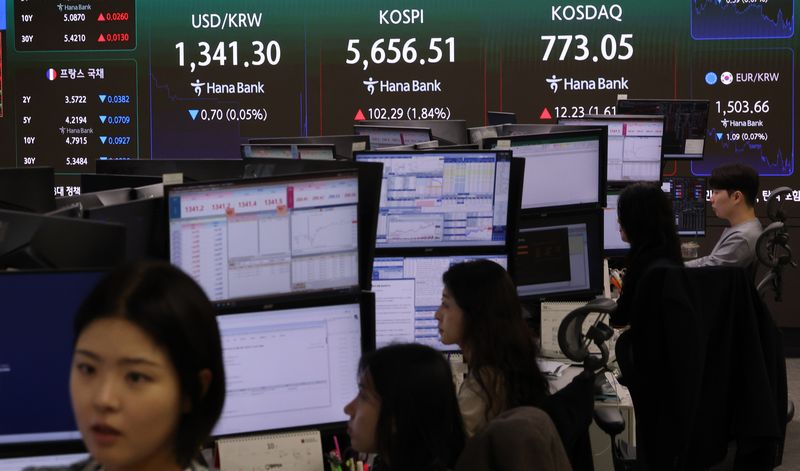
[Financial News] Amid U.S. monetary tightening and increased exchange-rate volatility, the average daily volume of foreign exchange transactions between domestic banks exceeded $55 billion in the third quarter of this year.
According to the Bank of Korea's report on foreign exchange trading trends in the third quarter of 2026, released on the 16th, the average daily volume of foreign exchange transactions in the interbank market (based on transactions routed through foreign exchange brokers) was $55.65 billion, up $2.25 billion from $53.4 billion in the previous quarter.
This was largely due to foreign exchange swap transactions, or currency exchanges, increasing by $1.8 billion from the previous quarter.
As companies' incentive to hedge foreign-exchange risk eased, the rush to sell dollars in advance subsided. Domestic companies' net sales of forward contracts fell sharply to $4.5 billion from $17.4 billion in the previous quarter.
However, as import and export transactions picked up amid exchange-rate volatility, total forward transactions (purchases and sales combined) rose by $22.3 billion from the previous quarter to $93.8 billion over the same period.
As domestic and international conditions shifted, including prolonged instability in the Middle East and increased exchange-rate volatility, overseas investors sold won and bought dollars.
Nonresidents' non-deliverable forward (NDF) transactions shifted from net purchases of $26.9 billion in the previous quarter to net sales of $30.7 billion.
The average daily volume of total NDF transactions with domestic foreign exchange banks (purchases and sales combined, including ND swaps) rose to $23.73 billion from $22.77 billion in the previous quarter.
According to the Bank of Korea's 'Trends in International Financial and Foreign Exchange Markets Since September,' also released that day, the won-dollar exchange rate rose amid conflict in the Middle East and concerns about U.S. interest rate hikes, then turned downward again as export companies sold dollars.
In September, the average daily fluctuation in the won-dollar exchange rate widened to 0.52% (7.0 won) from 4.4 won (0.31%) the previous month.
The three-month won-dollar swap rate, which represents the cost of borrowing dollars, fell, partly due to nonresidents' net sales of NDFs. The three-year currency swap rate, linked to Korean Treasury bond yields, stood at 3.56% as of October 14, unchanged from the end of August (3.56%).
[email protected] Jeong Sang-gyun Reporter