Jobs and the CSAT... Films Rooted in Reality Are Coming: ‘Final Interview’ and ‘The CSAT: The Secret Behind the Questions’
- Input
- 2026-10-16 09:47:48
- Updated
- 2026-10-16 09:47:48
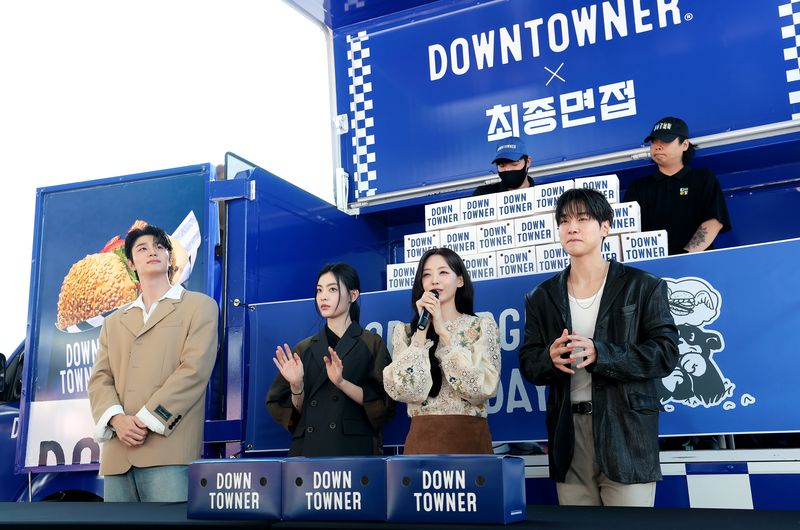

[Financial News] Among the small- and medium-scale films that were box-office hits in the first half of this year, several stood out for capturing the realities of youth or drawing young audiences in with vivid horror experiences.
Notable examples include ‘If We,’ which depicts young people’s love as it is buffeted by the pressures of everyday life, including jobs and housing, and ‘Salmokji’ and ‘The Backrooms,’ which put horror experiences front and center. ‘Salmokji’ in particular drew 3.24 million moviegoers in the first half of the year on a net production budget of 3 billion won. Viewers in their 20s accounted for 34% of its audience and those in their teens for 14%, with young moviegoers driving its box-office success. More than half of the audience for the low-budget horror film ‘The Backrooms’ was also in their teens or 20s.
Films about job interviews and setting the College Scholastic Ability Test (CSAT) questions will meet audiences in late October. They are ‘Final Interview,’ which adds mystery to the competitive realities young people face, and ‘The CSAT: The Secret Behind the Questions,’ a comedy about the unfamiliar world behind the college entrance exam.
They beat 5,000-to-1 odds, then face a battle of revelations... ‘Final Interview’ adds mystery to job seekers’ desperation
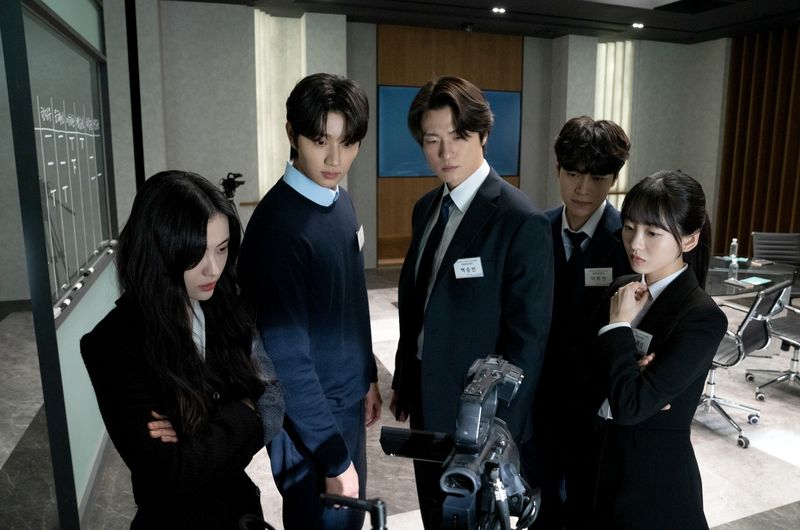
‘Final Interview’ combines the desperation of job seekers with mystery. Its protagonists are six applicants who make it through odds of 5,000 to 1 in an open recruitment drive at the global IT company Spira Links and reach the final hurdle. They had been preparing for a team discussion together and dreaming that they would all get hired, but on the day of the final interview they are given an unexpected task: after discussing for two hours in an interview room monitored by cameras on every side, they must choose the one successful candidate themselves.
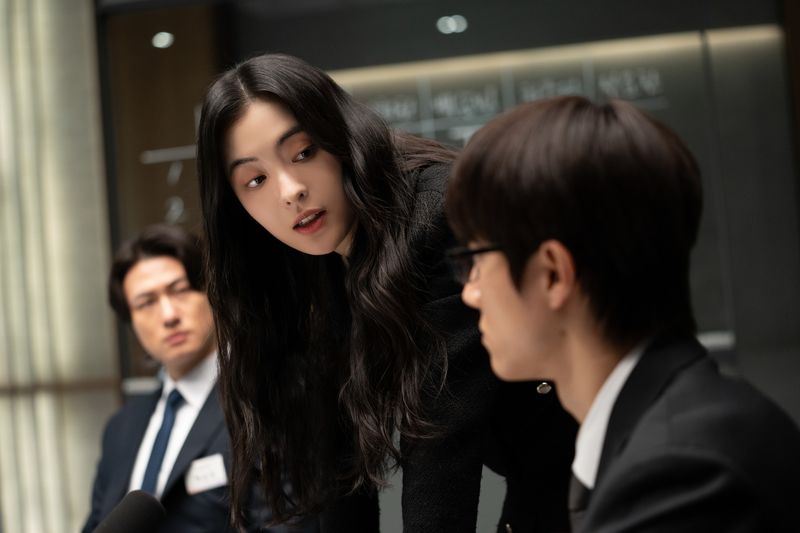
In an instant, former colleagues become competitors and judges assessing one another. Then mysterious envelopes exposing each person’s secrets are found, turning the interview room into the scene of an uncontrollable battle of revelations. The tension builds as the characters wonder whose words to trust and who engineered the situation.
The pressure to prove oneself to get a job, and the contradiction of having to compete with colleagues one prepared alongside for a limited number of positions, resonate with the realities young audiences face. In an interview, where applicants’ abilities and character are judged in a short time, can you make the same assessment after learning someone else’s secrets?
Director Kim Jung-hoon said through investor-distributor NEW, “The striking setup—in which an envelope of revelations is found as six job seekers compete for a single position—will make audiences feel immersed, as if they have become the seventh applicant.”
Jo Yi-hyun, Kim Jae-won, Shin Seung-ho, Kang Yoo-seok, Kwak Dong-yeon and Bae Kang-hee play the six applicants. Jo Yi-hyun plays Moon Hye-in, an observant woman who closely watches those around her, while Kim Jae-won plays Han Jin-woo, an idealist who believes in people. Shin Seung-ho plays Baek Seung-bin, an action-oriented leader; Kang Yoo-seok plays Lee Hee-chan, a sociable mediator; Kwak Dong-yeon plays Jeon Yo-han, a strategist whose true intentions are hard to read; and Bae Kang-hee plays Cha Ju-won, a perfectionist with an impeccable résumé. A key point of interest is how the characters, with their differing personalities and standards of judgment, change their relationships as revelations come to light. Opens November 4

“How are CSAT questions written?”... ‘The CSAT: The Secret Behind the Questions’ offers a glimpse into 40 days behind closed doors
While ‘Final Interview’ is about young people entering the competition, ‘The CSAT: The Secret Behind the Questions,’ opening on the 28th, turns its attention to the adults who create the exam that sets the terms of that competition. The comedy follows what happens when Maeng Bo-ram, a Korean-language teacher in a small provincial city, joins the CSAT question-setting headquarters because of an administrative error.
Maeng Bo-ram checks in, elated after receiving an official notice appointing them as an exam question setter, only to learn later that they had been summoned by mistake. By then, however, the phone has already been handed in and Maeng has been cut off from the outside world. Among exam setters, each with their own pride and interests, Maeng must spend 40 days creating “problem-free questions”—with no typos or grounds for dispute.
Although the focus shifts from test-takers to the exam setters, including teachers and professors, the question “Who on earth writes the CSAT questions, and how?” is an intriguing one for every generation.
Lee Sun-bin plays Maeng Bo-ram, a young teacher, while Yoo Jae-myung plays Moon Ju-yeol, the committee chair who pulls the strings at the question-setting headquarters. Kim Young-min appears as Park Gyeong-tae, chair of the review committee and Moon Ju-yeol’s rival, while Jeon Seok-ho plays Ki Jun-su, an employee of the Korea Institute for Curriculum and Evaluation and Moon Ju-yeol’s right-hand man. The clash between a young teacher who stands by principles and an older generation accustomed to compromise, along with the adults’ maneuvering to protect their positions, adds to the comedy.
Yoo Jae-myung said through investor-distributors Barunson E&A and BY4M Studio, “This is a film that strives to tell engaging stories about all kinds of people fighting, compromising and resorting to underhanded tactics to protect their positions, as well as about lives marked by sincerity amid it all.”
To recreate the closed-off environment of the question-setting headquarters, the production team consulted the book ‘Who Writes the CSAT, and How?’, which covers the exam-setting diary of a former professor who served twice as an actual question setter. For the scenes showing the arrival and departure ceremonies, they erected a fence 20 meters long and 4 meters high based on historical research, and hired a specialist company to install a security checkpoint in the lobby.

[email protected] Shin Jin-a Reporter