LH Launches Fast-Track Push for 5,032 Urban-Complex Homes in Singil 4, Nokbeon-dong and Songjung-dong
- Input
- 2026-10-16 08:54:16
- Updated
- 2026-10-16 08:54:16
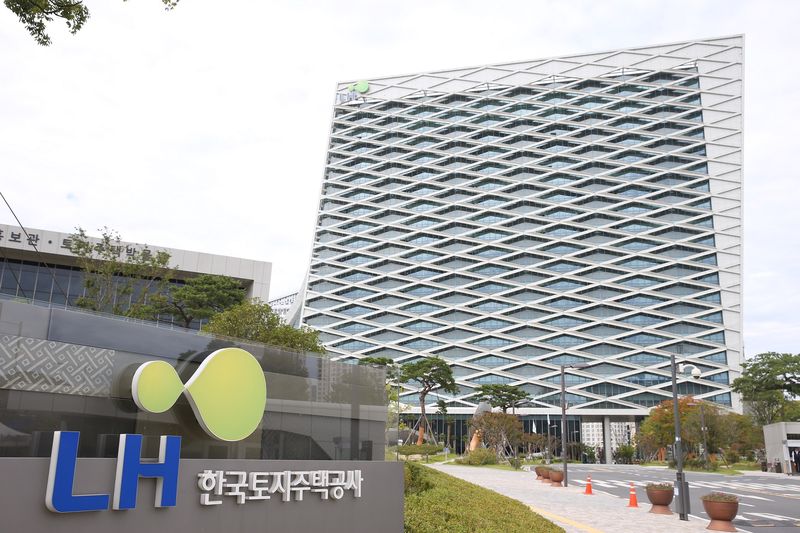
[Financial News] The schedule for supplying 5,032 homes to be built directly by the public sector in three aging residential areas in Seoul’s Yeongdeungpo, Eunpyeong and Gangbuk districts is expected to pick up pace.
According to LH on the 16th, the corporation has decided to expedite follow-up procedures for three urban public housing complex project districts: Singil 4 District, Nokbeon-dong Neighborhood Park and the area near Songjung-dong Community Service Center. The move follows the Ministry of Land, Infrastructure and Transport’s (MOLIT) designation of the three sites as urban-complex project districts on the 30th of last month. The aim is to bring forward the date when homes are supplied by securing approval for the complex project plans on schedule.
The key is how quickly the contractors for the complex projects can be selected. LH will broaden channels for consulting with residents from the early planning stages and reflect each district’s different conditions and residents’ needs in the project plans. It will provide interested contractors with drawings and design guidelines in advance to shorten the selection process. Supporting the early formation of resident representative councils is part of the same effort.
An integrated design-and-construction competition will also be introduced. Under this structure, a private-sector developer is responsible for design, project approval and construction as a single package. LH says this will help improve the quality of public housing by enabling it to draw widely on the private sector’s technical capabilities and know-how. It also expects construction time to be reduced, since a separate design competition will not be necessary.
The largest of the three sites is the Nokbeon-dong Neighborhood Park district, near lot 94 in Nokbeon-dong, Eunpyeong-gu. It will have 2,676 homes on a 91,162-square-meter site. The area is close to Bulgwang and Nokbeon stations on Seoul Subway Lines 3 and 6, making it convenient to travel downtown, and is bordered by two neighborhood parks.
The district near Songjung-dong Community Service Center, around 87-33 Mia-dong in Gangbuk-gu, is planned to have 1,083 homes on a 36,322-square-meter site. It adjoins Mia Sageori Station on Line 4, and Changmun Girls’ High School Station on the Dongbuk Line, which is set to open soon, will also be within walking distance. The Jangwi 12 and Mia 16 urban-complex projects are underway to the south, and once all the projects are completed, a residential complex of about 3,000 households is expected to take shape in the area.
A total of 1,273 homes will be supplied in Singil 4 District, around 4911 Singil-dong in Yeongdeungpo-gu, on a 51,824.97-square-meter site. Its proximity to business centers such as Yeouido makes it a potential residential area for workers seeking to shorten their commutes. All three sites are housing supply activation districts of the low-rise residential type.
The Nokbeon-dong Neighborhood Park and Songjung-dong Community Service Center districts were announced by LH as preliminary project districts last December, along with areas near Mokdong Station, Gangseo High School in Mok 4-dong, west of Goeunsan and Mia 16 District. After meeting the resident-consent requirements and passing the relevant reviews, they became main project districts about nine months later. On the 30th of last month, MOLIT designated five sites in Seoul, including these districts and areas such as west of Goeunsan and Gangseo High School in Mok 4-dong, as main project districts, covering a total of 11,818 homes. On the same day, as a follow-up to the Aug. 13 real estate measures, it also announced 11 new candidate sites in Seoul, with about 18,000 homes.
The urban-complex project is a redevelopment method in aging downtown areas where private redevelopment is difficult to make profitable, with public entities such as LH acting directly as project implementers. It allows projects to skip steps such as establishing an association and drawing up a management and disposal plan, while receiving floor-area-ratio incentives, shortening the permitting period and improving project feasibility. Since the project was first introduced in 2021, LH has pursued projects at 44 sites, totaling 73,000 homes. However, as of the end of last month, construction had not yet begun at any of them. The first groundbreaking is expected this year at the Incheon Jemulpo Station Complex District, which will have 3,500 homes.
An LH official said, “We will accelerate project implementation following district designations to expand housing supply in urban areas and improve aging residential environments.”
[email protected] Jung Kyung-soo Reporter