“Jang Yun-gi Could Also Be Paroled After 20 Years” ... 151 Murderers Released Over 10 Years
- Input
- 2026-10-16 08:25:18
- Updated
- 2026-10-16 08:25:18
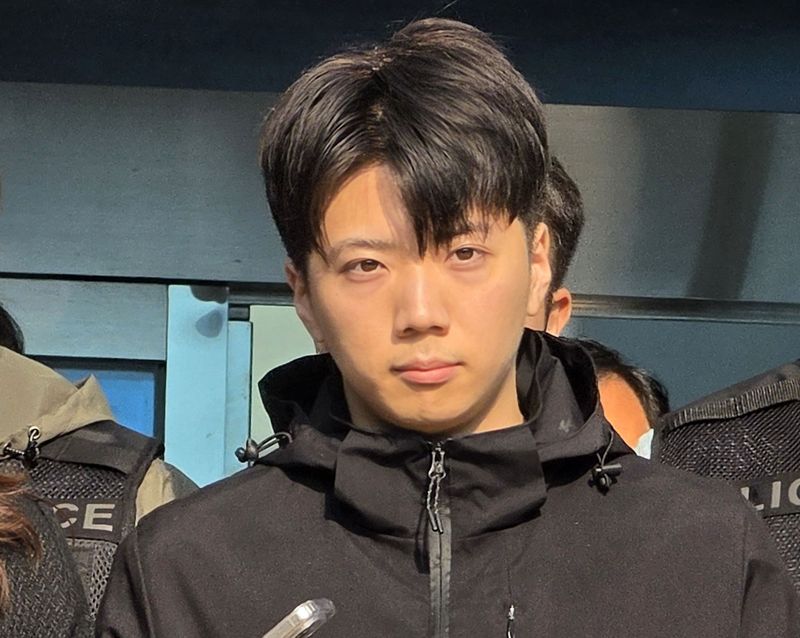
[Financial News] Over the past 10 years, about 150 prisoners serving life sentences have been granted parole, according to figures. Nine out of 10 were violent offenders who had committed murder. The Justice Ministry, however, does not even track their recidivism, prompting criticism that this is heightening public anxiety about becoming victims of crime.
According to records obtained from the Ministry of Justice on the 15th by the office of Seo Young-gyo, a Democratic Party of Korea lawmaker on the National Assembly’s Legislation and Judiciary Committee, 151 inmates serving life sentences were granted parole from 2017 through September this year.
By type of crime, 144 inmates had committed serious violent crimes such as murder, robbery-murder, parricide and rape-murder, accounting for 95% of the total. Five had committed robbery resulting in death, while one each had attempted robbery-murder and attempted murder.
The yearly figures were 11 in 2017, 40 in 2018, 14 in 2019, 18 in 2020, 17 in 2021, 16 in 2022, 12 in 2023, one in 2024 and nine in 2025.
As of September this year, 13 people had been granted parole. All had committed murder.
Under Article 72 of the Criminal Act, even a person sentenced to life imprisonment may be granted parole after serving at least 20 years, subject to certain requirements.
Although many prisoners who had committed serious violent crimes were granted parole, the Justice Ministry was found not to separately track their recidivism.
A Justice Ministry official said, “We do not maintain separate data on recidivism among inmates serving life sentences after their release on parole; we only compile the rate at which all parolees return to prison.”
The rates at which parolees returned to prison, according to figures the Justice Ministry submitted to Rep. Seo’s office, were 7.3% in 2018, 6.8% in 2019, 6.2% in 2020, 5.9% in 2021 and 7.4% in 2022, among other years.
Meanwhile, as serious violent crimes continue to occur, including the recent case in Seoul’s Songpa District involving the murder of a mother-in-law and the kidnapping of a wife, and the indiscriminate knife attack in Incheon, some are calling for a de facto life sentence without parole.
The 13th Criminal Division of the Gwangju District Court recently sentenced Jang Yun-gi, the “high school girl murderer,” to life imprisonment. The court reignited debate over introducing life sentences without parole, saying, “The only way to offer even a little comfort to the victim and the bereaved family, and to prevent similar crimes from recurring, is to never allow parole while the defendant is alive and to fully enforce the life sentence.”
The rationale is that South Korea, which has not carried out an execution since 1997 and is classified by the international community as a “de facto abolitionist country,” needs to impose severe punishments comparable to the death penalty for violent and heinous crimes such as murder.
Earlier, the appellate court in the case of Kim Tae-hyun, who was accused of murdering a mother and her two daughters in Seoul’s Nowon District in 2021, sentenced him to life imprisonment, saying, “Parole should not be permitted.” The court of first instance that sentenced Choi Won-jong to life imprisonment for a knife attack that caused 14 casualties in Bundang District, Seongnam, Gyeonggi Province, in 2023, also proposed ways to restrict parole.
In 2023, as indiscriminate knife attacks targeting the public occurred one after another, efforts were made to introduce life imprisonment without parole. An amendment to the Criminal Act was submitted to the National Assembly but was later scrapped amid strong public opposition.
In September 2024, Rep. Seo introduced as lead sponsor an amendment to the Criminal Act that would introduce life imprisonment without parole, seeking to address limitations in the criminal justice system.
Rep. Seo said, “Serious violent crimes must be met with correspondingly severe punishment,” adding, “Offenders whose crimes are heinous and for whom it is difficult to find any possibility of rehabilitation or reform need to be permanently separated from society.”
[email protected] Ahn Ga-eul Reporter