International team including KAIST researchers proposes 1952 as the start of the ‘Anthropocene,’ an era of rapid change in Earth’s environment
- Input
- 2026-10-16 08:18:03
- Updated
- 2026-10-16 08:18:03
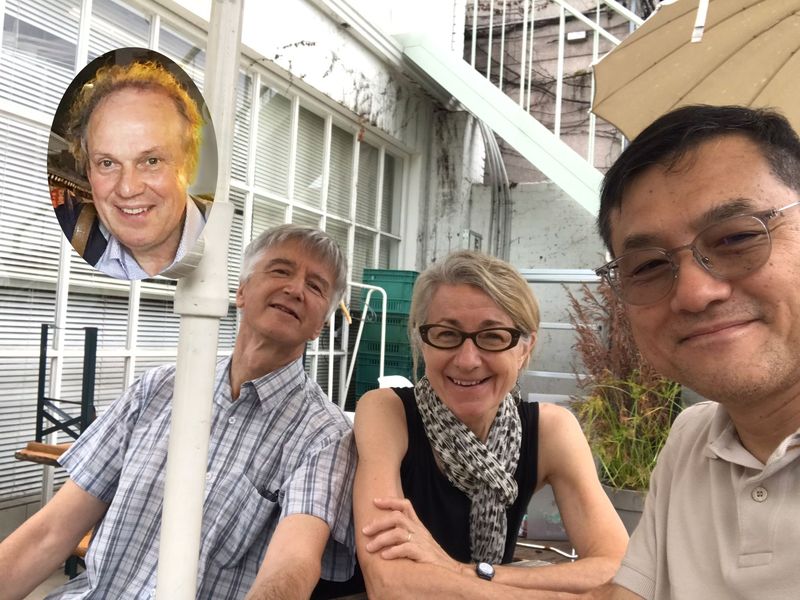
[Financial News] An international research team that includes a researcher from the Korea Advanced Institute of Science and Technology (KAIST) has proposed common criteria for defining the ‘Anthropocene’—the era in which human activity has rapidly changed Earth’s environment—and identifying its starting point. The aim is to distinguish the relatively stable Earth environment before 1952 from the rapid changes that followed, and thereby better understand the scale and pace of the environmental crisis.
According to KAIST on the 16th, Distinguished Professor Beom-soon Park of the KAIST Graduate School of Science and Technology Policy, who heads the Anthropocene Research Center, published a paper with an international research team proposing a definition of the Anthropocene and directions for future research and its use. The Anthropocene is a concept describing an era in which human activity has had a great enough impact to alter Earth’s environment as a whole, including its climate and ecosystems. For around 20 years, the concept has spread beyond the natural sciences to the humanities and social sciences, education, the arts and other fields, but differing interpretations of its meaning and starting point have persisted.
A proposal to recognize the Anthropocene as an official geological epoch was not approved in 2024. However, the concept continues to be used across a range of academic and social fields to explain the impact humans have had on Earth’s environment. Against this backdrop, the paper sets out a consistent definition of the Anthropocene and proposes research directions that can be applied across disciplines.
The researchers noted that defining the Anthropocene broadly as simply ‘a period when humans affected the environment’ makes it difficult to show how recent, rapid changes to Earth differ from past human impacts. Humans have been changing the environment for a long time, they said, but it is important to recognize that since the mid-20th century their impact has grown large enough to threaten the stability of the Earth as a whole.
The researchers proposed 1952 as the starting point of the Anthropocene. This coincides with the ‘Great Acceleration,’ a period in the mid-20th century when industrialization and urbanization advanced rapidly and various indicators of human activity and Earth’s environment changed sharply.
The idea is that clarifying the starting point and meaning in this way would allow researchers and policymakers from different fields to compare and discuss changes in Earth’s environment using the same criteria. The researchers said the Anthropocene could serve as a common language connecting the natural sciences with the humanities and social sciences, and helping people understand and respond to the environmental crisis in areas such as environmental policy, international law and education.
Professor Park said, “The Anthropocene is a common language for understanding how quickly and profoundly humans are changing the Earth. If we clarify its meaning and criteria, we can compare changes in Earth’s environment more accurately and discuss together how to respond.” He added, “I hope this paper will help connect diverse fields, including science, policy, education and the arts, and provide an opportunity to respond to the environmental crisis together.”
The paper involved international scholars from various fields, including Professor Jan Zalasiewicz (Jan Zalasiewicz) of the University of Leicester in the UK, a co-chair of the Anthropocene Working Group; Professor Julia Adeney Thomas (Julia Adeney Thomas) of the University of Notre Dame in the US; and Professor Jürgen Renn (Jürgen Renn) of Germany’s Max Planck Institute of Geoanthropology.
The paper was published on September 8, 2026, as part of the special feature ‘The Anthropocene Debate’ in the international journal Nature Reviews Earth & Environment.
[email protected] Yeon Ji-an Reporter