State paid Choi Seo-won's 39.27 million won hospital bill, but after leaving it unattended for more than five years, ultimately cannot recover the money
- Input
- 2026-10-16 08:04:55
- Updated
- 2026-10-16 08:04:55
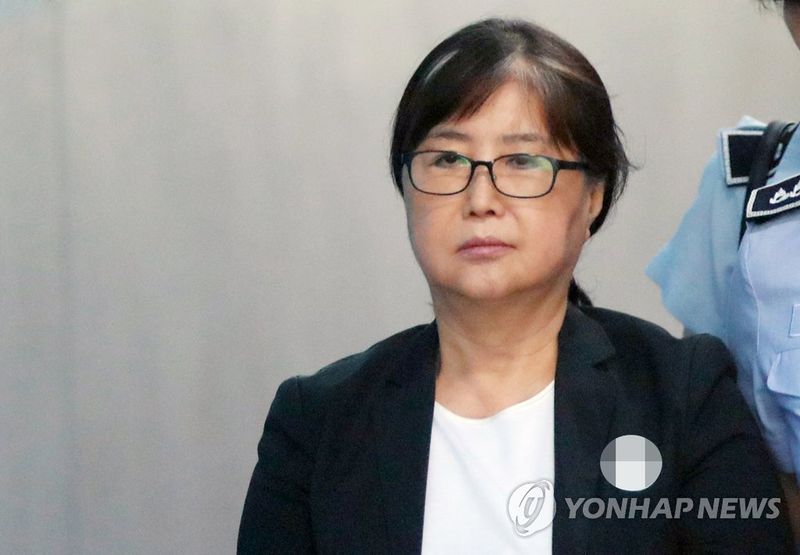
[Financial News] A court has ruled that Choi Seo-won, formerly Choi Soon-sil, who was identified as a “behind-the-scenes power broker” in the Park Geun-hye administration’s influence-peddling scandal, does not have to reimburse the correctional authorities for her hospital bills, which they paid on her behalf.
On the 15th, Yonhap News Agency and other outlets reported that Judge Kim Do-yo of the Seoul Central District Court’s Civil Division 210, a single-judge panel, ruled against the government in its reimbursement suit against Choi.
Choi fell in a bathhouse while being held at the Seoul Dongbu Detention Center in July 2019 and underwent shoulder surgery at Gangdong Sacred Heart Hospital from May to July 2020. When she did not pay the costs, citing her financial circumstances, the correctional authorities paid her hospital bill of 39.27 million won on October 23 that year. The detention center notified Choi on the 28th of the same month that she had to pay the medical expenses, but no significant follow-up action was taken over the next five years.
It was not until last November that the correctional authorities learned the medical expenses had been paid on Choi’s behalf and instructed the Seoul Dongbu Detention Center to file a reimbursement suit. The detention center filed suit against Choi on November 25 that same year.
The key issue was the statute of limitations. Under the National Finance Act, the state’s monetary claims expire if they are not pursued for five years, but a payment notice issued by the state has the effect of interrupting the limitation period.
Choi’s side argued that the statute of limitations had expired because the suit was filed more than five years after October 23, 2020, the date the state paid the bill on her behalf.
The government countered that the notice demanding payment of Choi’s hospital treatment costs, which she received on October 28, 2010, qualified as a payment notice under the National Finance Act, and that the limitation period should be calculated from November 28, 2010, the day after the 30-day payment deadline expired.
The court held, “It is established that Choi asked the warden of the Dongbu Detention Center to arrange treatment at an outside medical facility at her own expense, and that the warden approved the treatment on the condition that she pay for it herself.” It added, “In principle, Choi is obligated to pay the medical expenses advanced by the government, as well as damages for delay.”
However, the court rejected the government’s argument that the limitation period had been interrupted, saying, “The reimbursement claim arose on October 23, 2020, and it is clear from the dates that the five-year statute of limitations has expired,” and that “it is difficult to find that the state issued a payment notice in accordance with the relevant laws and regulations.”
The court found that, under laws and regulations governing state claims, a payment notice requires a payment resolution form to be prepared and to include all relevant details, such as the payment address and the basis for calculating the amount. The detention center’s payment demand notice did not meet these formal requirements.
[email protected] Kim Su-yeon Reporter