Zelenskyy's disclosure of North Korean POWs' repatriation to South Korea complicates Seoul's strategies toward Pyongyang and Moscow
- Input
- 2026-10-16 05:54:47
- Updated
- 2026-10-16 05:54:47
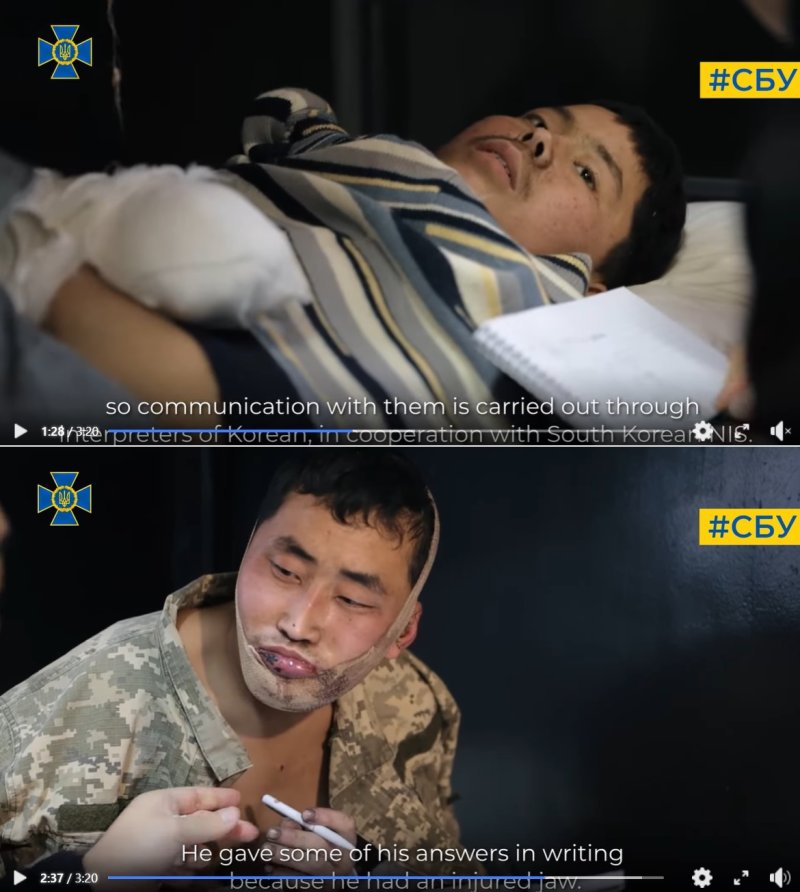
[Financial News] U.S. experts say the Lee Jae-myung administration's diplomatic strategies toward North Korea and Russia have hit an unexpected obstacle after Ukrainian President Volodymyr Zelenskyy disclosed that North Korean prisoners of war sent to fight for Russia had been repatriated to South Korea.
Leading U.S. foreign policy and security experts offered this assessment of the recent diplomatic friction between South Korea and Ukraine at a seminar hosted by the Center for Strategic and International Studies (CSIS) on the 15th (local time).
Earlier, President Zelenskyy disclosed in his address to the UN General Assembly on the 23rd of last month that two North Korean POWs captured by Ukrainian forces had recently been sent to South Korea. President Lee Jae-myung demanded a public apology, saying the disclosure violated an agreement between the two countries to keep the matter secret. Diplomatic tensions between South Korea and Ukraine have since risen sharply.
Sydney Seiler, a senior adviser at CSIS and a former deputy national intelligence officer for North Korea at the U.S. Office of the Director of National Intelligence (DNI), said, “President Lee does not want to antagonize North Korea at a time when he is trying to remove every potential obstacle to resuming dialogue with it.”
Seiler added, “President Lee also does not want to provoke Russia, and hopes one day to normalize relations with Russia or restore them to their previous state.” He assessed that “President Zelenskyy's disclosure has undermined this approach to some extent.”
Emma Chanlett-Avery, Asia Society's director of politics and security, also said the disclosure could have a major impact on North Korea. She said, “President Lee is well aware of the humiliation Kim Jong Un must have felt over this. It is an extremely sensitive issue, especially because they are soldiers—not ordinary defectors, but part of North Korea's heroic narrative.” She explained, “The matter became much bigger because it was disclosed on the stage of the UN General Assembly, watched by the entire world, and that is why President Lee had no choice but to respond strongly.”
Victor Cha, the Korea Chair at CSIS, cited South Korea's “long-term strategy toward Russia” as the reason the government expressed such strong anger over the incident. Cha said, “South Korea has indirectly supplied material support to Ukraine, but at the same time is keeping open the possibility of resuming business in Russia someday and restarting its factory in St. Petersburg.”
He also emphasized the energy security dimension. Cha said, “South Korea needs to find alternative sources to reduce the risk to oil supplies through the Strait of Hormuz, and must maintain at least good relations with Russia to secure routes through Central Asia and the Black Sea.”
Cha nevertheless thought it was “highly likely” that President Zelenskyy did not know about these complex circumstances behind South Korea's position. Interpreting Zelenskyy's intentions, he said, “It would have been a kind of psychological warfare aimed at North Korea, intended to make North Korea pay for helping Russia and to rally allied countries.”
The experts called for a prompt and quiet resolution, as a prolonged dispute could work against the South Korean government.
Seiler said he was concerned that “the longer this issue drags on, the more pressure North Korea will face to respond, and if it is not resolved within days and North Korea issues a response, that would be a political loss for President Lee.” Cha also pointed out that the situation had become highly complicated, saying, “Publicly fighting through the media means that behind-the-scenes negotiations are not taking place.”
Meanwhile, Chanlett-Avery said of the growing closeness between North Korea and Russia, including North Korea's recent troop deployment and Russian soldiers recuperating in North Korea, “The relationship between the two countries has gone beyond a simple transaction and developed into a kind of communist brotherhood.” She predicted, “This alignment will persist even after the war in Ukraine ends, and as divisions into blocs among countries harden, it will pose a considerable obstacle to South Korea restoring relations with Russia, even under future progressive governments.”
[email protected] Yoon Jae-jun Reporter