A Rock Built Layer by Layer in Ceramic... Mikyung Shin’s ‘Megalith’ Gets Its First Major Showcase in Korea [fn Art Snap]
- Input
- 2026-10-16 07:00:00
- Updated
- 2026-10-16 07:00:00
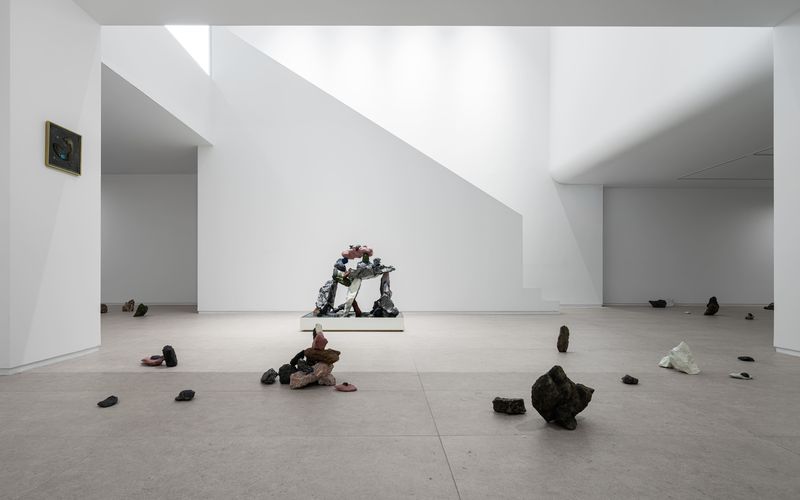
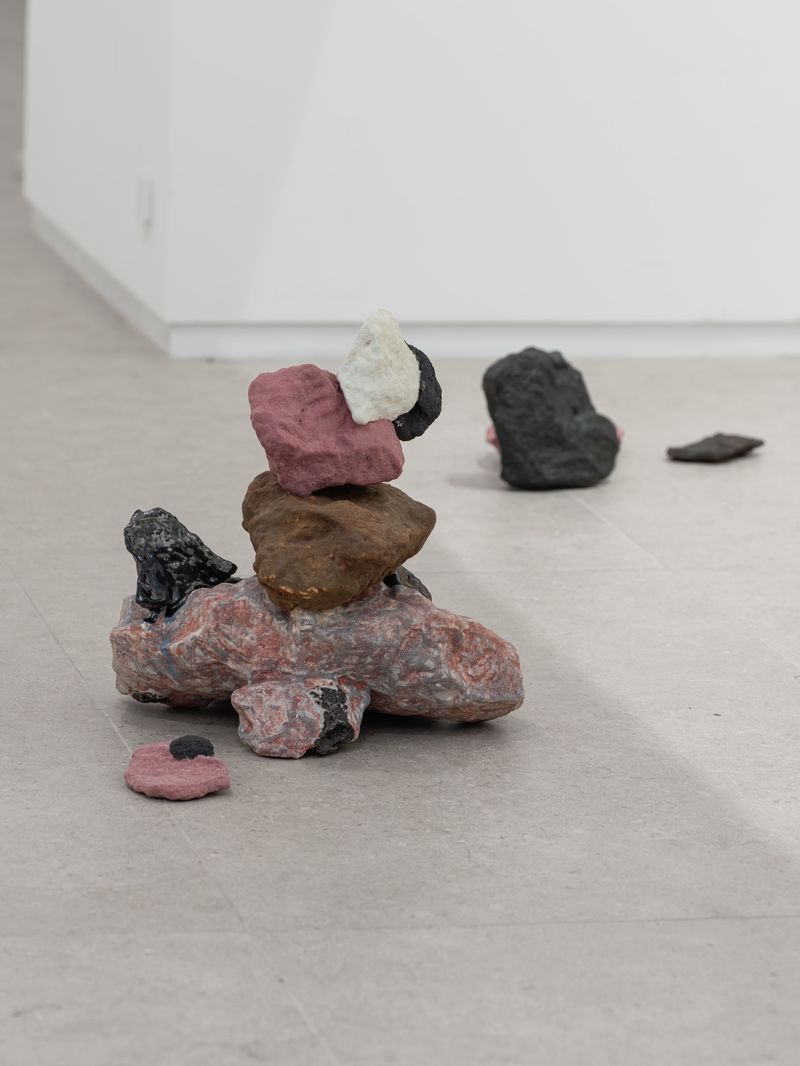
The artist shaped and bent clay, then ground its surface and fired it to create ceramics resembling old masses of minerals. By stacking them, the artist built structures like rocks. In effect, the newly made ceramics were given the appearance of ancient relics. The exhibition also includes major works shown at the Princessehof National Museum of Ceramics in the Netherlands in 2021.
At a press conference on the 15th, the artist said, “I didn’t want the work to come out clumsy, so from the beginning I thought it would take about 10 years.”
The sculptures invite viewers to look at their surfaces as though reading the past from relics, but the traces before us arose from a contemporary process of making. The gaze shifts from trying to guess a work’s age to examining how it was made.
In the layered works, it is worth taking in both the overall outline and the boundaries between the layers. A form that first looks like a single mass of rock can be read as a structure of interlocking parts when you follow the layers, each with a different color and texture. Even as the natural strata of the earth come to mind, the traces of the artist’s hand in building them up are also visible.
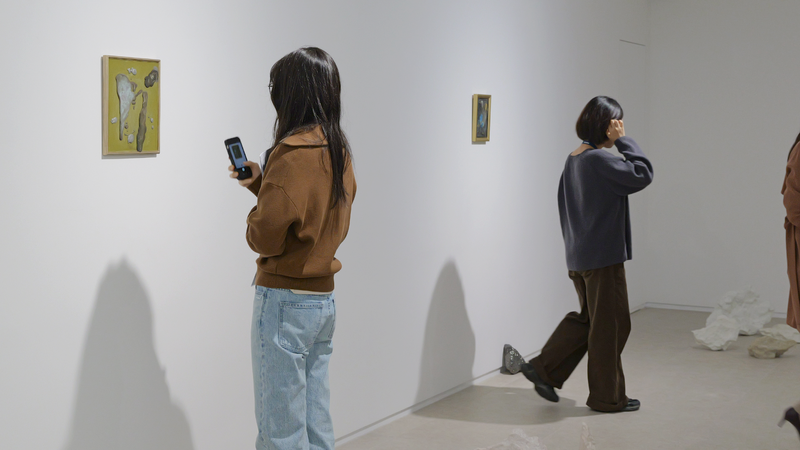
The ‘Unknown Painting’ series, made this year, brings this question onto the wall. Jesmonite, a sculptural material, and metal powder are applied and layered on panels hung like paintings. Rather than depicting a specific subject, the works bring out the forms and traces created as materials overlap.
Seen together, the two series make reading the surface as important as taking in the outline of the mass. In ‘Megalith,’ viewers can examine the layered structure; in the two-dimensional works, they can follow the traces of material accumulated on the surface. The arrangement directs attention less to the distinction between sculpture and painting than to the ways matter can appear.
‘Becoming Stone,’ the exhibition’s title, means ‘turning into stone.’ It refers to how our perception of objects shifts among clay, ceramics and stone. Just as fragments of broken ceramics became the starting point for new work, the title prompts reflection on the changes before and after a finished form, rather than on the form itself.
The exhibition runs on the B1 floor of AOD Museum through February 28 next year. Admission is free.
[email protected] Jang In-seo Reporter