Daejeon links research capabilities to startups ... building a startup city ecosystem
- Input
- 2026-10-15 21:00:00
- Updated
- 2026-10-15 21:00:00
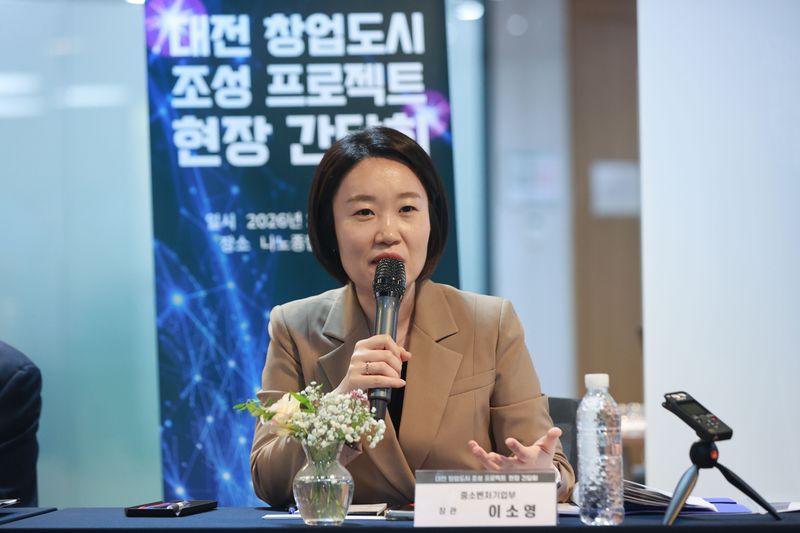
MSS said it held an on-site meeting for the Startup City Development Project on the 15th at the National Nanofab Center at KAIST in Daejeon, together with Daejeon City, KAIST, the Daejeon Center for Creative Economy and Innovation, and startup representatives, among others. Fourteen people attended, including MSS Minister Lee So-young, the mayor of Daejeon and the president of KAIST.
The meeting was organized as a follow-up to the earlier Regional Startup Ecosystem Revitalization Roundtable, chaired by the prime minister. It focused on reviewing progress on the Daejeon Startup City Development Project and exploring concrete measures to boost the local startup ecosystem.
Daejeon has a strong pool of research talent and technological infrastructure, centered on KAIST, Chungnam National University (CNU), Daedeok Research and Development Special Zone and government-funded research institutes. It is seen as having significant potential to grow into a deep-tech startup hub, ranking 296th globally and first among cities outside the Seoul metropolitan area in the global startup ecosystem rankings.
To leverage these regional resources, MSS selected Daejeon as a startup city this past April and is carrying out the related project. The core of the Startup City Development Project is to go beyond supporting individual companies and connect local startup resources—including talent, funding, investment and infrastructure—to support businesses from launch and growth through to settling in the region.
At the meeting, Daejeon City shared progress on the project to date and its plans for the future. Participants discussed ways to connect the technology and talent held by universities and research institutes with startups, expand investment and infrastructure to help startups grow, and strengthen cooperation among local innovation stakeholders.
The minister stressed that Daejeon has the foundations needed for startups, including science and technology, research talent and research institutions. She noted, “When these strengths are organically connected around startups, Daejeon can build a competitive startup ecosystem of its own.”
She continued, “A startup city is not created through the efforts of MSS or Daejeon City alone; it is a project built together by universities, research institutes, investment firms, large corporations and others,” and called for the active participation of local innovation stakeholders. MSS said it would continue communicating with those on the ground and provide support so that the region’s strengths can translate into startups and business growth.
Meanwhile, MSS is advancing the Startup City Development Project in four cities: Daejeon, Daegu, Gwangju and Ulsan. It plans to issue a notice this month to select six additional cities, expanding the program to 10 cities nationwide. The ministry plans to gradually expand regional startup hubs based on the strengths and specialized industries of each region.
[email protected] Lee Ju-mi Reporter