[Editorial] Four idle nuclear reactors need faster approvals for continued operation
- Input
- 2026-10-15 18:39:30
- Updated
- 2026-10-15 18:39:30
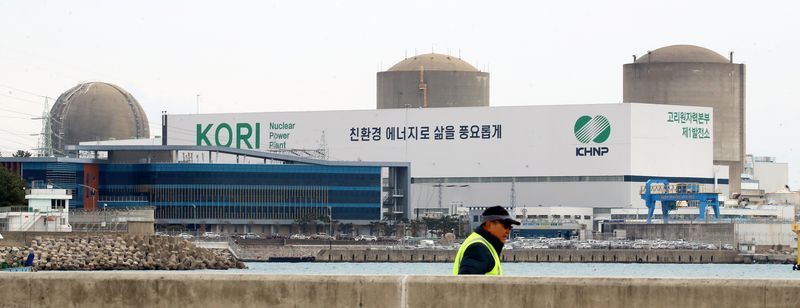
An accident management plan sets out response strategies, related equipment and implementation systems to reduce damage in the event of a severe nuclear accident. It is a separate process from approval for continued operation, but is a major prerequisite whose review overlaps substantially with that approval. Kori Unit 2, which received approval for continued operation last November, had also received approval for its accident management plan a month earlier. A decision on whether to authorize continued operation of Kori Units 3 and 4 is expected as early as next month.
Still, a problem remains: the reviews are taking far too long. Korea Hydro & Nuclear Power (KHNP) submitted the plans in 2019. It took seven years to secure approval. The plans had already been deemed sound following the safety review by the Korea Institute of Nuclear Safety (KINS) and the review by an expert committee under the NSSC. Even so, the NSSC postponed its decision twice last month. A matter that had completed its technical review came to a halt at the commission’s threshold.
The economic losses caused by the delays have also been substantial. Kori Unit 3 stopped operating in September 2024, Unit 4 in August last year, Hanbit Unit 1 in December last year, and Unit 2 last month. The opportunity cost of the electricity these four reactors could not sell while offline amounts to about 2 trillion won. Losses are mounting by about 5.1 billion won a day. It is also a problem that the period of continued operation is calculated from the expiration of the existing operating license, rather than from the date approval is granted. The later the review, the shorter the actual operating period. Calls to speed up reviews were also made at the National Assembly audit on the 13th.
A number of other reactors are also awaiting review. Five units are in the queue, including Hanul Units 1 and 2 and Wolseong Units 2, 3 and 4. The design life of Wolseong Unit 2 ends next month. The nine units, including the four approved this time, have a combined installed capacity of 7.8 GW, about 30% of the country’s total nuclear capacity.
Meanwhile, electricity demand is rising rapidly. Taking into account the “three mega-projects,” including AI data centers and semiconductor clusters, the government forecast peak electricity demand of 158–165 GW in 2040. That is 60–70% higher than current levels. A stable power supply is essential for advanced industries. That is why nuclear power plants matter: they provide baseload power, supplying electricity steadily 24 hours a day regardless of the weather.
Of course, there must be no compromise on nuclear safety. But delaying a decision does not make things safer. If the technical review is complete and no further review is needed, a decision should be made promptly in accordance with established procedures. The system must also be improved without delay—for example, by reducing overlap between the accident management plan and continued-operation reviews, and linking the two processes for review beginning 5–10 years before a reactor reaches the end of its design life.