Korean Air’s Q3 revenue tops 5 trillion won, growing on transfer and semiconductor demand despite high oil prices
- Input
- 2026-10-15 16:12:20
- Updated
- 2026-10-15 16:12:20
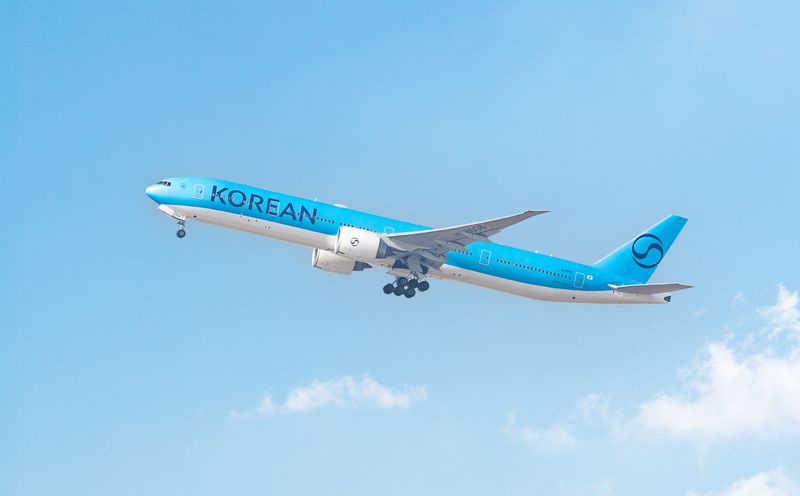
[Financial News] Korean Air’s preliminary Q3 revenue exceeded 5 trillion won. Despite a prolonged period of high oil prices, the burden of fuel surcharges and a weak won weighing on passenger demand, the airline posted its highest quarterly revenue on record. Increased transfer passenger traffic between the United States and China, along with demand for semiconductor-related cargo, drove the improvement in profitability.
Korean Air said on the 15th that its preliminary Q3 revenue was 5.0448 trillion won. That was an increase of 1.0363 trillion won from the same period a year earlier, while operating profit rose by 44.9 billion won to 421.2 billion won. Revenue increased in both the passenger and cargo businesses. Net profit rose by 91.9 billion won to 929.7 billion won, climbing substantially due to exchange-rate effects.
Passenger revenue rose by 496.3 billion won from the same period a year earlier to 2.9174 trillion won. It increased substantially despite higher fuel surcharges amid rising jet fuel costs and weaker passenger demand for travel from Korea as the won-dollar exchange rate fell.
Revenue grew despite unfavorable conditions in part because transfer demand at Incheon increased, driven by passengers traveling to Korea from overseas and tensions between the United States and China, among other factors. As the dispute over expanding direct flights between the two countries has dragged on, travelers have been using Incheon as a transfer hub. Korean Air responded by increasing flights on U.S.-China routes, boosting profitability.
Specifically, for the winter schedule running from the 25th through March 27 next year, Korean Air increased the total number of weekly flights on its three routes from Incheon to New York, Atlanta and Seattle from 28 to 42. Asiana Airlines, which is scheduled to merge with Korean Air in December, also increased its weekly flights on the Incheon–New York route from seven to 14 over the same period.
Cargo revenue rose by 365.6 billion won from the same period a year earlier to 1.4323 trillion won. The apparent driver was an increase in cargo volume. According to the Ministry of Land, Infrastructure and Transport’s Aviation Information Portal, international cargo at Incheon Airport totaled 1,086,954 tonnes in Q3, up 7.9% year over year and a record for a quarter.
One point worth noting is that air freight rates themselves are high. They have risen because of high oil prices stemming from the Arab-Israeli conflict, yet cargo volumes have increased rather than fallen. The main reason is sustained demand for high-value cargo related to AI semiconductors, which are worth a great deal relative to their weight. With demand for AI semiconductors showing no signs of abating, cargo volumes have continued to rise despite high freight rates. This is why Korean Air’s cargo business has achieved maximum profitability. According to the Korea International Trade Association, semiconductors accounted for more than 70% of Incheon Airport’s exports from January through August, totaling $278.4 billion out of $383.1 billion.
The fuel cost burden caused by the Arab-Israeli conflict is expected to continue into the coming fourth quarter, but growth is unlikely to lose momentum easily, with passenger demand supported by transfers through Incheon and cargo demand by AI semiconductors. Korean Air will operate flexibly in response to factors that enhance profitability. In particular, since Q4 is traditionally the peak season for air cargo and comes on top of demand for AI semiconductors, the airline plans to expand its cargo operations.
Korean Air emphasizes that safety is the final piece in maximizing profits from its passenger and cargo businesses. With the launch of the integrated Korean Air also scheduled for December 17, the airline continues to review and invest in its safety systems.
[email protected] Kim Yun-ho Reporter