Eastar drove growth in international passenger traffic as five airlines set to be integrated lagged
- Input
- 2026-10-17 07:59:00
- Updated
- 2026-10-17 07:59:00
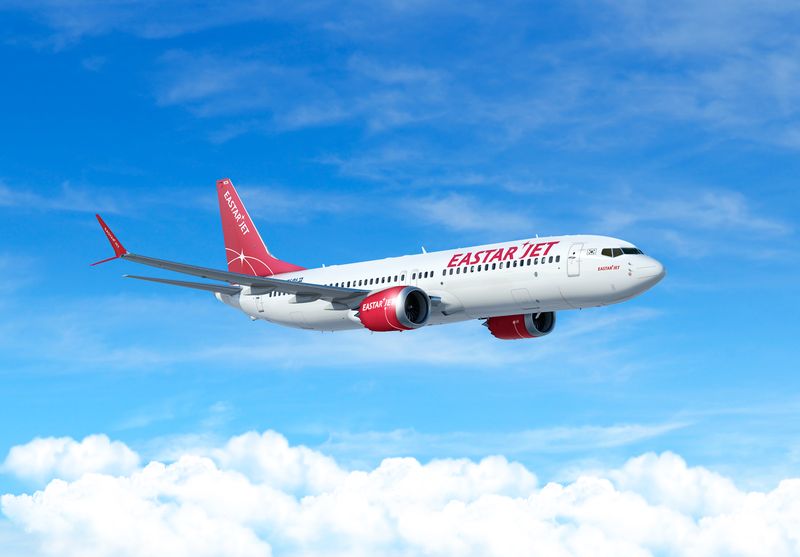
[Financial News] Eastar Jet drove growth in the international passenger market this year, accounting for a quarter of the increase in international passengers carried by Korean airlines from January to September. Compared with the same period last year, it ranked first among Korean carriers both in passenger growth rate and in the net increase in passenger numbers. By contrast, growth at Korean Air and Jin Air, among others, fell short of the market average, while Asiana Airlines and Air Seoul saw passenger numbers decline, reflecting divergent growth trends across airlines.
An analysis of statistics from the Ministry of Land, Infrastructure and Transport's Aviation Information Portal on the 17th found that Korean carriers transported 52,551,028 international passengers from January to September this year, up 10.5% from the same period last year.
During this period, Eastar Jet's international passenger numbers rose 60.8% (1,248,556 passengers), from 2,053,426 to 3,301,982. That accounted for 25.1% of the total increase of 4,976,446 passengers among Korean carriers. In other words, Eastar Jet carried about one in every four additional international passengers. As a result, its share of international passengers carried by Korean airlines rose by about 1.97 percentage points, from 4.32% to 6.28%.
Eastar Jet's rapid growth went hand in hand with a major expansion in capacity. From January to September this year, it offered 3,661,485 international seats, up 55.0% from last year. Passenger numbers rose even faster, lifting the passenger-to-seat ratio from 86.9% to 90.2%. In other words, the airline filled a higher proportion of its seats even as it sharply expanded capacity.
The growth was even more pronounced in recent monthly results. Eastar Jet's year-on-year growth in international passengers rose from 52.0% in July to 72.7% in August and 74.3% in September. In September alone, it carried 403,013 passengers, an increase of 171,746 from the same month last year.
Growth trends varied sharply by airline. From January to September this year, the highest cumulative growth rates in international passengers after Eastar Jet were recorded by Aero K (35.7%) and Air Premia (32.9%). Jeju Air (14.1%) and Trinity Air (formerly T'way Air, 12.1%) also outpaced the overall growth rate for Korean carriers.
By contrast, the five airlines set to form the combined Korean Air and the integrated low-cost carrier (LCC) ranked among the bottom five of the 10 airlines compared. Air Busan grew 7.8%, Korean Air 6.8% and Jin Air 3.8%, all below the overall rate for Korean carriers. Asiana Airlines and Air Seoul declined by 2.6% and 3.5%, respectively.
These differences in growth rates also led to shifts in market share. While Eastar Jet raised its share by about 2 percentage points, Korean Air's share of international passengers carried by Korean airlines fell from 29.9% last year to 28.9% this year. Jin Air's share also declined over the same period, from 10.8% to 10.1%. As the international market continues to grow at a double-digit rate, airlines' positions in the market are shifting according to how quickly each expands capacity.
An airline industry official explained, "Even as demand for international travel grows, growth rates can vary depending on how quickly each airline expands capacity and on its route operating strategy."
[email protected] Jung Won-il Reporter