POSCO and Hanwha Ocean to launch demonstration of high-manganese steel LNG cargo tanks [Full Story]
- Input
- 2026-10-15 15:23:01
- Updated
- 2026-10-15 15:23:01
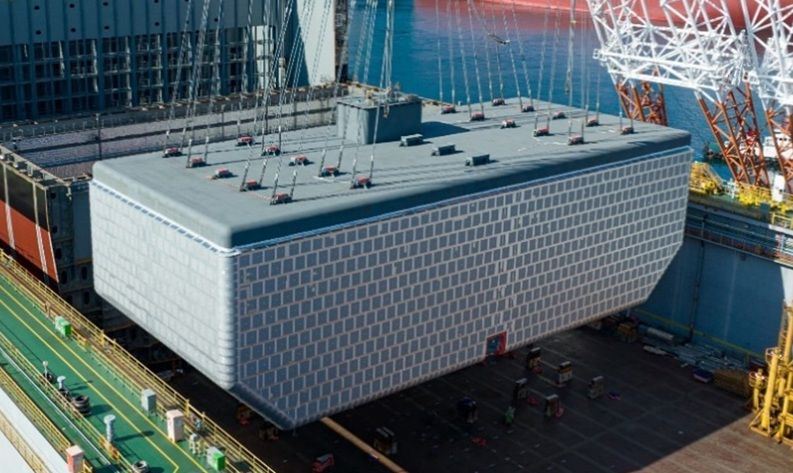
[Financial News] POSCO will work with Hanwha Ocean to demonstrate the use of high-manganese steel, which POSCO developed independently, in the cargo containment systems of large LNG carriers. Since each LNG carrier’s cargo containment system would require approximately 10,000 tonnes or more of the material, commercialization is expected to expand demand for high-manganese steel.
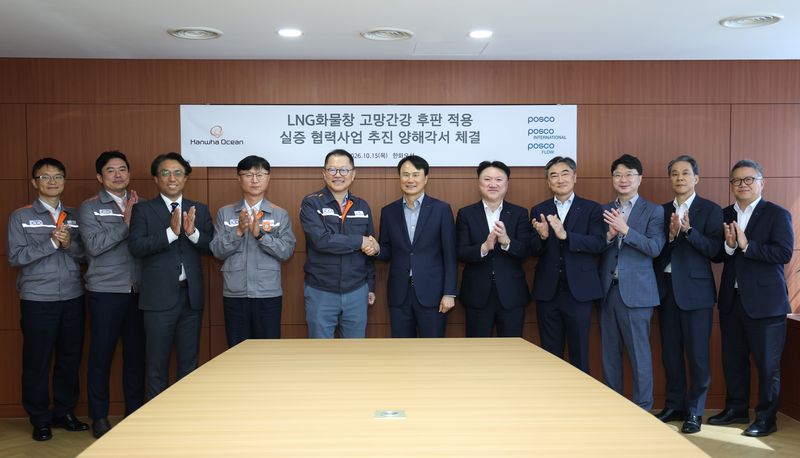
POSCO said it signed a memorandum of understanding (MOU) on the 15th at Hanwha Ocean’s Geoje shipyard in Geoje, South Gyeongsang Province, with senior executives from both companies, including POSCO President Heegeun Lee and Hanwha Ocean Co., Ltd. CEO Hee-Chul Kim, in attendance. POSCO Group affiliates, including POSCO International and POSCO Flow, will also support securing and operating the demonstration vessel.
The two companies plan to build a demonstration vessel equipped with a high-manganese steel cargo containment system, led by Hanwha Ocean, and test its safety, durability and operational efficiency under actual operating conditions. They aim to use the project to build an operating track record to present to global shipowners and move toward commercialization.
High-manganese steel is a specialty steel developed to retain its strength and impact toughness even in cryogenic conditions of -163°C or lower. POSCO emphasized that it is competitive in terms of cost and material supply compared with the nickel-alloy steel (INVAR) used in existing LNG cargo containment systems. The company said that using a standalone design, in which the cargo containment system is built separately and then installed on the vessel, can shorten construction time.
The key aim of this partnership is to expand the market for high-manganese steel from ship fuel storage systems to cargo containment systems used to transport LNG. According to POSCO, LNG-powered vessels use approximately 1,000 tonnes of material per vessel for their fuel tanks, while LNG carriers require approximately 10,000 tonnes or more for their cargo containment systems.
High-manganese steel has also been used in LNG fuel tanks on very large crude carriers and container ships built by Hanwha Ocean. According to POSCO, the material had been used on a cumulative total of 51 vessels through this year, including vessels with LNG fuel tanks.
However, the existing record of use in fuel tanks should be distinguished from the commercialization of cargo containment systems for large LNG carriers. To use a new material in cargo containment systems that store large volumes of LNG, its safety and durability must be confirmed through actual operations. This demonstration is a step toward building that operating track record.
POSCO Group plans to support the demonstration project by combining POSCO’s materials development, POSCO International’s LNG trading and terminal operations, and POSCO Flow’s logistics capabilities.
The two companies plan to broaden the scope of application in the future to include LNG bunkering vessels and floating storage and regasification units (FSRUs). In the medium to long term, they also plan to expand into the transport of other cargoes, such as hydrogen, ethane and ammonia.
POSCO CEO Heegeun Lee said, "We will take the lead in setting global standards for materials used in eco-friendly vessels." Hanwha Ocean CEO Hee-Chul Kim said, "We will apply the material in a range of low-temperature cargo transportation fields, including LNG, and make Hanwha Ocean’s overwhelming technological capabilities known in the global market."
[email protected] Kim Mi-hee Reporter