Ruling party closes ranks amid internal strife ahead of Oh’s appeal ruling, targets the Nakdong River Belt in anticipation of conservative consolidation
- Input
- 2026-10-15 16:14:16
- Updated
- 2026-10-15 16:14:16
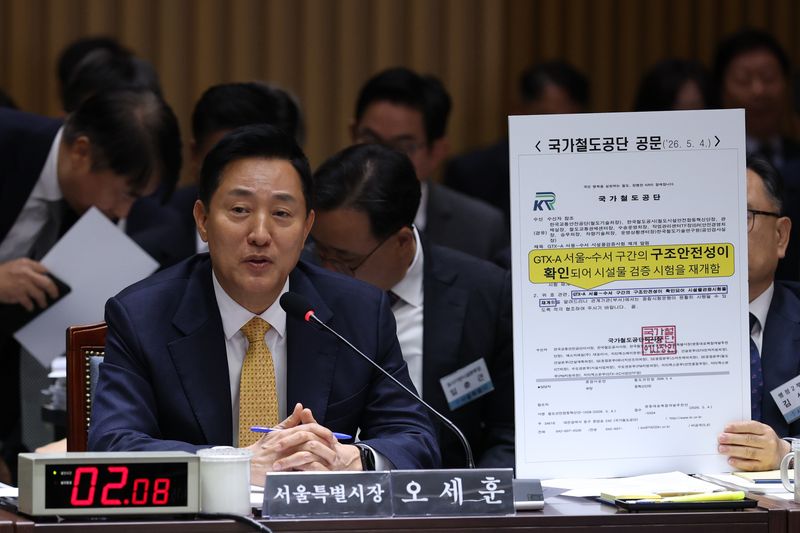
At the National Assembly’s audit of the Seoul Metropolitan Government on the 15th, ruling-party lawmakers grilled Oh on his administration of the city and his ethics. Lawmakers Park Joo-min and Kim Young-bae raised allegations of kickbacks related to Oh’s flagship Han River Bus project and the destruction of internal investigation records. Park Jeong-hyun raised the possibility that Oh had ordered the destruction of records, while Chae Hyun-il brought up allegations of a targeted audit of former Seongdong District mayor Jeong Won-oh. Oh countered that unverified allegations should not be treated as established facts, while the People Power Party called the accusations a political attack.
On the surface, the parliamentary audit is examining the propriety of the Seoul city government’s administration, but beneath it lie Oh’s political fate and the Democratic Party’s electoral strategy. Oh, who was fined 10 million won in the first trial over allegations that Myung Tae-gyun’s polling costs were paid on his behalf, is due to receive the appeal ruling on the 23rd. If a sentence of a fine of at least 1 million won for violating the Political Funds Act is finalized, he will lose his mayoral office. If the original sentence is upheld on appeal, a Seoul mayoral by-election could become a reality following a Supreme Court ruling as early as next January. Conversely, shedding his legal troubles could give Oh room to strengthen his position as a potential presidential contender. The Democratic Party’s offensive thus also reflects a political calculation: to keep in check a potential rival in the next presidential election while eyeing the possibility of retaking the Seoul mayor’s office.
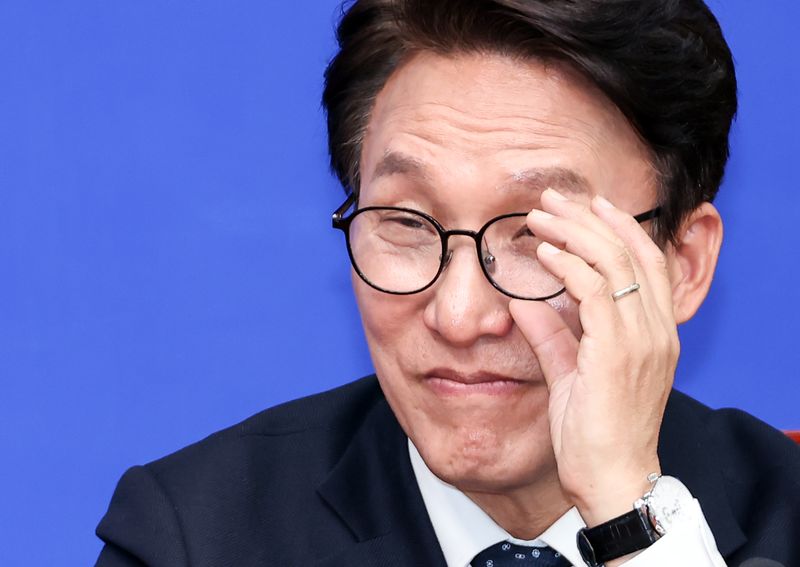
If a Seoul by-election does take place, it would give Kim a chance to contain internal party divisions and strengthen his grip on the leadership through electoral success. Amid internal turmoil over the selection of Kim Ji-yong as the nominee to head the Serious Crime Investigation Agency and allegations of mass membership enrollment by Shincheonji, the election would be a test of Kim’s ability to demonstrate leadership distinct from that of former leader Jung Cheong-rae. However, disputes over nominations or an electoral defeat could instead lead to calls for him to take responsibility. Conversely, if the by-election does not take place, the prospect of a realignment among conservatives would become a new burden. Former lawmaker Yoo Seung-min, a potential conservative presidential contender viewed warily even by some in the ruling camp, said on the 13th that if Oh is acquitted on appeal, conservatives should join forces with independent lawmaker Han Dong-hoon and Reform Party lawmakers Lee Jun-seok and Chun Ha-ram to rebuild the conservative camp.
Kim’s visit to Busan on the 16th and 17th is also tied to this political landscape. The Nakdong River Belt, encompassing Busan’s Buk, Sasang, Saha and Gangseo districts, as well as Gimhae and Yangsan in South Gyeongsang Province, is a strategic battleground where the Democratic Party has won seats even in Yeongnam, a conservative stronghold, and the ruling and opposition parties have fought fiercely. This is the context behind Kim’s earlier emphasis that the Nakdong River Belt would be more important than the Han River Belt in the 2028 general election. In particular, after losing Busan Buk-gap, which the Democratic Party had held under former leader Jung Cheong-rae, to independent lawmaker Han Dong-hoon, the party is seen as laying the groundwork to rebuild its support in Yeongnam in preparation for a possible conservative consolidation. Its strategy is to link President Lee Jae-myung’s vision for an Arctic shipping route and a maritime capital to regional industrial development, and to use a united party-presidential office approach to regain public support. If the party can win back the seats it lost in the 2028 general election and secure additional ones as well, it can present that as evidence of electoral leadership distinct from that of the previous leadership.
However, using the president’s policy vision and turning it into actual electoral gains are separate challenges. The party is also not immune to pressures stemming from the presidential office, including public assessments of the government’s performance and controversies over appointments. Kim’s political challenge going forward will be to resolve infighting within the ruling camp, respond to the possibility of conservatives uniting, and build tangible support in the Nakdong River Belt.
[email protected] Song Ji-won, Kim Hyeong-gu Reporter