Kim Ji-yong Floats ‘Accountability-Based Investigation System’ ... Will the Serious Crime Investigation Agency Tighten Oversight of Long-Unsolved Cases and Enforce Organizational Discipline?
- Input
- 2026-10-15 15:18:14
- Updated
- 2026-10-15 15:18:14
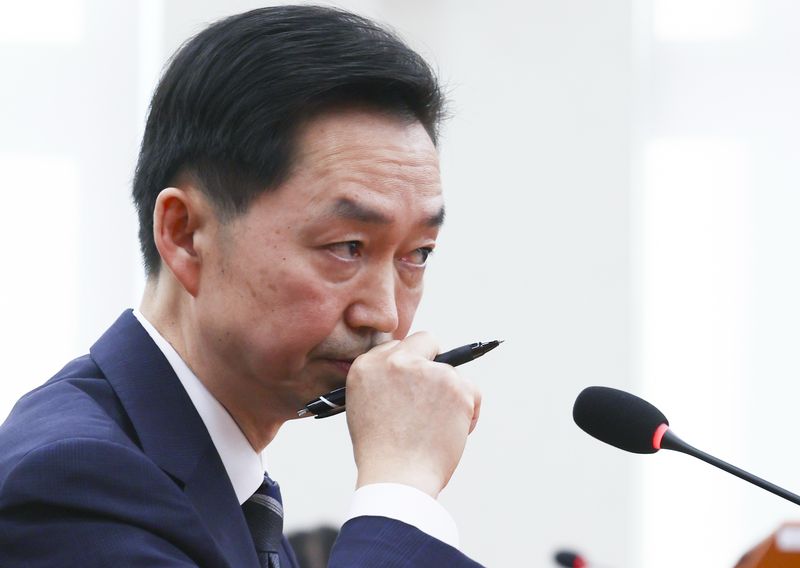
[Financial News] Kim Ji-yong, nominee to become the inaugural chief of the Serious Crime Investigation Agency, has made an “accountability-based investigation system” a priority he will vigorously pursue after taking office. He also proposed statistical tracking of long-unsolved cases and a separate review process. However, with no specific performance-evaluation criteria in place and staffing and investigative infrastructure still incomplete, the system’s effectiveness is expected to be the key issue.
According to legal circles on the 15th, the National Assembly’s Public Administration and Security Committee adopted a confirmation hearing report on Kim that day. Kim will become the agency’s inaugural chief once he completes the presidential appointment process.
At the confirmation hearing at the National Assembly the previous day, he was asked by Jin Jong-oh, a People Power Party lawmaker, about how long-unsolved cases would be managed. Kim replied, “If I become chief, accountability in investigations is what I want to emphasize,” and added, “If you refer a case because you believe an offense has been committed, that isn’t the end of it. If it is indicted, I believe you must take responsibility for whether it results in a conviction.” He went on to say that he would vigorously implement the accountability-based investigation system and ensure that rewards and penalties were applied accordingly. In written responses submitted to the National Assembly, he also said he would establish the principle of accountable investigations as part of the agency’s organizational culture from its early days.
The accountability-based investigation system is understood to require Serious Crime Investigation Agency investigators to remain responsible for the outcome of an investigation even after referring a case, by following whether the Public Prosecution Office indicts and how the court rules. Kim did not, however, explain in detail the criteria that would be used to evaluate the outcome at each stage, such as indictment and conviction, or how those results would factor into rewards and penalties. Concerns could also be raised about the need for safeguards to prevent performance evaluations based on whether cases result in convictions from encouraging excessive investigations.
The plan is to establish a statistics-based system for managing long-unsolved cases. At the hearing, Kim said, “I will use statistics to identify cases that have been neglected for a long time.” In his written responses, he said decisions on whether to disclose the number of cases received, processing times and the status of long-unsolved cases would be made after reviewing the relevant laws and regulations.
Long-unsolved cases transferred from the prosecution service will be prioritized for handling based on factors including the seriousness and urgency of the crimes and the need to protect victims. The plan is to set appropriate target processing times based on the difficulty of each case, while also considering the completeness of the investigation to prevent cases from being closed prematurely. If an investigation is prolonged, it would be subject to a separate review of the reasons for the delay and plans going forward. The agency is also considering reviewing the relevance and necessity of an investigation when its scope is expanded.
The organization must first be put on a sound footing to carry out these plans. The Serious Crime Investigation Agency currently has about 1,900 staff, or 66.1% of its authorized 2,874 positions. Kim said he would fill vacancies through additional special appointments of Public Prosecution Office personnel permitted through next April, as well as by hiring outside specialists such as police officers, lawyers and accountants. After taking office, he plans to form a task force (TF), led by Deputy Chief Jeon Jong-min, to help the agency get up and running quickly.
Integrating an organization heavily weighted toward personnel from the prosecution service is another challenge. Kim said, “Rather than favoring an all-prosecutor culture, we will be grounded in diversity,” and stressed that he would recruit specialists from a range of fields. He also said he would ensure investigators could raise objections if they disagreed with the legality or legitimacy of instructions or supervision.
By contrast, he called for strict management of organizational discipline. Kim said, “I will ensure that there is absolutely no collective action with a political bent.” Internal conflict has emerged early in the agency’s launch following an order for an internal inspection of Im Eun-jeong, head of the Gwangju Serious Crime Investigation Agency. Meanwhile, the Seoul Regional Serious Crime Investigation Agency assigned to an investigative division within its Anti-Corruption Investigation Bureau the case in which a civic group filed a complaint against Chief Im the previous day, alleging defamation and other offenses.
[email protected] Choi Eun-sol Reporter