From a secluded monastery to a legendary cave... A journey through Georgia’s Mtskheta and Kutaisi [Lee Hwan-joo’s Self-Funded Travel]
- Input
- 2026-10-18 08:00:00
- Updated
- 2026-10-18 08:00:00
[Financial News] The book I’m reading now (The Unbroken Thing Within Me by Kazufumi Shiraishi) contains the following passage.Once you’ve read a book, you don’t want to read it again, and if you’re made to, it becomes tedious and tiresome. Relationships with other people are much the same.A long time ago, I said something like that to a woman I was dating, and she replied:“People aren’t books, and some books are enjoyable no matter how many times you read them. But if I had to compare people to books, I think they’d be long, endless storybooks.”She also said this:“A book that is a human being contains countless unreadable characters and codes, so no matter how many times you read it, you can never understand it completely. If we’re going to use a metaphor, I think each person is like a piece of music made up of hundreds of thousands of different kinds of sounds all tangled together. The impression it makes changes every time you listen; it’s probably a truly complex piece of music.”Perhaps the places where we stay or pass through in life are like books we’ve read once. In particular, places we visit while traveling can become no more than a simple “I’ve been there once,” so we don’t tend to seek them out again. And yet, there are some destinations that, even when it’s our first time there, give us the feeling that we’ll return someday.

Shio-Mgvime Monastery, a secluded sanctuary
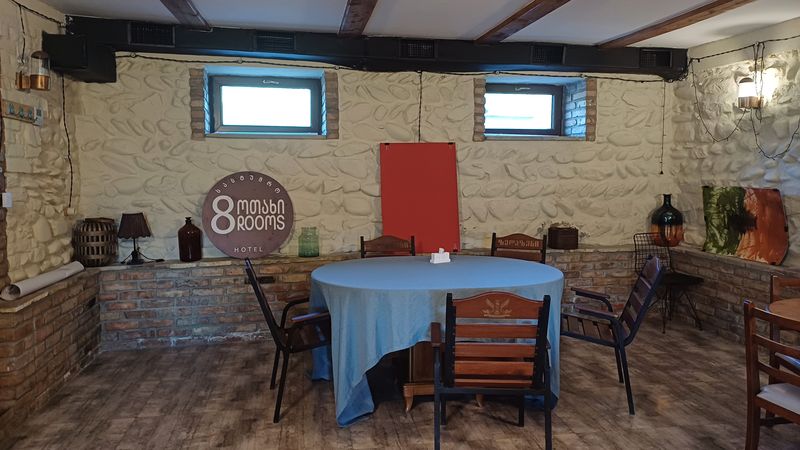
The fifth morning in Georgia began at a place called 8rooms hotel in Mtskheta. I went down to the basement restaurant and put some cheese, bread, fruit, and other items on a plate. An elderly woman with a stooped back in the kitchen at the back of the restaurant made us a separate serving of fried eggs. I entered “Kutaisi,” that day’s destination, into Google Maps and set off.
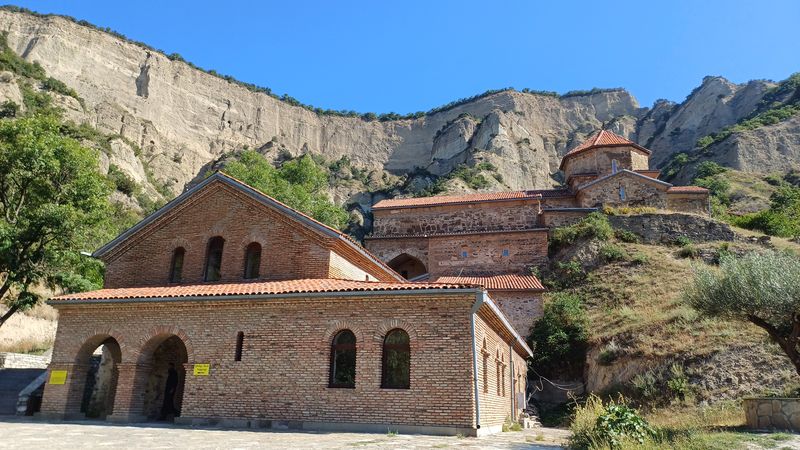
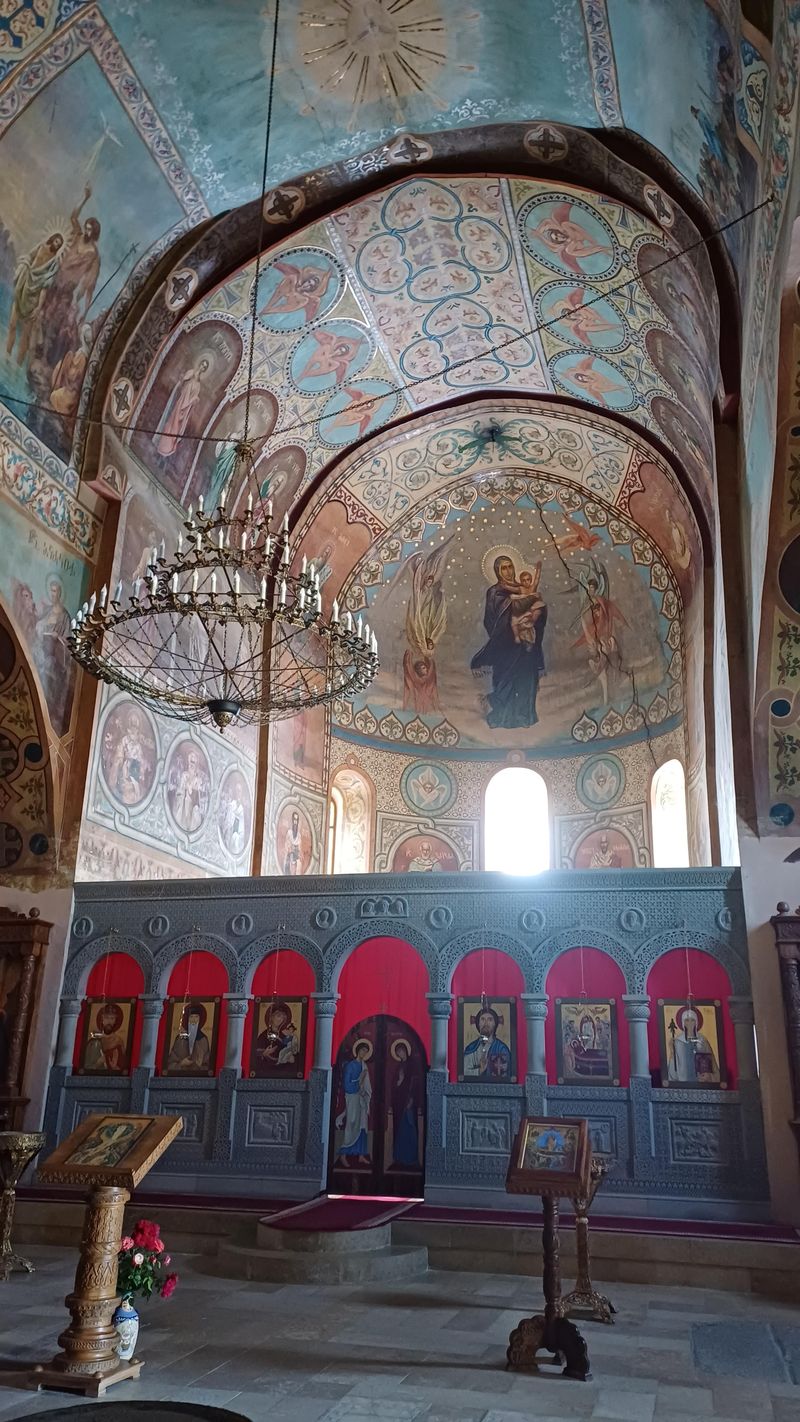
After driving the rental car for about 10 minutes, I spotted a church on Google Maps and decided to stop by on a whim. It was Shio-Mgvime Monastery, near the ancient Georgian city of Mtskheta. I visited around 10 churches while traveling all around Georgia over 10 days and nine nights, but this place is the one that stayed with me most. It wasn’t a place already famous as a tourist destination and crowded with visitors; the only tourists there were our group and about two or three other parties.
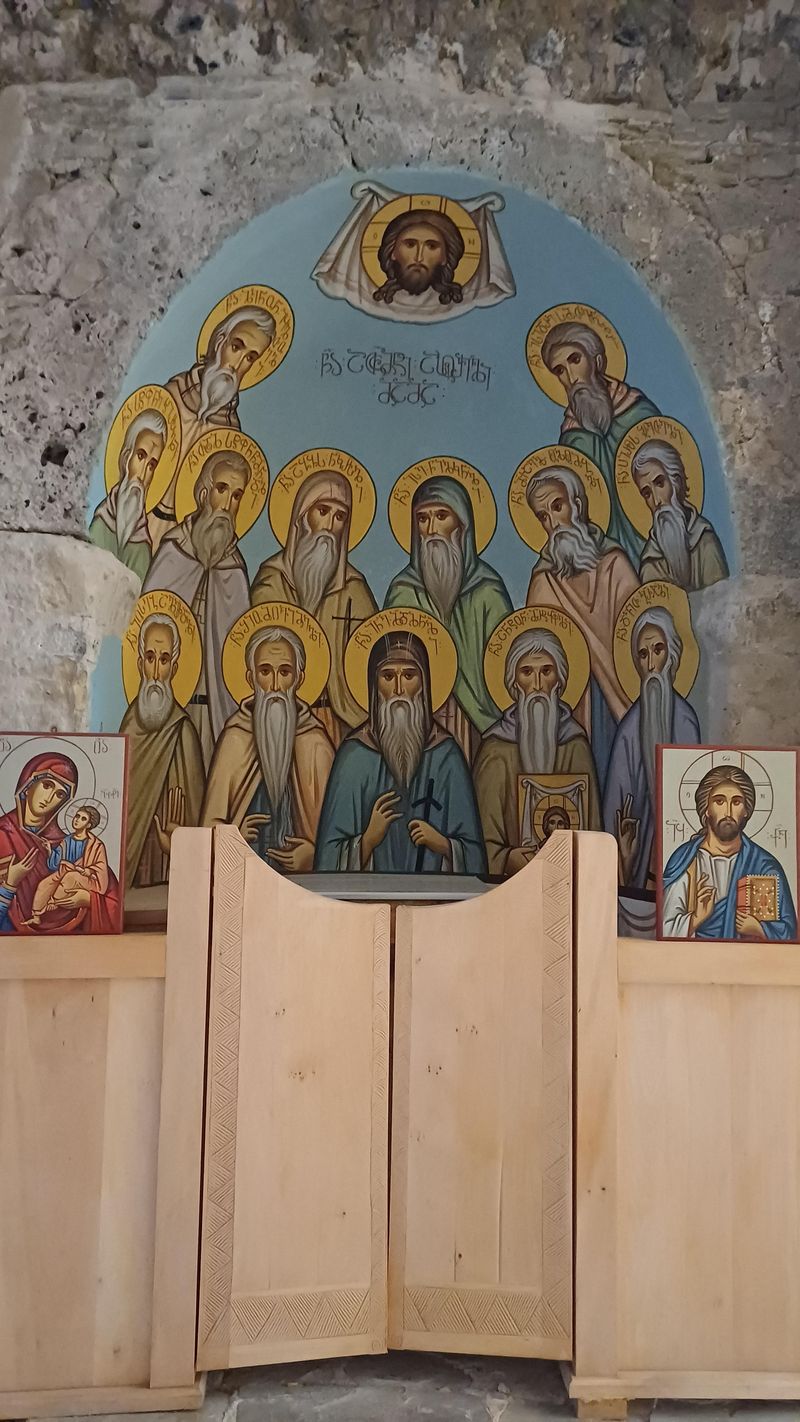
The monastery was founded in the late sixth century by a monk named Saint Shio, one of the “Thirteen Syrian Fathers” who came from Assyria (present-day Syria). When Saint Shio first came here, he practiced asceticism in a remote cave; the name “Shio-Mgvime” itself means “Cave of Shio” in Georgian. The monastery is surrounded by rugged limestone cliffs. In the past, monks secluded themselves from the outside world and devoted themselves solely to prayer, and the area is said to contain numerous small cave hideouts. The elevated road to the monastery was in fact surrounded by rock faces, making the drive spectacular in its own right.
Bagrati Cathedral in Kutaisi, Georgia’s second-largest city
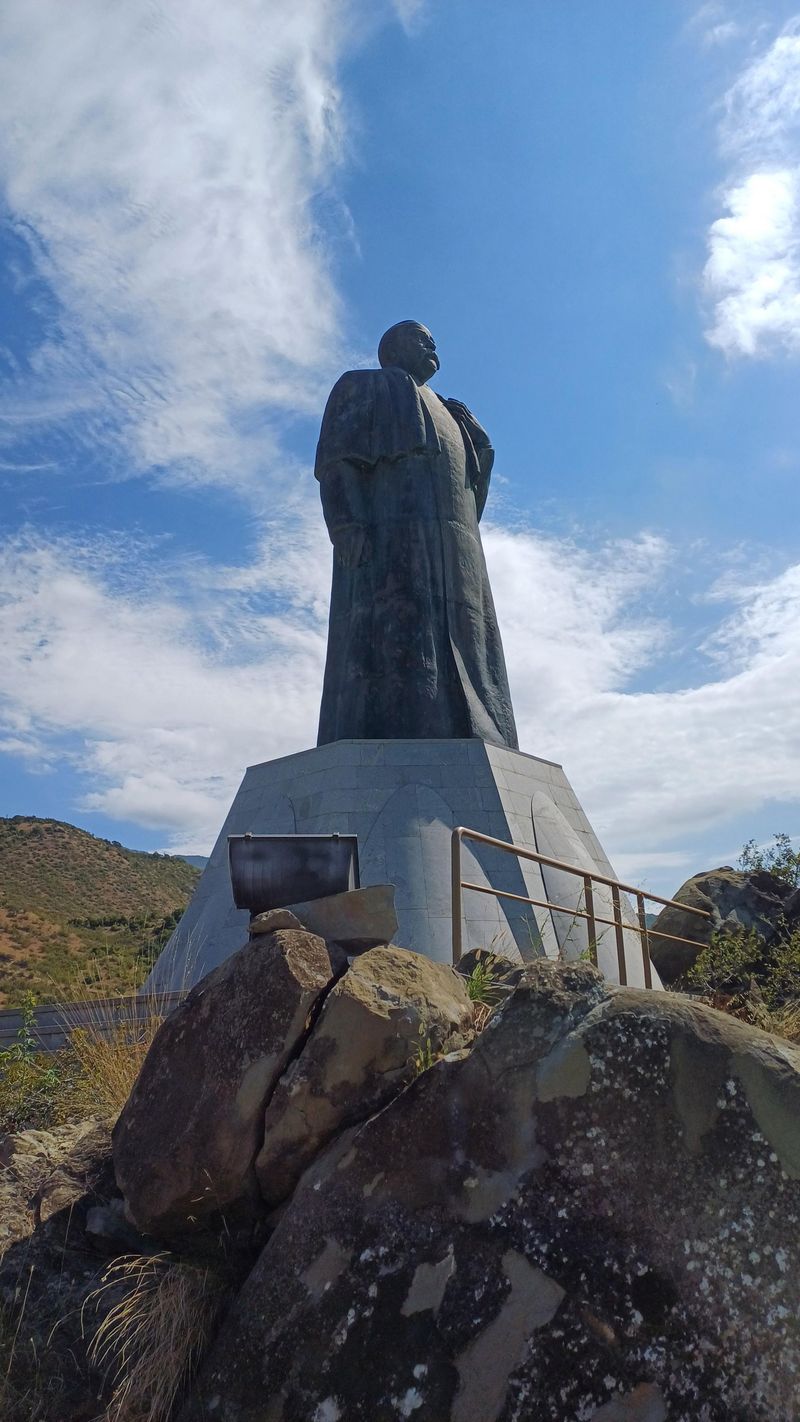
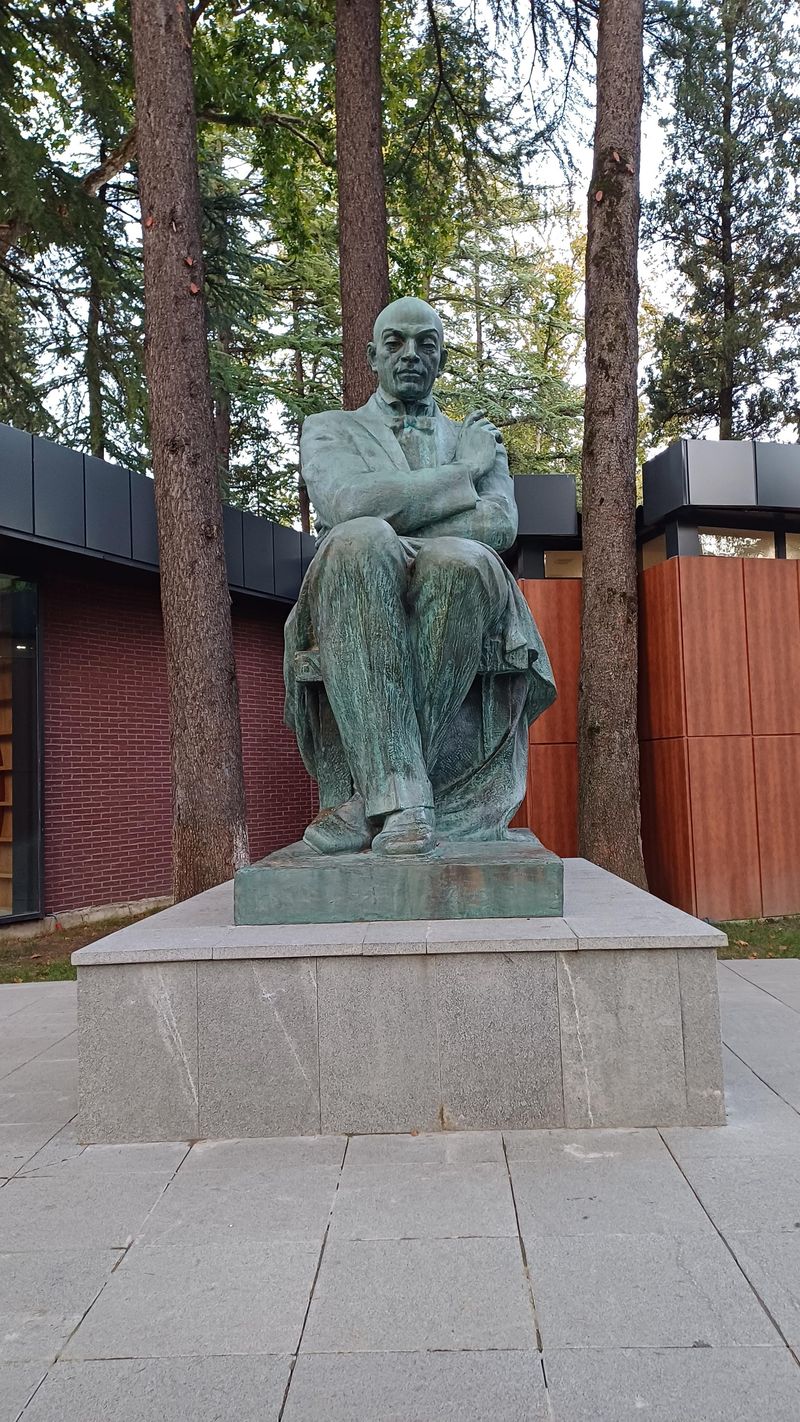
After leaving Shio-Mgvime Monastery, I briefly got lost around Mtskheta because of a navigation error and came across a statue by chance. It was a statue of Ilia Chavchavadze, near the village of Saguramo in Mtskheta. A writer and politician, he was a national founding father in modern Georgian history who led movements in language, culture, the press, and education to foster national consciousness in Georgia under Russian imperial rule in the 19th century. The statue stands on a roadside hill at the site where he was assassinated in 1907, where traces of his life remain.
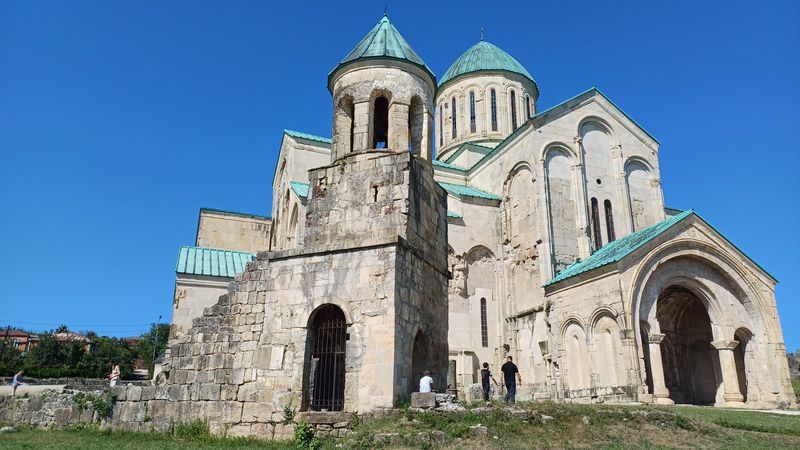
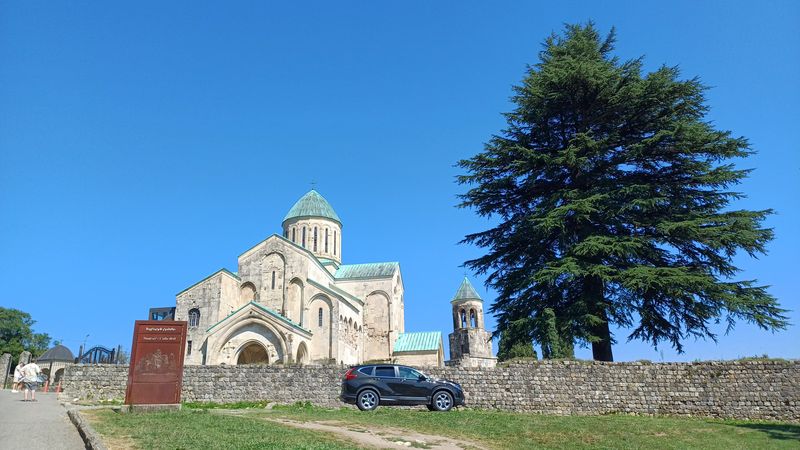
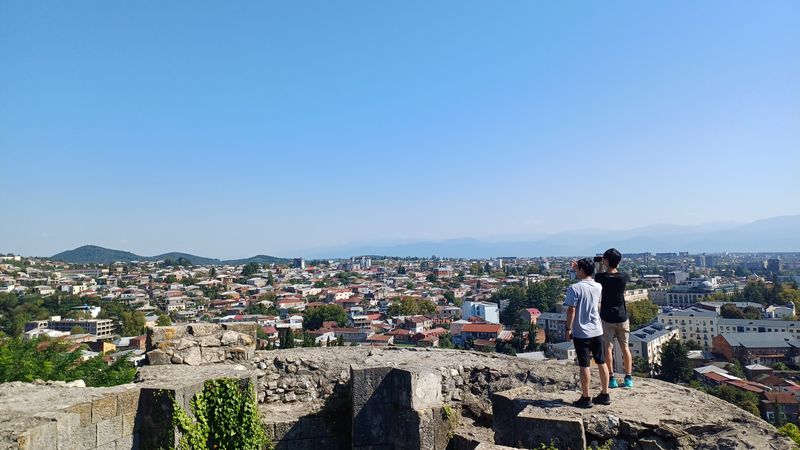
The drive from Mtskheta to Kutaisi took about three hours, so we stopped at a rest area along the way to grab something to eat. Kutaisi is Georgia’s second-largest city after the capital, Tbilisi, and is best known for Bagrati Cathedral, with its sky-blue roof. Built by Emperor Bagrat III, who ushered in Georgia’s Golden Age in the early 11th century, the cathedral is something of a symbol of the united Kingdom of Georgia. It was designated a UNESCO World Heritage Site in 1994, but reportedly removed from the list in 2017 because of excessive modern restoration. From a tourist’s perspective, though, I actually preferred being able to see the building in its complete form. We visited in the latter half of August. It wasn’t as muggy as in Korea, but the sun was quite intense.
An unplanned visit to Prometheus Cave
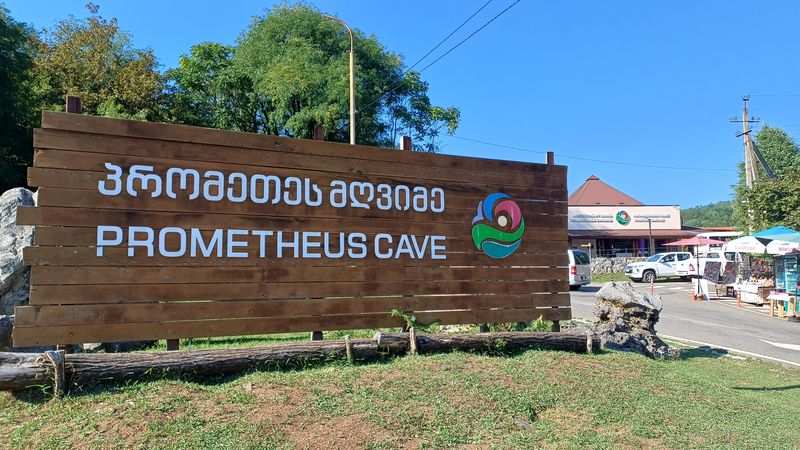
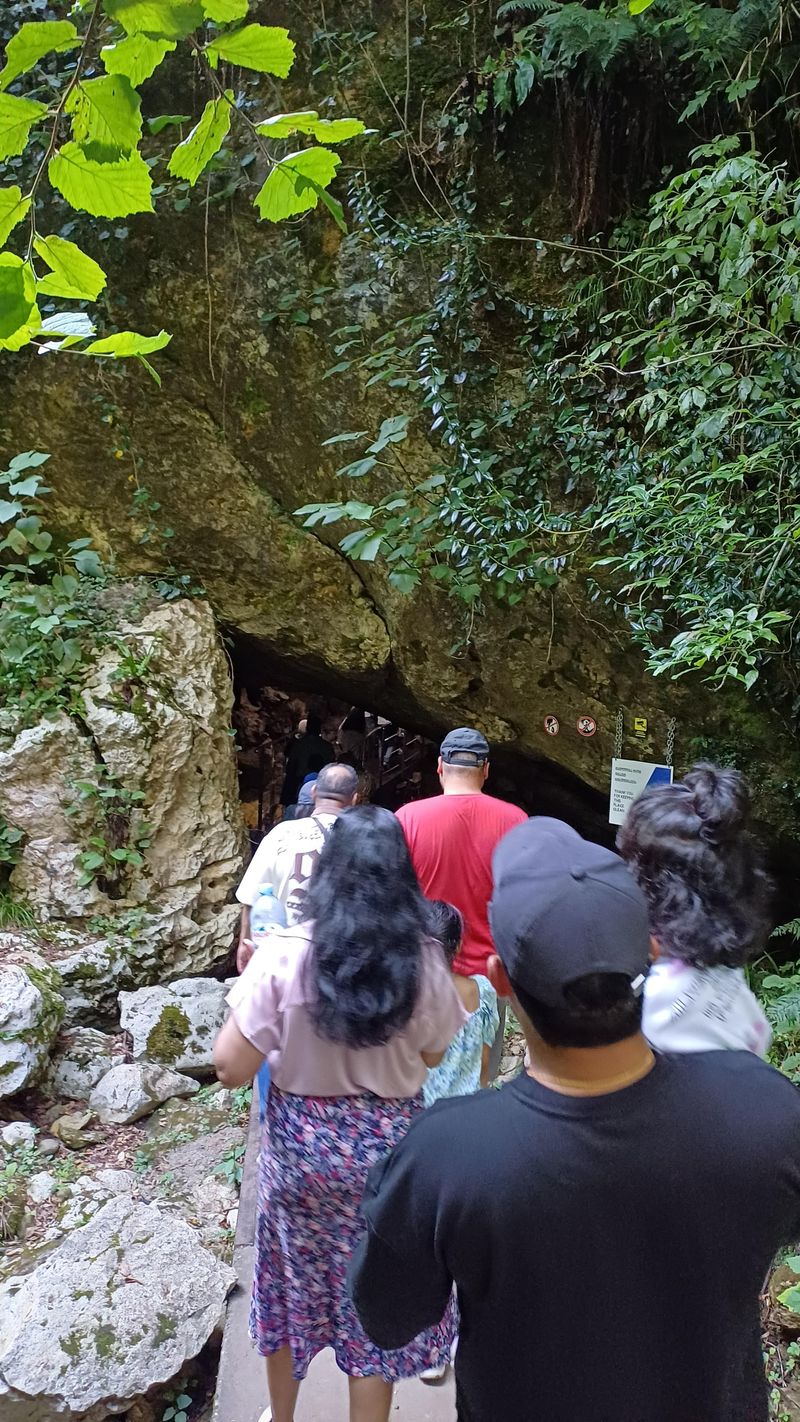
In Kutaisi, I had planned a village winery tour that included wine tasting and a look around the vineyards, but when I showed up without a reservation, I couldn’t join that day. A quick search on Google Maps led me to Prometheus Cave in a nearby village. It is in the village of Kumistavi in Tskaltubo, a 30-minute drive from Kutaisi.
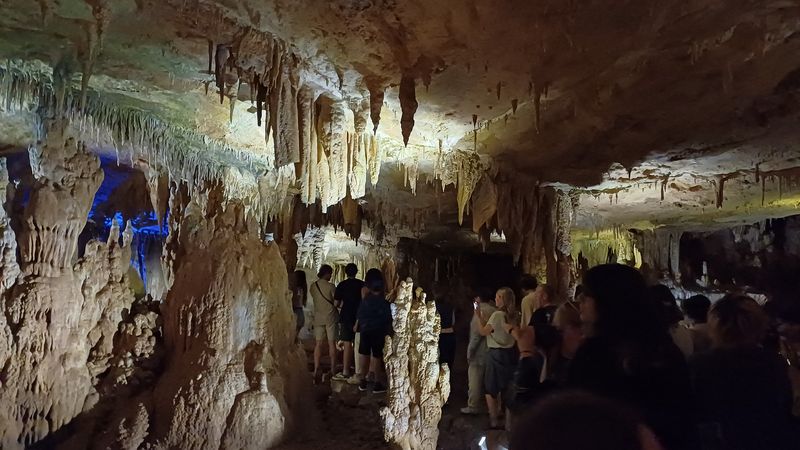
Discovered in 1984 and developed as a tourist attraction, the stalactite cave was named after Prometheus of Greek mythology. Legend has it that Zeus punished Prometheus for bringing fire to humanity and chained him to a rock in the Caucasus Mountains. A story is also told that he was chained to rocks in the Caucasus near this cave.
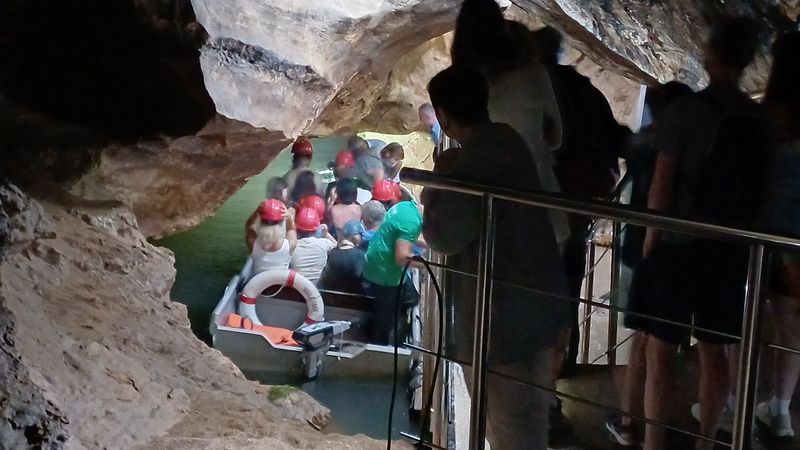
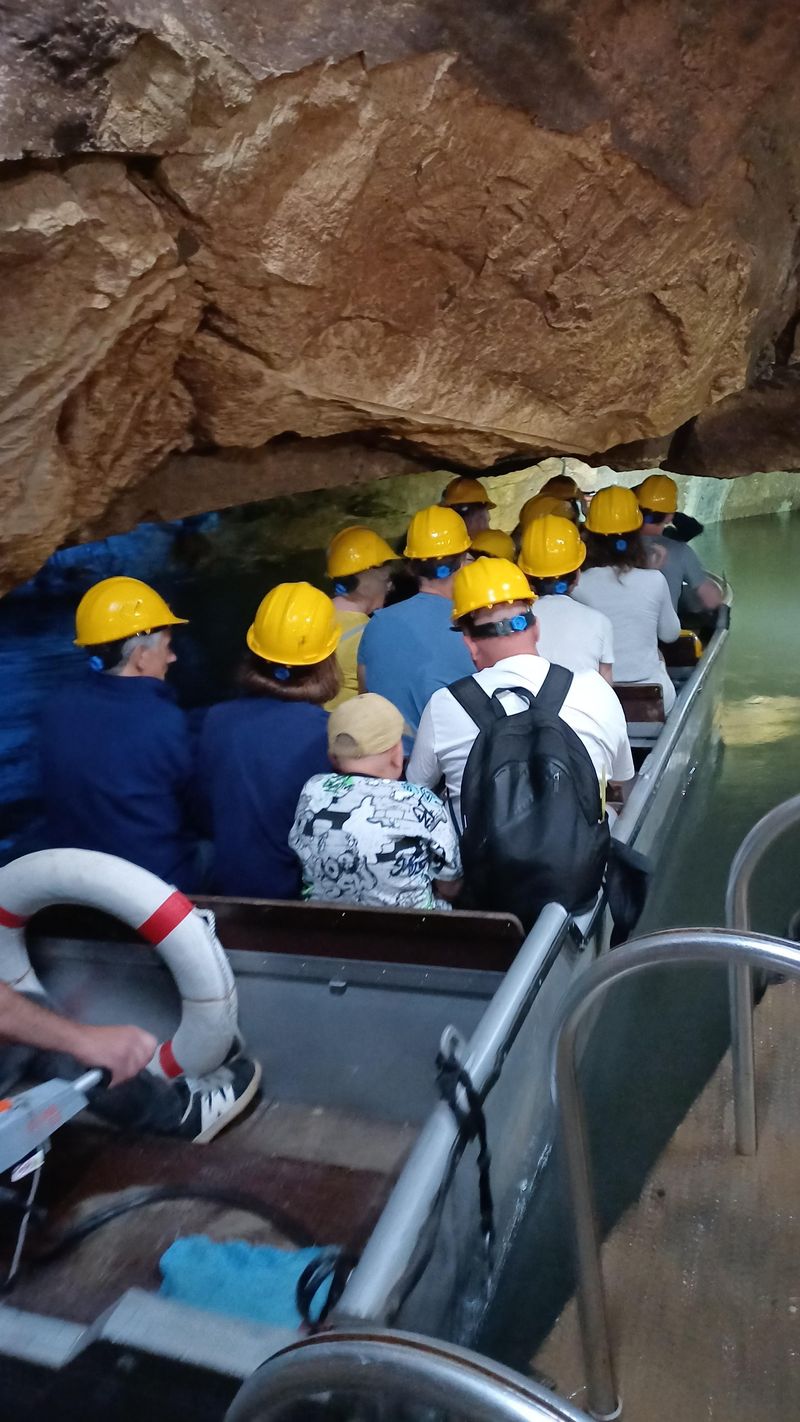
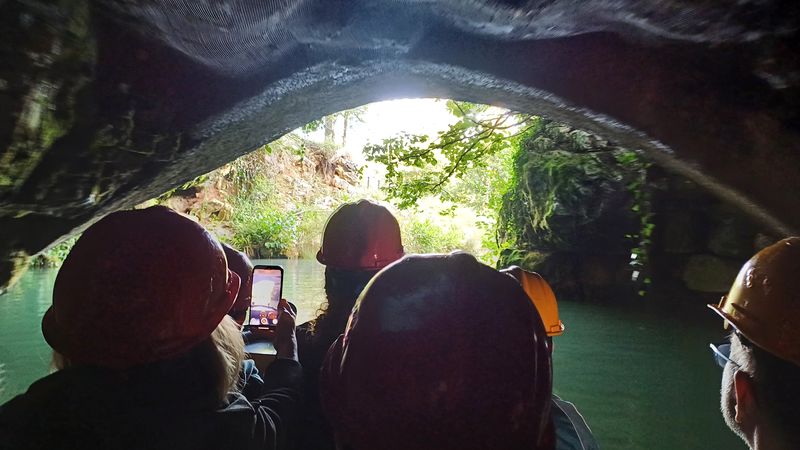
The tour involved exploring the stalactite cave for about an hour, and the return route included a boat ride along the underground river flowing through the cave. Wearing a helmet and riding in the boat, the ceiling comes so close it feels as if it might brush your head, making you feel a little like you’re in a scene from a movie.
The Colchis Fountain and the White Bridge
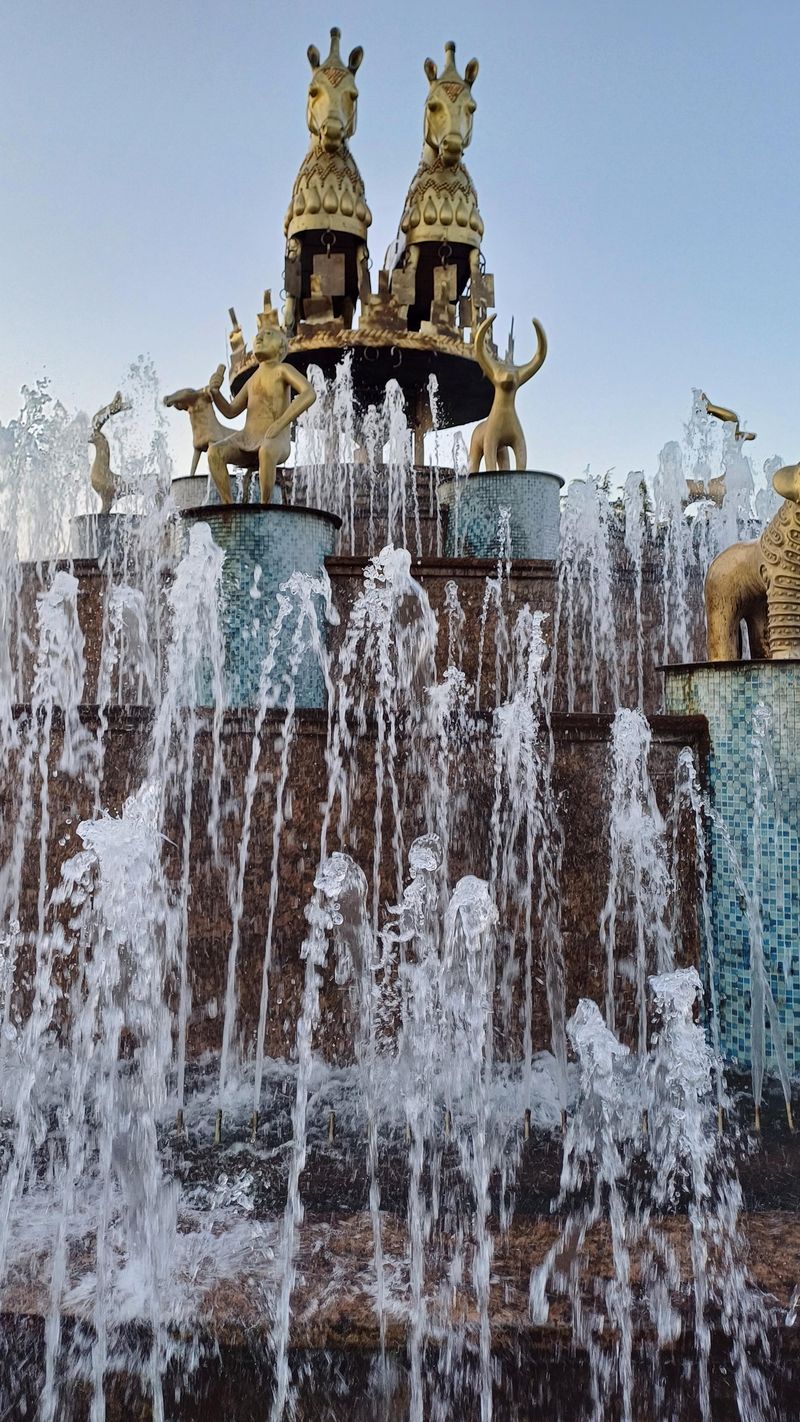
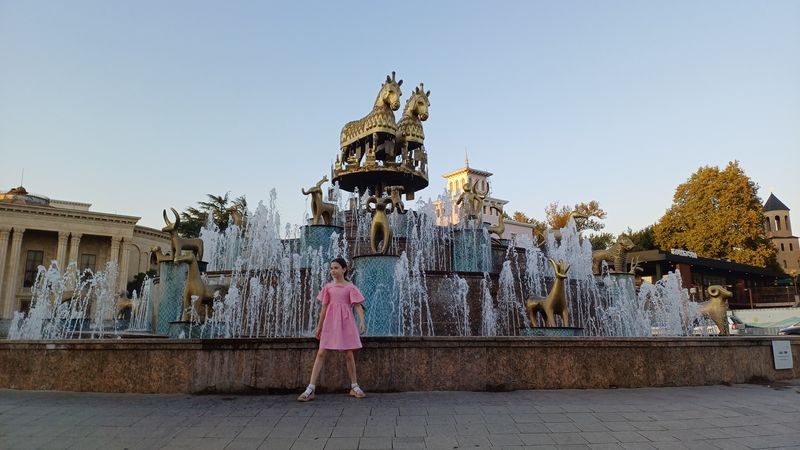
When you search for Kutaisi on Google Maps, the first image you see is a fountain decorated with golden animals and chariots. It is the Colchis Fountain, in the middle of Agmashenebeli Square in central Kutaisi. The Kutaisi area is where the legend of the “Golden Fleece” from Greek mythology is set, and where the ancient Kingdom of Colchis, which flourished around the sixth century BC, had its capital. The fountain’s roughly 30 statues are said to be giant replicas of artifacts from the ancient Colchian period found across Georgia.
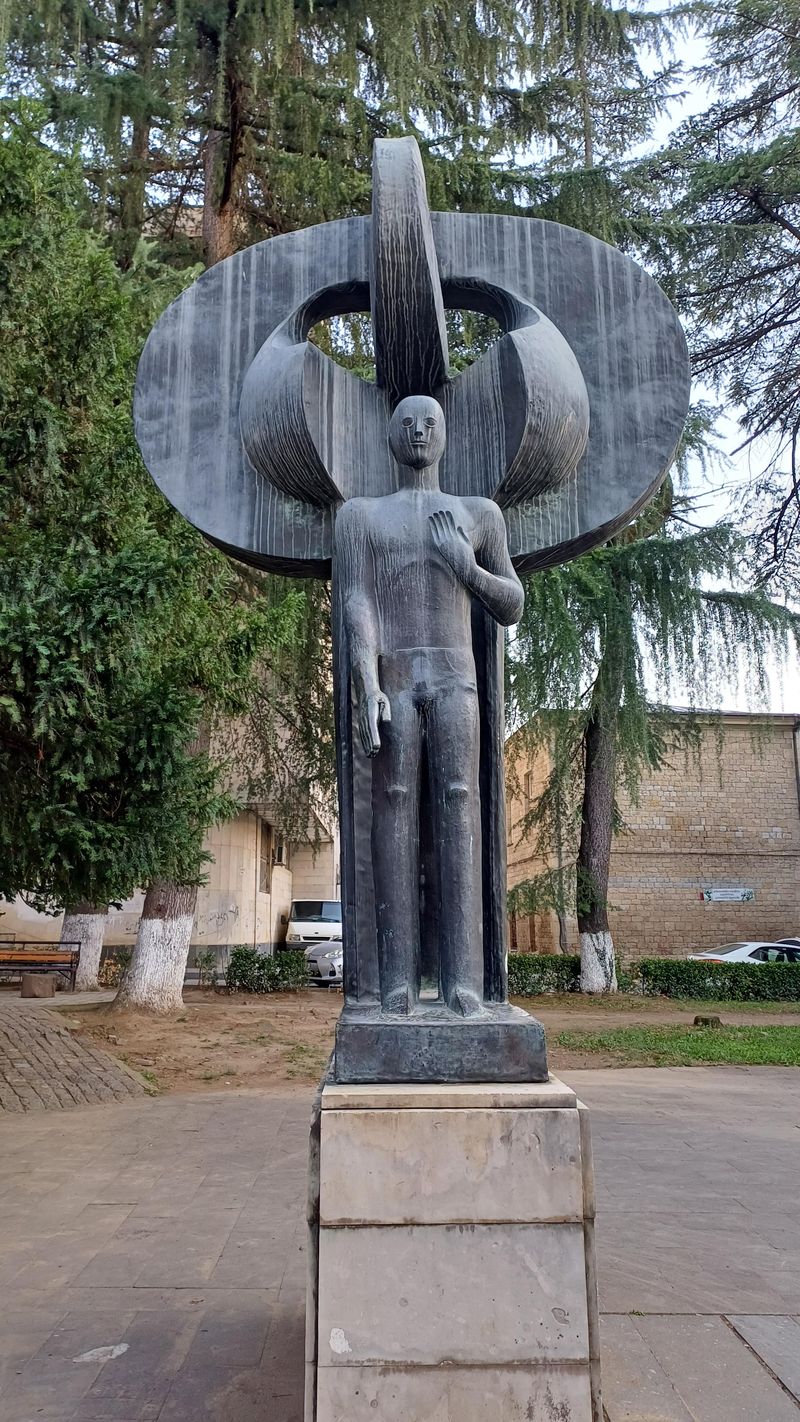
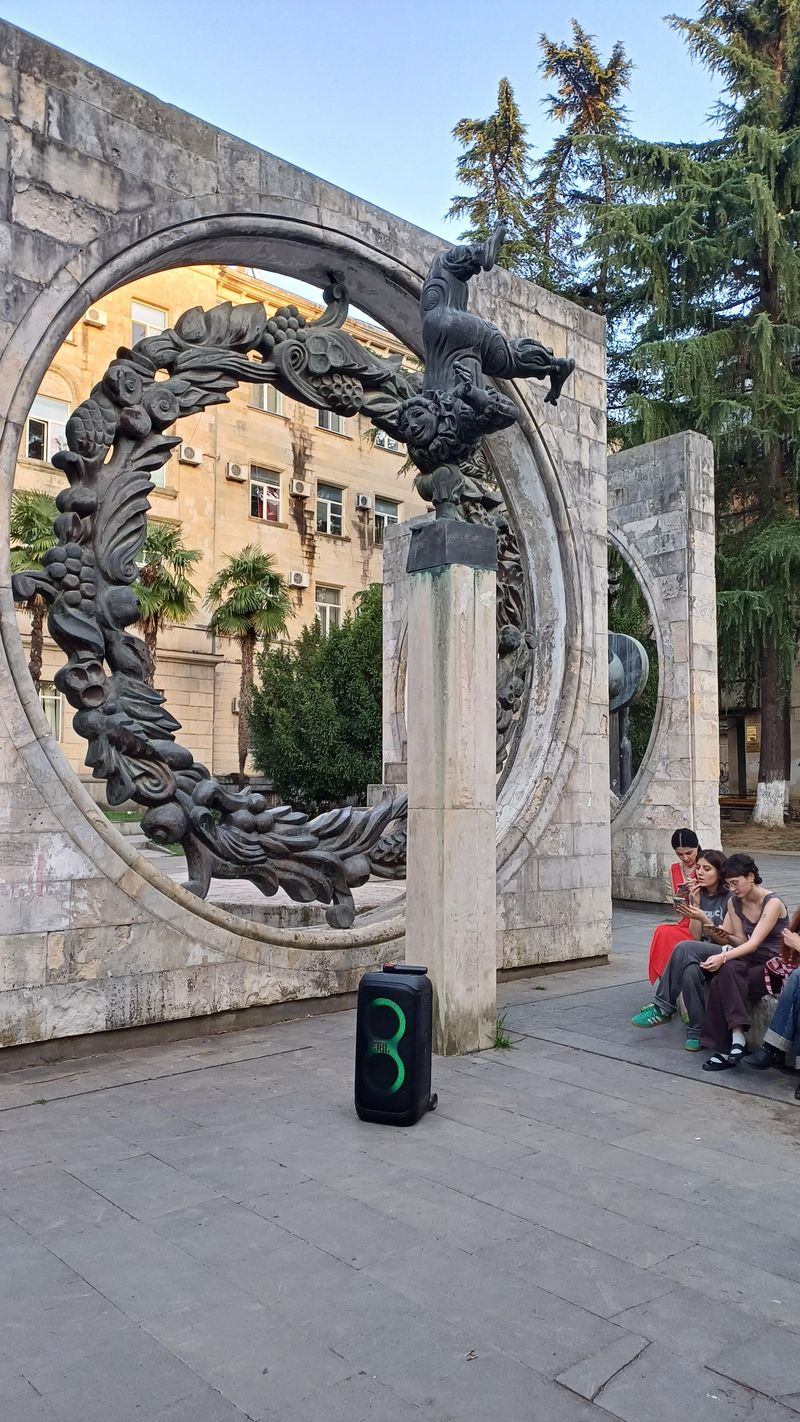
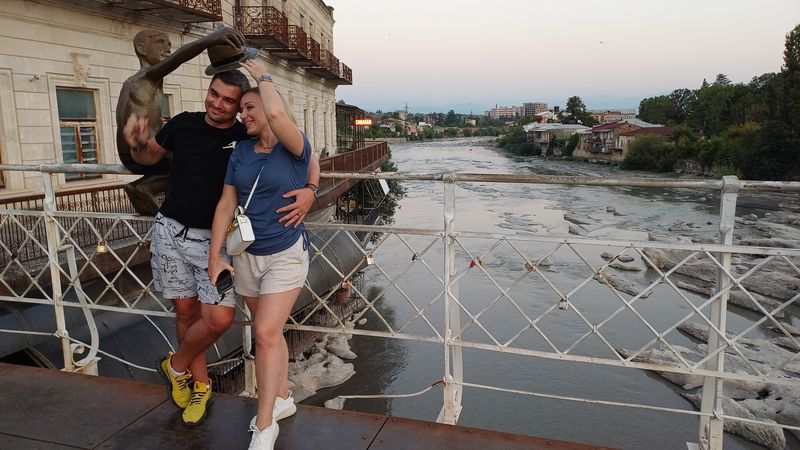
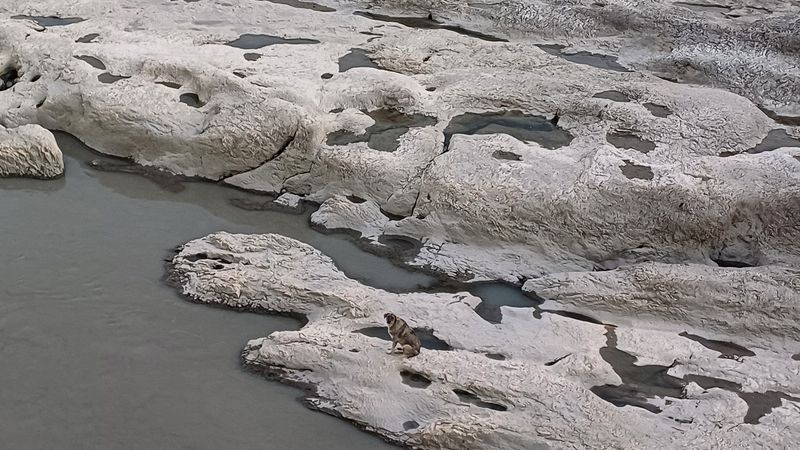
After taking some commemorative photos at the fountain, I went for a walk in a park in central Kutaisi. I saw statues of various historical figures and what appeared to be artists. Then I made my way to the White Bridge. The bed of the Rioni River flowing beneath it is covered with clusters of white rocks formed from hardened limestone, giving it an unusual appearance. On the bridge railing is a statue called “Picasso’s Boy,” holding two hats and seeming about to jump. Tourists were waiting in line to take pictures. After looking around central Kutaisi, I had dinner at a restaurant called Georgian Cuisine. Georgia is known for its bad food, but this was the best meal of the lot.

[email protected] Lee Hwan-joo Reporter