Two attempted murders, weapon possession, ankle monitor... Safety net breached despite foreseen danger [Knife Rampage: An Endless Tragedy (Part 2)]
- Input
- 2026-10-15 15:01:23
- Updated
- 2026-10-15 15:01:23
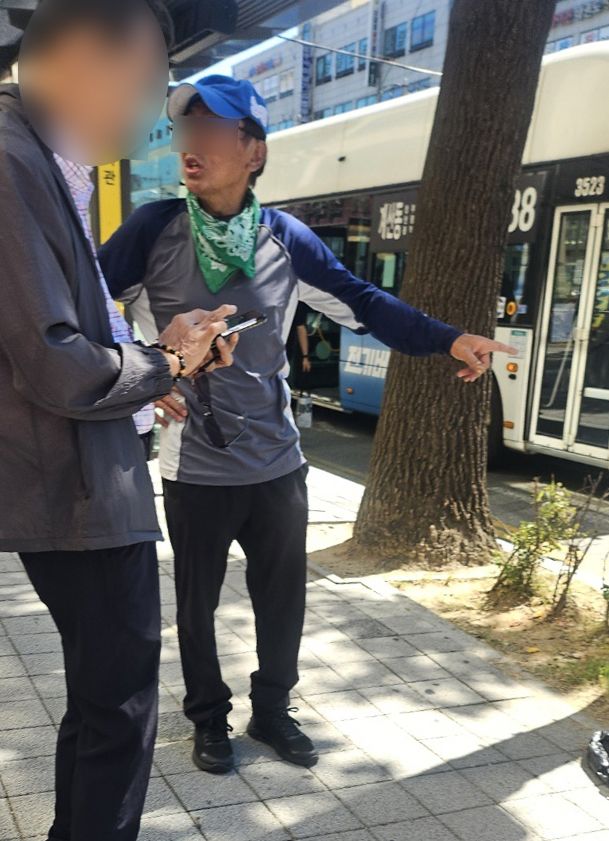
[Financial News] The suspect in the Incheon knife-rampage case was found to have previously committed attempted murder twice and been punished for violating electronic-monitoring conditions. A week before the attack, he had also been questioned by police on suspicion of possessing a weapon. The failure to prevent the attack despite his repeated violent-crime history and warning signs has put under scrutiny the police decision on whether to take him into custody and the effectiveness of the Justice Ministry’s electronic-monitoring system.
According to court rulings and reporting obtained by Financial News on the 15th, Choi, 59, the suspect in the Incheon knife-rampage case, had a lengthy record of criminal punishment, including attempted murder in 2004 and 2015, assault with a weapon in 2007, and violations of electronic-monitoring conditions in 2021–2022.
Two attempted murders and electronic-monitoring violations... a repeated record of violent crime
In 2004, Choi reportedly attacked an employee with a weapon at a real estate office in Bupyeong-gu, Incheon, after he was unable to recover a 9 million won jeonse deposit. He was sentenced to five years in prison at the first trial on attempted-murder charges, but the sentence was reduced on appeal to two years and six months in prison, suspended for three years. In 2007, he was sentenced to one year and six months in prison, suspended for three years, for wielding a weapon against a woman he was living with.Choi later married the woman and then divorced her. In February 2015, after she rejected his request to get back together, he again threatened her with a weapon at her home in Bupyeong-gu, Incheon. The victim wrested the weapon away and called the police, but Choi then took it back and stabbed her—his ex-wife—in six places, including her chest, back and arms. He continued trying to attack her even after a police officer struck his arm with an expandable baton. The victim suffered injuries requiring three weeks of treatment.
The Incheon District Court sentenced Choi to four years in prison and ordered him to wear an electronic location-tracking device for 10 years. At the time, he scored 14 on the Korea Recidivism Risk Assessment Scale (KORAS-G), rated “high,” and 15 on the Psychopathy Checklist-Revised (PCL-R), rated “moderate.” The court found him at risk of reoffending, citing his record of violent crime and repeated attacks on the same victim. Choi argued on appeal that his history of psychiatric treatment and alcohol use had left him mentally and physically impaired, but the Seoul High Court rejected the argument and upheld the original ruling.
But violations of his conditions continued while he was under electronic monitoring. Choi violated the curfew order barring him from going out between midnight and 6 a.m. four times from January 2021 through May 2022. The Incheon District Court found the matter was not minor, given the number of violations, but took into account his remorse and pledge not to reoffend and fined him 3 million won in November 2022.
Despite this accumulated record of violent crime, police did not take Choi into custody during their investigation just before the attack. Since August, Choi had been staging solo protests over his dissatisfaction with medical treatment at a hospital. After the hospital raised safety concerns about his possession of a weapon through the e-People petition system, police began an investigation. Police said they questioned Choi on the 6th and learned of his attempted-murder record and that he was wearing an electronic ankle monitor, but did not consider whether to seek an arrest warrant.
No arrest despite questioning over weapon possession... police and Justice Ministry oversight systems under scrutiny
A police official explained, “This was a matter where we first had to determine whether an offense had been committed and assess the evidence,” adding, “We needed to review case law and conduct further investigation before deciding how to handle his custody. Legal review had to come first.” Choi claimed at the time that he had used the weapon to make holes in a protest placard. Police said that when they questioned Choi, they notified a Justice Ministry probation officer of the relevant facts by phone and checked whether he was complying with the electronic-monitoring conditions.According to the Justice Ministry, on the day of the attack Choi attended addiction counseling, met with a probation officer, underwent a medication check and even had lunch together. The ministry’s position is that there was no tampering with the electronic device or violation of monitoring conditions related to this incident.
However, the attack occurred despite this supervision, raising questions about the effectiveness of the oversight system. Critics say the police and Justice Ministry need to go beyond sharing risk information and take joint action.
Lee Woong-hyuk, a professor in the Department of Police Science at Konkuk University, said, “The police and probation offices need to make their cooperation ongoing, for example by establishing a regular consultative body or a joint task force (TF),” adding, “The two agencies should work together to develop tailored harm-prevention measures for people considered at risk.”
Expanding the probation workforce is also seen as a task. Bae Sang-gyun, a research fellow at the Korean Institute of Criminology and Justice, expressed concern: “The biggest structural problem is that each probation officer has far too many people to supervise. When they are managing many people at once, it is difficult to assess the seriousness of repeated warning signs and respond quickly.”
There are also legal limits: a suspect cannot be detained solely because of a violent-crime record or the possibility of reoffending. However, the law requires recidivism risk and the danger posed to victims to be considered when assessing grounds for detention, underscoring the need to weigh warning signs comprehensively.
Kim Dae-geun, a research fellow at the Korean Institute of Criminology and Justice, noted, “Detention is assessed primarily on grounds relating to the suspect, such as the risk of destroying evidence or fleeing, or having no fixed residence, which limits the extent to which concerns about harm can be considered.” He added, “But if someone has a violent-crime record and is wearing an electronic ankle monitor, the risk of harm to the victim should also be actively considered.”
[email protected] Kim Ye-ji, Choi Seung-han, Park Seong-hyeon, Choi Eun-sol Reporter